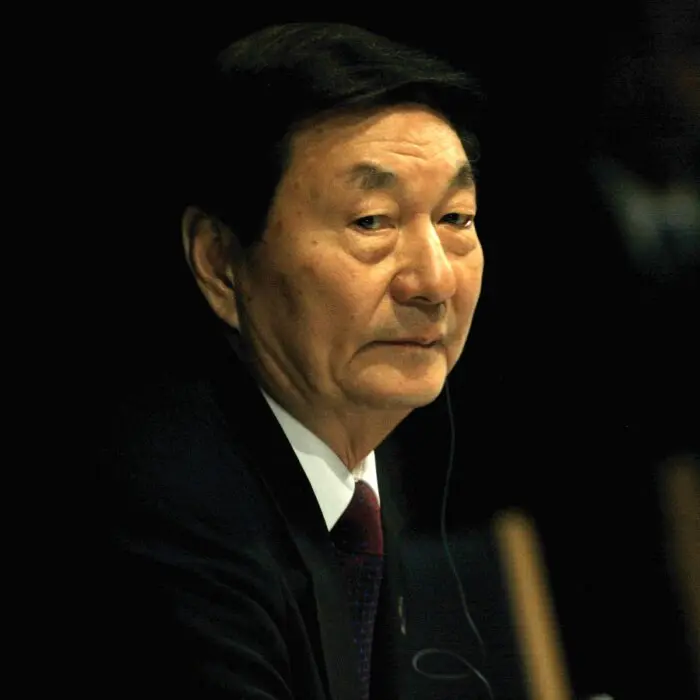
The praise and omissions in the Chinese regime’s obituary for former Chinese Premier Zhu Rongji, who died in Beijing on Aug. 12 at the age of 98, were politically calculated, political analyst Chen Pokong told The Epoch Times.
Chen said the obituary glossed over Zhu’s early political persecution and sought to recast his legacy in a way that serves the current leadership. The obituary reflects Chinese leader Xi Jinping’s effort to use the death of a respected political elder to bolster his own rule, Chen said.
Zhu’s death, he said, also marks the definitive end of China’s “Reform and Opening-up” era as the nation pivots toward a more centralized and ideological future.
Born in 1928, Zhu’s early career was defined by the political turbulence of the Mao era. In 1958, he was branded a “rightist” during the Anti-Rightist Campaign, a state-led purge of perceived dissidents, primarily outspoken intellectuals, and was stripped of his political rights. During the Cultural Revolution (1966–1976), he was targeted again and sent to a labor camp for reeducation, where he spent five years doing manual labor.
The official obituary, however, omits the mention of “rightist” and the Cultural Revolution entirely.
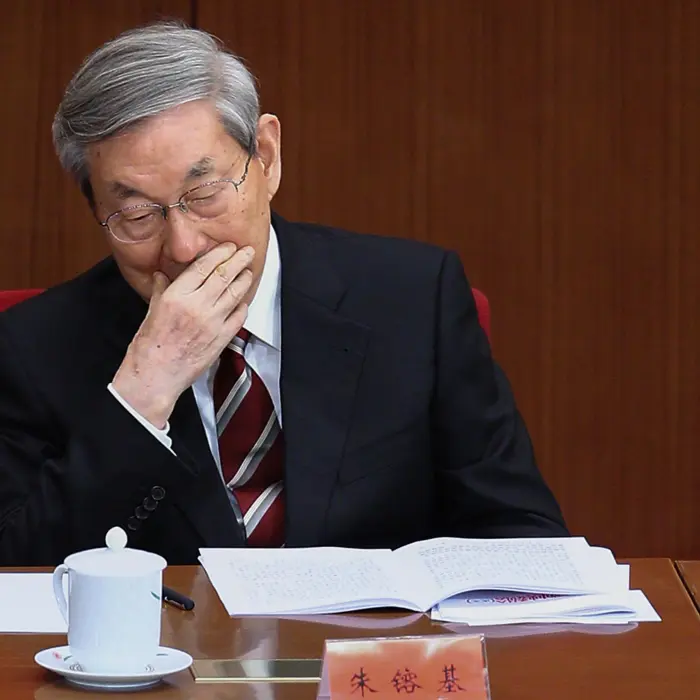
Chen said the omissions show that the current leadership is seeking to conceal the darker chapters of the Chinese Communist Party’s history and avoid prompting public demands for accountability over systemic abuses and mistakes.
Another closely watched passage in the obituary states that Zhu “firmly supported and endorsed the Communist Party Central Committee under the leadership of General Secretary Hu Jintao, and firmly supported and endorsed the Central Committee with Xi Jinping at its core.”
Chen told The Epoch Times that Zhu, as a representative of the reform camp, had fundamental differences with the increasingly left-leaning political direction pursued by Xi’s leadership.
At the Communist Party’s 19th National Congress in 2017, when Xi secured a second term as party leader, television cameras showed Zhu as the only political elder in attendance who did not applaud the leadership report.
Taken together, the accounts available suggest that Zhu spent his later years under a form of de facto house arrest, Chen said.
The tensions between Zhu and the current leadership are also evident in the anti-corruption campaign in recent years. Xi has overseen a sweeping purge of China’s financial sector, while many senior officials who have fallen from power were technocrats who rose during the Zhu era.
Zhu was once regarded as a political mentor to Wang Qishan, a former vice president and senior Chinese official. In recent years, several officials with long-standing ties to Wang have come under investigation. They include Dong Hong, a longtime senior aide to Wang and former deputy head of a central inspection team, who was investigated in October 2020 and received a suspended death sentence for bribery in 2022. Zhou Liang, a vice minister of the National Financial Regulatory Administration who served as Wang’s secretary for many years, was placed under investigation on March 24, 2026.
Chen explained that Xi views Zhu’s enduring influence in the financial and political spheres with suspicion, leading to a systematic sidelining of officials associated with Zhu’s reformist era.
“Zhu Rongji was a political elder, and he was also a reformer. Xi has always feared political elders, and he fears reformers even more,” Chen said.
Zhu played a leading role in China’s economic development for 12 years during his tenure as vice premier and premier. He oversaw major reforms of state-owned enterprises, eased exchange-rate controls, opened the property market, introduced a tax-sharing system between the central and local governments, and helped edge China into the World Trade Organization.
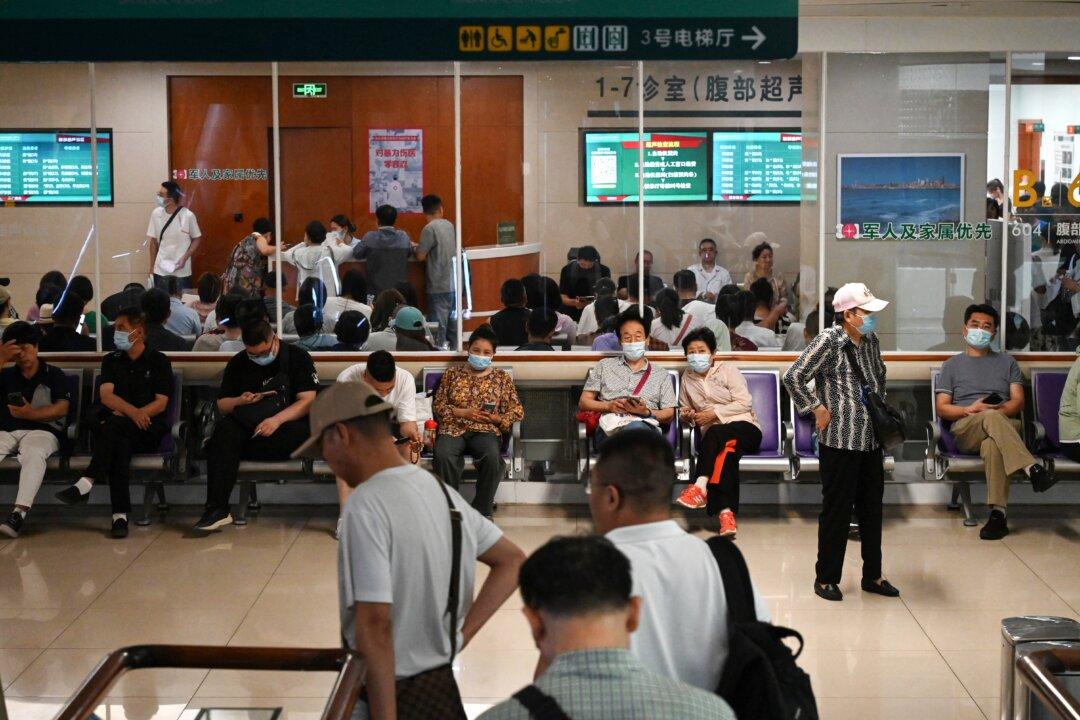
Zhu also faced public criticism for the social costs of his reforms. His restructuring of state-owned enterprises resulted in massive layoffs of state workers.
One impression from those interviews remained particularly strong, Yaita said.
In Guangdong, many people expressed gratitude to Deng Xiaoping because reform and opening-up had made them wealthier. But in China’s three northeastern provinces, Yaita said, many ordinary people gritted their teeth when Zhu’s name came up.
The reason was Zhu’s aggressive restructuring of state-owned enterprises. While the reforms improved efficiency, they also produced a massive wave of layoffs, leaving countless families without the stable livelihoods they had once relied on. The benefits of reform were widely seen as flowing to the state and the powerful, while much of the cost was borne by people with the least political influence.
Chen said Zhu’s death also symbolizes the end of China’s reform era.
“Zhu’s death signifies that China has entered a new and vastly different political trajectory,” Chen said.