When Gadi Harpaz, Israel’s Consul General in Chengdu, China, posted his farewell message on WeChat on Aug. 5, it marked more than the end of his five-year term. It signified the closure of Israel’s mission in Southwestern China.
Analysts, such as Chen Wen-chia, a national security scholar and Vice President of Taiwan’s Kainan University, say the closure is a clear sign of a deteriorating relationship that has shifted from a “comprehensive innovative partnership” to a state of strategic alienation.
The official closure, effective this month, leaves Israel with a significantly reduced footprint in the world’s second-largest economy. While the Israeli government has not publicly detailed the reasons for the move, experts speaking to The Epoch Times suggest the decision is a calculated response to mounting political, strategic, and ideological friction.
The Oct. 7 Turning Point
For decades, Israel and China maintained a pragmatic, tech-heavy relationship. Israel was once a primary supplier to Beijing of cutting-edge military technology ranging from cruise missiles to radar systems. However, the Oct. 7, 2023, Hamas attacks on Israel acted as a definitive breaking point.

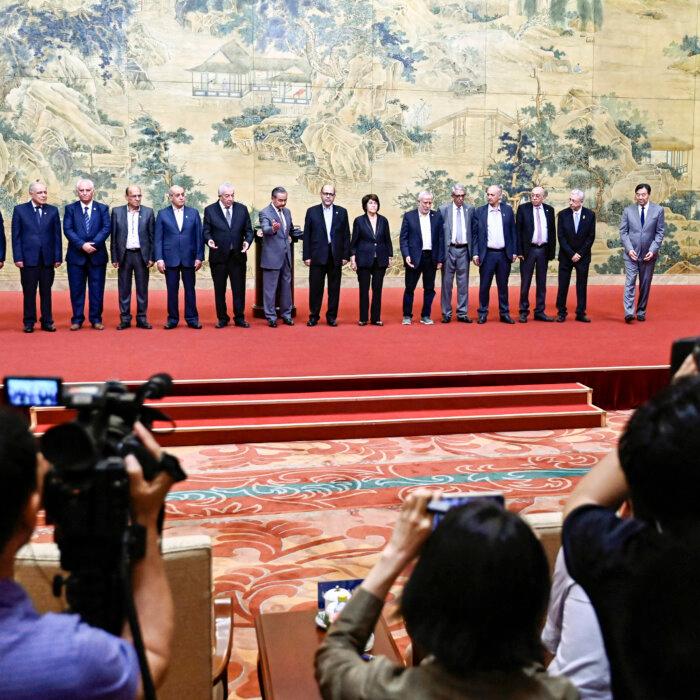
“China’s response to the Hamas attack was the immediate trigger,” Chen told The Epoch Times. “After the attack, the Chinese Communist Party [CCP] clearly sided with the Palestinians. The CCP did not publicly condemn Hamas, causing deep dissatisfaction in Israel. This led to the near-total collapse of political mutual trust between the two sides.”
This sentiment is reflected in the Israeli public. A poll conducted in April 2024 by the Institute for National Security Studies in Tel Aviv found that over half of Israelis now view China as “hostile” or “unfriendly.”
Shen Ming-shih, a research fellow at Taiwan’s Institute for National Defense and Security Research, noted that the diplomatic climate has become increasingly untenable for Israel.
“Since the conflict with Hamas began, the CCP has been diplomatically wooing Arab nations and criticizing Israel’s military actions at the United Nations,” Shen told The Epoch Times. “This is something Israel simply cannot accept.”
The closure of Israel’s consulate in Chengdu also reflects the lack of economic incentive to maintain a presence in China’s interior. Shen explained that while Beijing promotes its “Great Western Development” strategy, the region has not lived up to its promise for Israeli interests. “The western provinces and cities are not major hubs for foreign trade,” Shen said. “Israel found that there were very few trade opportunities left there.”
A Historical Misunderstanding
The current frostiness highlights a historical paradox that has long colored Israel’s approach to Beijing.
Many Israelis have historically held a deep affection for China, rooted in the actions of Ho Feng-shan, the “Chinese Schindler.” As the Republic of China’s Consul General in Vienna during World War II, Ho issued thousands of “life visas” to Jews fleeing Nazi persecution. Many made their way to Shanghai, where they received generous assistance from local Chinese residents. To this day, descendants of those survivors honor the humanitarian legacy of that era.
However, historians and analysts point out an important distinction: It was the Republic of China, now based in Taiwan, that helped save Jewish lives, not the Communist Party (CCP), which took power on the mainland in 1949. The two sides remained deeply hostile toward each other for decades thereafter.
After World War II, Israel developed particularly close ties with Beijing, which some believe was partly an expression of gratitude toward China, without realizing that communist China is not the same entity that had helped them.
In fact, while the CCP welcomed technological assistance from Israel, its attitude toward the Jewish people and Israel has historically been far less favorable.
Evidence of this divide dates back to the early days of the People’s Republic.
In 1952, Mao Zedong refused to recognize Jewish people as one of China’s official 56 ethnic groups, according to Jin Guangyuan, a descendant of the Kaifeng Jewish community in central China’s Henan Province.
By 1965, Mao explicitly framed Israel as a tool of the West, telling a PLO delegation: “Imperialism is afraid of China and the Arabs. ... They created Israel for you, and Formosa [Taiwan] for us. Their goal is the same.”
Youth Factor, Persistent Propaganda
This decades-old “anti-imperialist” framework continues to shape the worldview of China’s youth, often amplified by state-aligned social media. Over the years, Chinese state media have consistently aligned with Beijing’s narrative to criticize Israel whenever conflicts arise in the Middle East.
Following the announcement of the consulate’s closure, several Chinese nationalist bloggers reacted with derision. Social media posts surfaced with comments such as, “Feel free to leave; we will not see you off,” reflecting a growing negative sentiment toward Israel.
Shen told The Epoch Times that this digital environment made it increasingly difficult to function. “The Chengdu mission likely felt the weight of CCP-driven nationalism whenever they tried to discuss the Middle East situation on Chinese social media platforms.”
Practical Geopolitics and ‘3-Track’ Future
The decision to cease operations also stems from changing geopolitical realities. Under pressure from the United States, Israel has already begun reducing its cooperation with Beijing in areas such as dual-use technologies and critical infrastructure.
Chen believes the relationship has entered a new, colder phase.
“Israel-China relations are shifting from a period of cooperation into one of strategic alienation, with diplomatic operations now functioning at a downgraded level,” he said. “In the future, the two countries will exist in a three-track pattern: limited trade, shrinking security cooperation, and low political trust.”