July 28, 2026, marks the 50th anniversary of one of the deadliest earthquakes of the twentieth century and one of the worst natural disasters in modern Chinese history. The disaster in Tangshan—and later the 2008 Sichuan earthquake—illustrates a recurring pattern in which scientific expertise has at times been subordinated to political considerations before disasters, while information has been tightly managed afterward.
At 3:42 a.m. on July 28, 1976, a magnitude 7.8 earthquake struck the industrial city of Tangshan in Hebei Province, reducing much of the city to rubble in 23 seconds. While official records released years later cited 242,000 fatalities, unofficial estimates and subsequent research have suggested the death toll could have exceeded 700,000.
Half a century later, the event remains a primary case study in how political priorities can supersede scientific warnings and how the pursuit of institutional stability can exacerbate the scale of a natural catastrophe.
The Warnings That Were Silenced
Historical records indicate that the Tangshan earthquake was preceded by years of scientific concern. Seismologists had been monitoring heightened activity in the region long before the first tremors were felt.
As early as 1974, experts such as Beijing-based seismologist Geng Qingguo identified a significant risk of a major seismic event in the Beijing-Tianjin-Tangshan area. By 1975 and early 1976, these warnings became increasingly specific. In the months leading up to the disaster, local monitoring stations reported a series of anomalies, including fluctuating water levels, unexplained temperature increases in hot springs, and unusual animal behavior.
On July 14, 1976, just two weeks before the disaster struck, the Ministry of Geology identified seven major seismic anomalies in the Tangshan area. On July 27, approximately 15 hours before the earthquake occurred, Zha Zhiyuan, a deputy director of the State Seismological Bureau, was briefed on the imminent danger. His response? “Let’s meet next week to study this.”
Consequently, most Tangshan residents were fast asleep in their homes when the earthquake hit, leaving them no time to evacuate.

The ‘Politics in Command’ Malady
Why was such urgent scientific evidence met with official inaction? According to current affairs commentator Tang Jingyuan, the recurring failure to heed expert advice reflects what he describes as a “genetic malady” of the Chinese Communist Party (CCP).
“The CCP is a regime built on the worship of a radical ideology. It necessitates a ‘politics in command’ approach to governance,” Tang told The Epoch Times.
He went on to say that this ideological framework explains why CCP authorities have repeatedly ignored scientific warnings and marginalized experts.
In his view, political imperatives take precedence over both scientific evidence and public welfare. As he put it: “Scientific laws and public needs must submit to the Party’s political agenda. Anything that contradicts that agenda is automatically suppressed.”
From 1972 to 1975, earthquake forecasting and preparedness fell under the authority of Zhou Rongxin, who oversaw the State Seismological Bureau.
After reviewing reports submitted by Geng Qingguo,Zhou forwarded the experts’ recommendations to the State Council on at least two occasions—in June 1974 and again in January 1975. He warned that the Beijing-Tianjin-Tangshan-Zhangjiakou region could face a destructive earthquake of magnitude 6 or greater within one to two years.
However, in April 1975, political infighting intensified as the Cultural Revolution entered its final stage. Mao Zedong launched another political campaign to remove Deng Xiaoping from power. Deng was purged once again, and Zhou, who was regarded as one of Deng’s key supporters, was also dismissed.
According to later published accounts, a radical “rebel faction” within the State Seismological Bureau targeted the Beijing-Tianjin-Tangshan-Zhangjiakou earthquake coordination group that Zhou had helped establish. The group was denounced for placing scientific expertise above revolutionary politics—an accusation with serious political consequences during the Cultural Revolution. Subjected to repeated political criticism, its work was effectively paralyzed, severely undermining coordination and information-sharing among seismic monitoring agencies.
Tang noted that the regime’s dismissal of the earthquake risk amounted to a rejection of scientific evidence based on political considerations.
In his view, this pattern did not end with the Cultural Revolution but has continued in different forms. He cited the construction of the Three Gorges Dam and the more recent zero-COVID policy as examples in which protecting the Party’s image took precedence over expert warnings.
“The CCP’s longstanding slogan of being ‘Great, Glorious, and Correct’ reflects its self-image as an infallible ruling party that cannot publicly acknowledge systemic mistakes,” Tang said. “As a result, information that could undermine that image—whether about earthquake risks or the potential environmental consequences of a massive dam project—is often treated as a political threat rather than a matter for open scientific debate.”
The Architecture of Deception: From Tangshan to Wenchuan
Questions surrounding the true human toll of the Tangshan earthquake have persisted for decades. The CCP did not release an official death toll of approximately 242,000 until November 1979, more than three years after the disaster. However, researchers such as Zhang Yuming have cited internal military accounts suggesting the actual number of fatalities was closer to 750,000.
The significant discrepancy between the official figure and these alternative estimates has fueled the longstanding debate over whether the full scale of the disaster was deliberately obscured.
A similar pattern occurred 32 years later during the 2008 Sichuan earthquake. While authorities officially reported approximately 69,000 deaths, more than 17,000 individuals were listed as “missing” and never formally added to the death toll.
The earthquake also revealed the problem of “tofu” school buildings, a term coined by the Chinese public to describe poorly constructed buildings made with inferior materials to cut costs, resulting in structures as fragile as bean curd. In Sichuan, thousands of children died when their schools collapsed, while nearby government buildings remained standing.
Tang noted that the public could not expect the CCP to conduct a transparent investigation into the corruption that led to the collapse of the school buildings.
“Investigating the ‘tofu’ school buildings would mean admitting that the Party, which claims to ’serve the people,' was actually lining its pockets at the cost of children’s lives,“ he said. ”Therefore, instead of investigating the corruption that led to shoddy construction, the government arrested the people who tried to count the dead. As always, the regime does not focus on solving the underlying problem. Instead, it focuses on silencing the people who draw attention to it.”
Individual as ‘Bolt’ in the Machine
Sheng Xue, a prominent Chinese-Canadian author and democracy activist based in the Toronto area, offered a deeper analysis of the political philosophy that drives these systemic failures.
She noted that the CCP often encourages individuals to serve the country like a “bolt.” This indicates that the CCP’s governance logic views the individual not as a being with inherent dignity, but as a “disposable cost” in a grand machine.
“The CCP’s ultimate goal is to eliminate the independent will of the individual,” Sheng told The Epoch Times. “The state is viewed as a massive machine, and the person is merely a screw.” The safety and interests of the core leadership are the only supreme principles. Human life is not the purpose of governance. It is merely a tool to be calculated and, if necessary, sacrificed for the stability of the regime.”

Sheng breaks down the CCP’s disaster management into a chilling four-stage “anti-human” loop.
The pre-warning phase: Warnings are labeled “rumors.” Whistleblowers are suppressed to maintain a facade of social harmony.
The outbreak phase: Information is strictly controlled. Information on casualties is treated as a state secret to prevent public panic or anger.
The relief phase: The state propaganda machine turns the tragedy into a “song of triumph.” The disaster is rebranded as an example of the Party’s “heroic leadership” in order to drown out calls for accountability.
The accountability phase: Any private investigation into building quality or official negligence is met with “iron fist” repression.
Reverse Incentive: Why Bureaucrats Choose Silence
Sheng also highlights the “reverse incentive” within the Chinese bureaucracy. In a system where officials are appointed from above rather than elected from below, their only loyalty is to their superiors’ mood.
“Issuing a public warning is a political risk,” Sheng says. “If an official warns of an earthquake and it doesn’t happen, they are blamed for disrupting the economy and creating social instability. However, if they remain silent and a disaster strikes, they can often deflect blame or even be promoted later for their ‘heroic’ relief efforts. The system punishes transparency and rewards the suppression of bad news.”
The Exception: The ‘Qinglong Miracle’
The history of the 1976 disaster contains one significant anomaly known as the “Qinglong Miracle.” In Qinglong County, located about 71 miles from the epicenter, County Party Chief Ran Guangqi chose to act on the scientific warnings he received.
On July 25, 1976, Ran bypassed standard reporting procedures—a move that carries extreme personal and political risk in China—to issue an earthquake alert. He instructed local officials to ensure that every resident was notified and ordered the population to stay outdoors.
When the earthquake struck, more than 180,000 buildings in Qinglong County were damaged or destroyed. Out of a population of 470,000, however, only one person died: an elderly woman who suffered a heart attack.
According to Zhang Qingzhou, the author of A Warning from Tangshan, despite its extraordinary success, the “Qinglong Miracle” remained a taboo subject in China for nearly two decades. Ran Guangqi received no official recognition or promotion for his actions domestically. Nevertheless, many years later, in 1996, he received a commemorative medal from a U.N. representative recognizing his contribution to disaster preparedness.
Sheng explained that Ran’s success was politically embarrassing for the central government. By proving that the earthquake was predictable and the deaths preventable, Ran inadvertently highlighted the culpability of officials who failed to act in Tangshan.
The Persistence of Systemic Logic
In the five decades since the Tangshan earthquake, China has built more skyscrapers, launched more satellites, and expanded its digital surveillance. But the two China experts both said that while the state’s methods of managing society have become more sophisticated, the underlying priority has remained the same: protecting the ruling Communist Party’s hold on power.
Sheng cited the suppression of Li Wenliang, the Chinese doctor who raised early warnings about the COVID-19 outbreak, as well as the 2023 decision to divert floodwaters into densely populated areas to protect the political hub of Xiong’an, as evidence that the CCP prioritizes preserving its authority over individual lives.
Tang agreed that these tragedies stemmed from the CCP’s inhumane and ruthless nature. He added that the party’s self-image as an infallible authority makes meaningful self-reflection impossible.
“They cannot admit error because their legitimacy is based on the idea of being an infallible vanguard,” he said. “Admitting a mistake in a disaster would mean admitting a flaw in the system itself.”
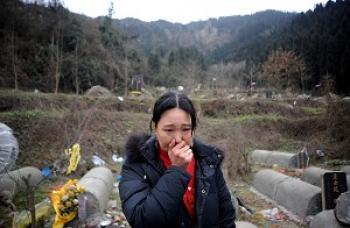
The 50th anniversary of the Tangshan earthquake serves as a somber reminder of the consequences of subordinating science to ideology. For the survivors of the Tangshan and Sichuan earthquakes, the memory of the disaster is inseparable from the knowledge that much of the suffering was likely avoidable. As long as political stability remains the supreme metric of success, the cycle of ignored warnings and suppressed truths appears destined to continue.
The “Qinglong Miracle” proved that saving lives is possible when individuals prioritize conscience over the system, but in the history of the CCP, such instances remain a rare exception to a tragic rule.