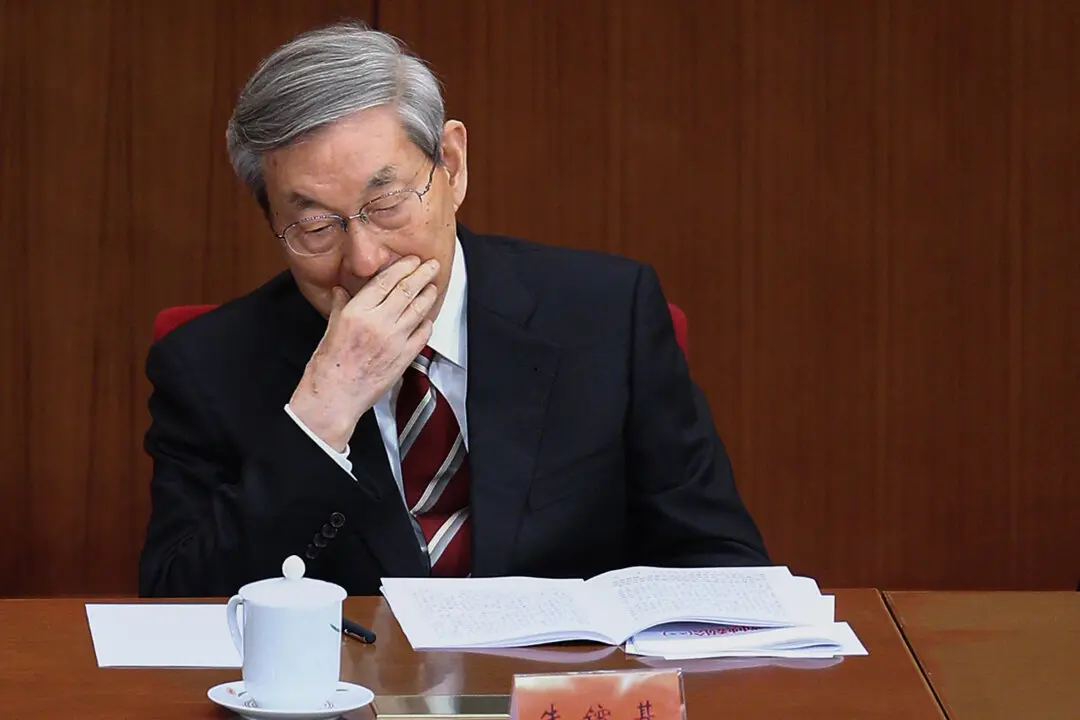
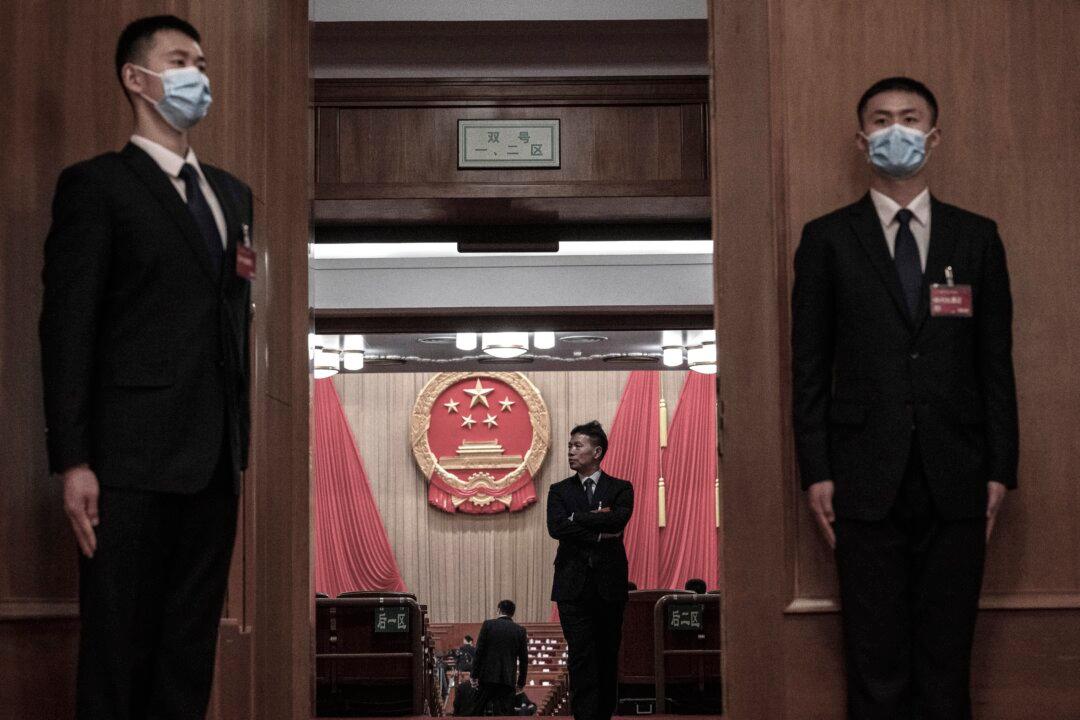
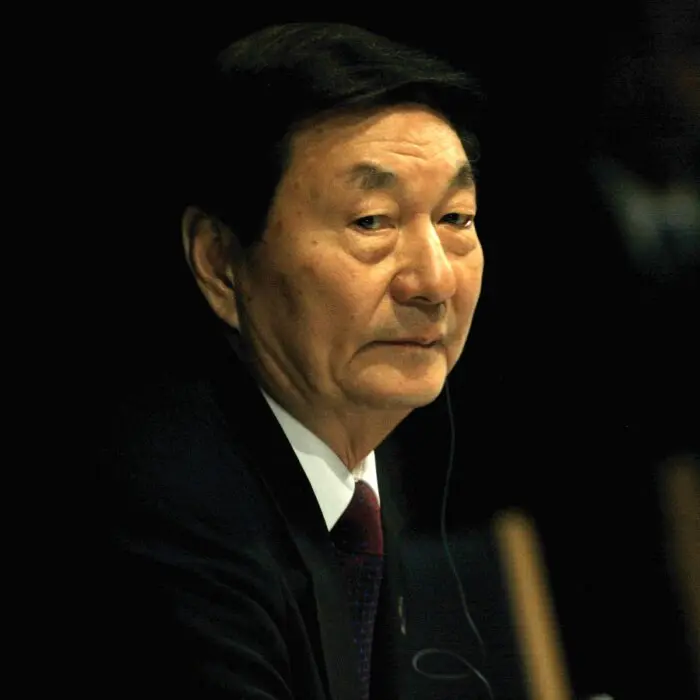
The Chinese Communist Party (CCP) is closely monitoring public reactions to the death of former Premier Zhu Rongji, amid concerns that mourning for the outspoken reform-era leader could become an outlet for broader dissatisfaction with the regime, according to an insider familiar with the matter.
An insider within the CCP, who spoke to The Epoch Times on condition of anonymity on Aug. 12, said the regime had been closely monitoring Zhu during his final years and was particularly concerned about how the public might respond to his death.
“People may use the opportunity to mourn Zhu Rongji to express their dissatisfaction with the current reality, and it could even develop into broader social sentiment,” the insider said.
The insider said Zhu’s movements were closely monitored by personnel assigned by Cai Qi, the CCP’s top official overseeing the Party’s General Office and a close ally of Chinese leader Xi Jinping.
“There were security guards, secretaries, doctors, and nurses around Zhu Rongji who were arranged by Cai Qi, and every move he made was monitored,” the insider said. “His later medical treatment also required Cai Qi’s approval.”
These claims could not be independently verified by The Epoch Times.
Zhu, who served as premier from 1998 to 2003, was known for his aggressive economic reforms and efforts to restructure China’s state-owned enterprises and financial system. In retirement, he largely stayed out of public political life, although occasional appearances and remarks continued to attract attention.
One such moment came at the opening of the CCP’s 19th National Congress in Beijing on Oct. 18, 2017. After Xi delivered a speech lasting about three and a half hours, other CCP officials in the audience stood and applauded. Zhu, who was seated among the former senior leaders, appeared to be the only one who didn’t applaud initially. Video of the moment circulated online and prompted speculation about whether Zhu was signaling dissatisfaction with Xi, while others said the footage was being overinterpreted.
Fears of Political Mobilization
The insider said the regime’s concern over public mourning for Zhu reflects a broader fear within the CCP of spontaneous public gatherings and political expression.
“The CCP has always opposed spontaneous activities among the public,” the insider said. “Regardless of whether such activities are consistent with the regime’s goals, it will remain vigilant. Its main concern is that spontaneous action by the public could get out of control and even develop into a movement opposing the CCP.”
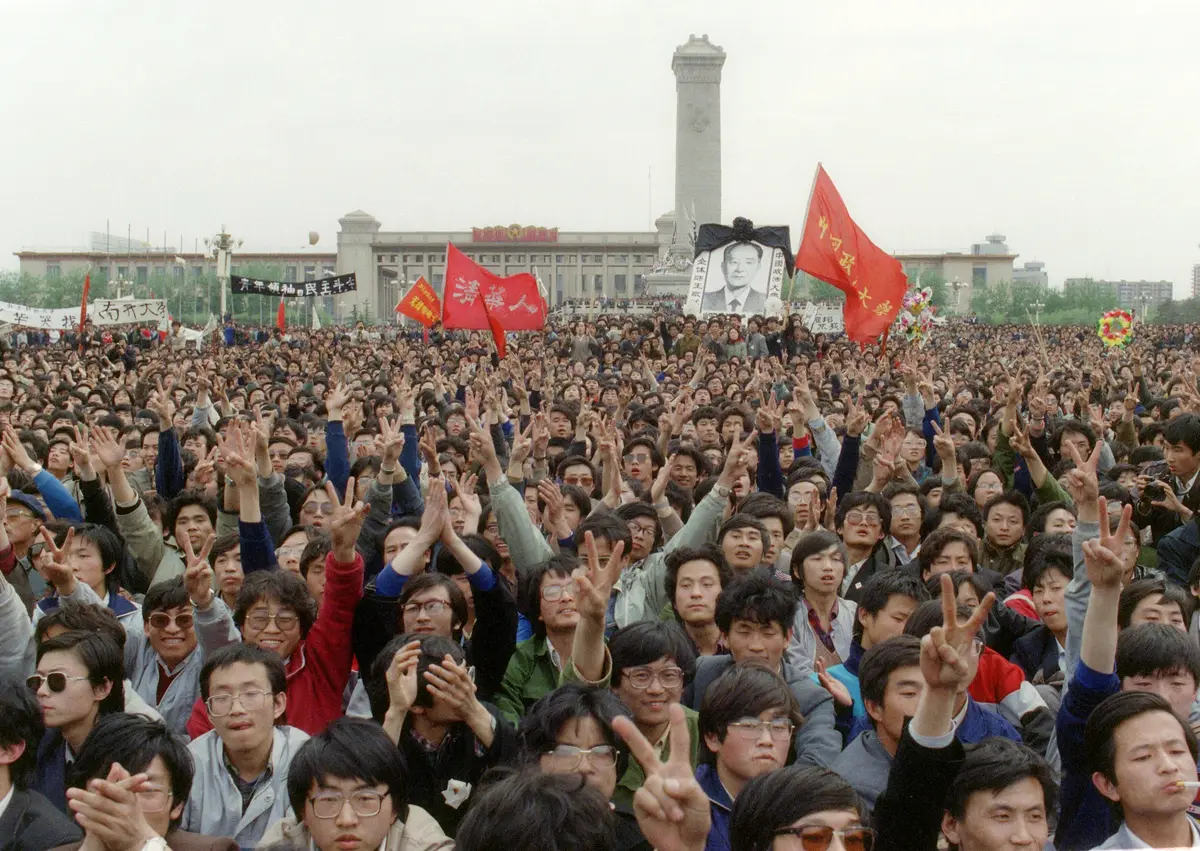
The insider noted the death of former Party leader Hu Yaobang in 1989 as a historical precedent. Public mourning for Hu, who had been removed from his position amid a political struggle within the Party, became a catalyst for student demonstrations that eventually spread across China and culminated in the military clampdown around Tiananmen Square on June 4, 1989.
The insider explained that the CCP’s sensitivity to mass sentiment has remained unchanged.
“Once large-scale public opinion emerges, the regime will inevitably intervene,” the insider said. “The CCP has never relaxed its control over public opinion that could potentially lead to social mobilization.”
With Zhu’s death coming at a politically sensitive time in China, the insider said authorities are likely to pay particular attention to online discussions, public commemorations, and any signs that mourning is spreading beyond officially sanctioned expressions.
“After Zhu Rongji’s death, the regime will likewise be highly vigilant about public sentiment,” the insider said. “Once they discover signs that mourning activities are spreading, the situation will likely be reported quickly to the highest level of power.”