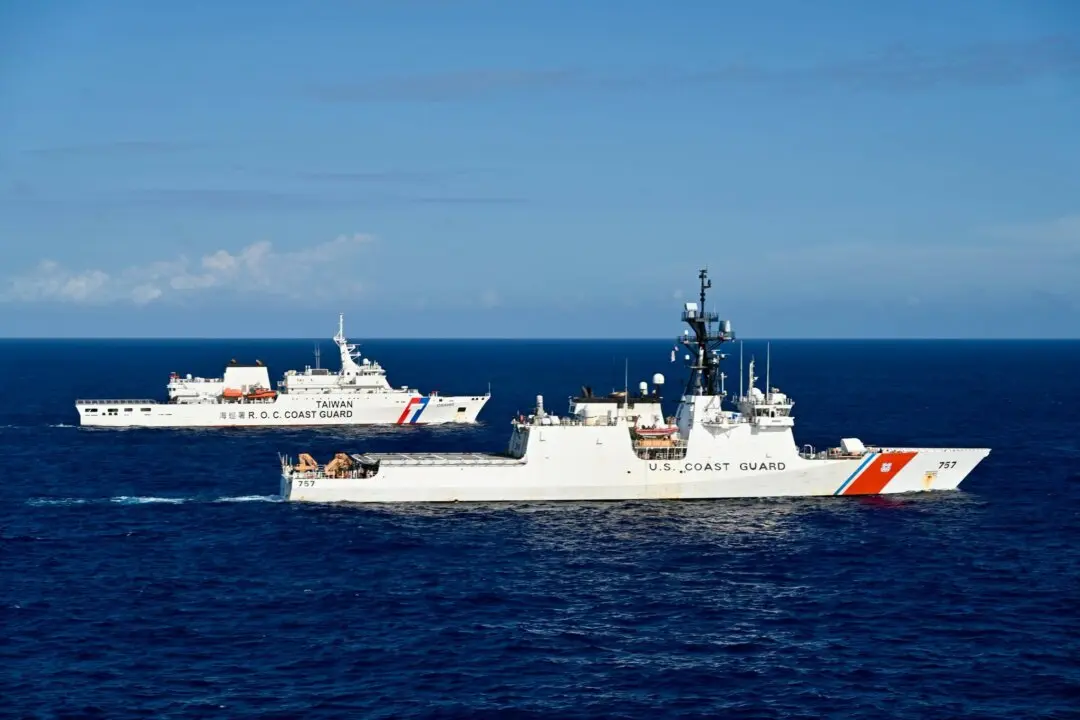
China and Indonesia conducted a joint naval exercise east of Taiwan on Aug. 12, marking the first time Beijing’s military has held a drill with a foreign navy in waters east of the island, according to Chinese state media Xinhua News Agency.
The exercise comes as the Chinese military has increasingly expanded its naval and maritime activities beyond the first island chain, raising concerns that Beijing is seeking to establish a more sustained military presence deeper in the Western Pacific.
The state media report said that the Chinese navy’s Honghe frigate conducted a “navigation exercise” with an Indonesian frigate in waters east of Taiwan. The drill included communications exercises and at-sea replenishment.
The location is significant because waters east of Taiwan connect directly to the Philippine Sea and provide a key route for Chinese naval forces to move beyond the first island chain and into the broader Western Pacific.
Pushing Beyond the First Island Chain
Among several scholars and insiders who spoke to The Epoch Times on the topic—on condition of anonymity out of fear of reprisal—a Chinese military scholar said holding the exercise east of Taiwan goes beyond the traditional scope of Chinese military activity around the Taiwan Strait.
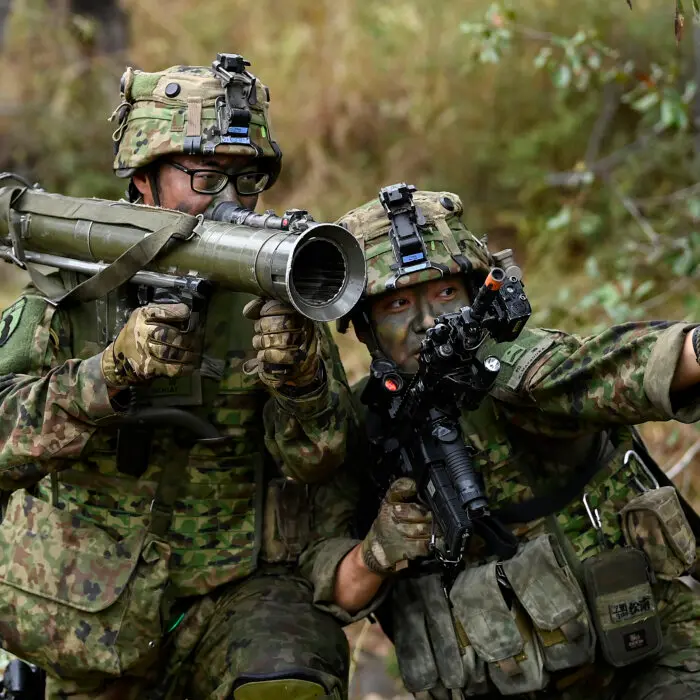
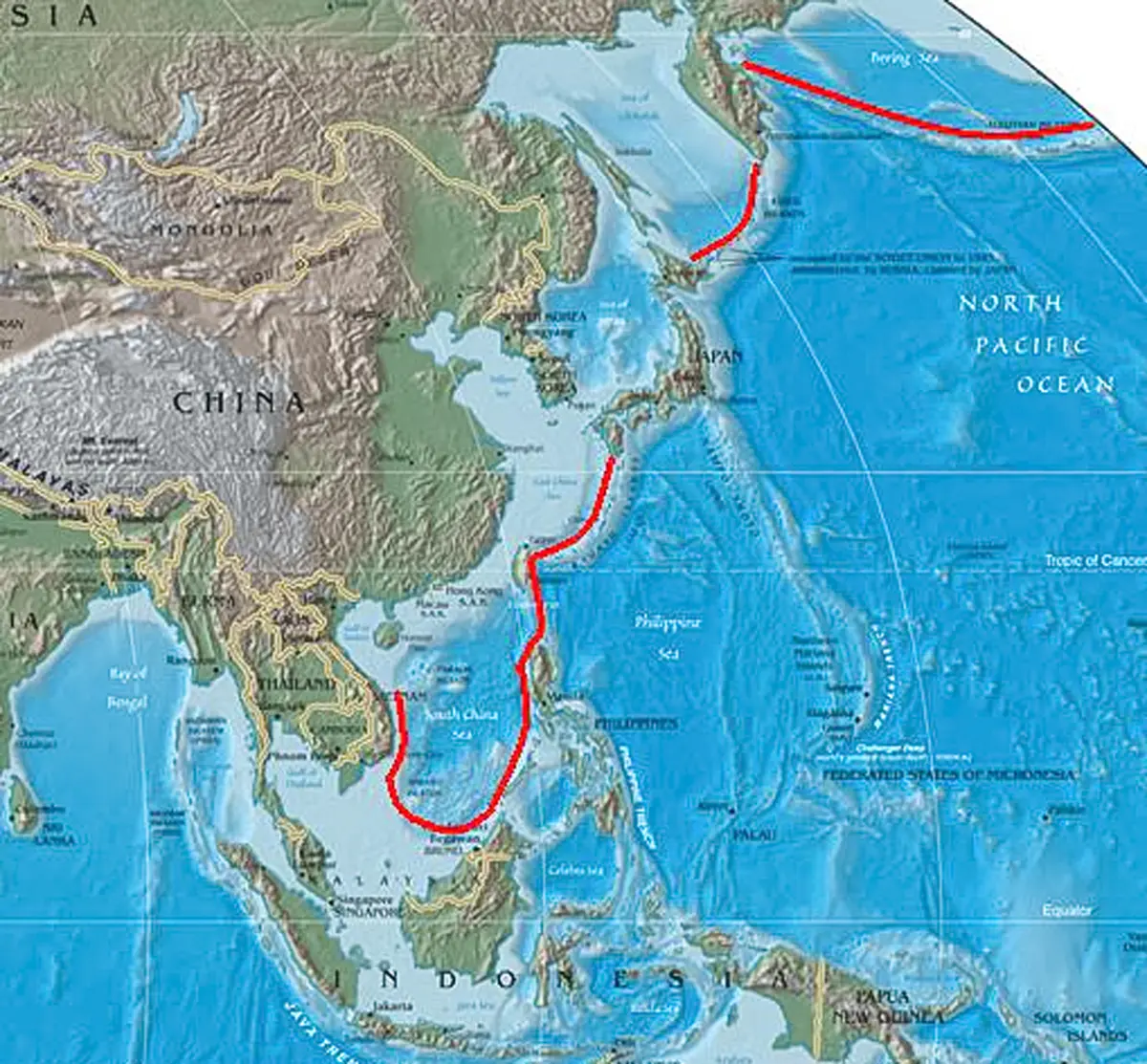
The first island chain generally stretches from Japan through Taiwan and the Philippines.
The second island chain extends farther east and includes the area around Guam, a major U.S. military hub in the Western Pacific.
An insider close to the Chinese military said Beijing has also been increasingly coordinating the activities of its navy, coast guard, and maritime law enforcement.
“Many operations now appear to be search and rescue, counterterrorism, navigation, or maritime law enforcement, but these activities can gradually incorporate the vessels of different countries into operational objectives set by China,” the insider told The Epoch Times.
“The coast guard goes in first to establish a so-called law-enforcement presence, and then the navy pushes the area of activity outward. This exercise is implementing the second step of the plan.”
He said Beijing is developing a system that links routine coast guard inspections and law enforcement with longer-range naval operations.
Expanding Military Ties With Southeast Asia
The exercise with Indonesia is part of a broader expansion of Chinese maritime and military cooperation with Southeast Asian countries.
A Chinese international relations scholar currently based in Japan, surnamed Liu, told The Epoch Times that Beijing is seeking to counter U.S.-led efforts to build a broader regional security network involving countries such as Japan and the Philippines.
China has instead sought closer military cooperation with major Association of Southeast Asian Nations (ASEAN) members, including Indonesia, Singapore and Malaysia, he said.
“China is trying to package itself as a stabilizer for regional security, using differences in interests within ASEAN to win countries over one by one and break through them individually, preventing neighboring countries from forming a united security front to guard against China’s expansion,” Liu said.
“Beijing’s goal is to divide these countries’ positions within America’s Indo-Pacific strategy and weaken the ability of the United States and its allies to form a regional counterbalance against China.”
The Chinese regime has also sought to assert what it describes as its maritime jurisdiction around Taiwan.
At-Sea Replenishment
The inclusion of at-sea replenishment in the China-Indonesia exercise could be particularly significant as Beijing seeks to sustain naval deployments farther from China.
Once Chinese warships move beyond the first island chain and into the Philippine Sea, their ability to remain there for extended periods depends heavily on long-range logistics and replenishment.
An insider from within the Chinese Communist Party (CCP) said the replenishment component indicates that Beijing is working to strengthen the logistical infrastructure needed to extend its military presence farther into the Western Pacific.
“Sending warships out once and maintaining long-term operations are two completely different concepts,” the insider told The Epoch Times.
“To truly push military power toward the second island chain, the first problem to solve is replenishment. Once the ability to replenish at sea catches up, the fleet can remain there for a long time.
“This is equivalent to pushing the logistics line outward together with the operational area.”
In recent years, Chinese aircraft carrier groups and other naval forces have increasingly operated beyond the first island chain, including in the Philippine Sea.
Chinese coast guard and other maritime vessels have also expanded their activities around Taiwan.
The CCP insider said the pattern suggests that Beijing’s ambitions extend beyond simply breaking through the first island chain.
The insider said Beijing is also seeking to link military pressure on Taiwan with its broader strategic expansion into the Western Pacific.
If the waters east of Taiwan and the Philippine Sea become regular operating areas for Chinese forces, he said, Beijing could increase military pressure not only on Taiwan but also on Japan, the Philippines and U.S. forces based in Guam.