Beijing has responded to weak household demand with a five-year plan promoting spending across 28 areas, but the program does not specify measures that directly address insecurity over jobs, housing, medical care, and retirement.
The Chinese communist regime’s official economic statistics have faced decades of credibility questions. Beijing’s figures are typically used to compare the direction of individual indicators—not as independently verified measurements of the economy’s true size. The government’s own data describe weaker household demand and private investment alongside stronger industrial production.
“We cannot know the true number of China’s economic growth,” he said. Gao estimated that actual growth during the preceding two or three years may have averaged around 2 percent, compared with official rates near 5 percent.
Families Save Against Uncertain Future
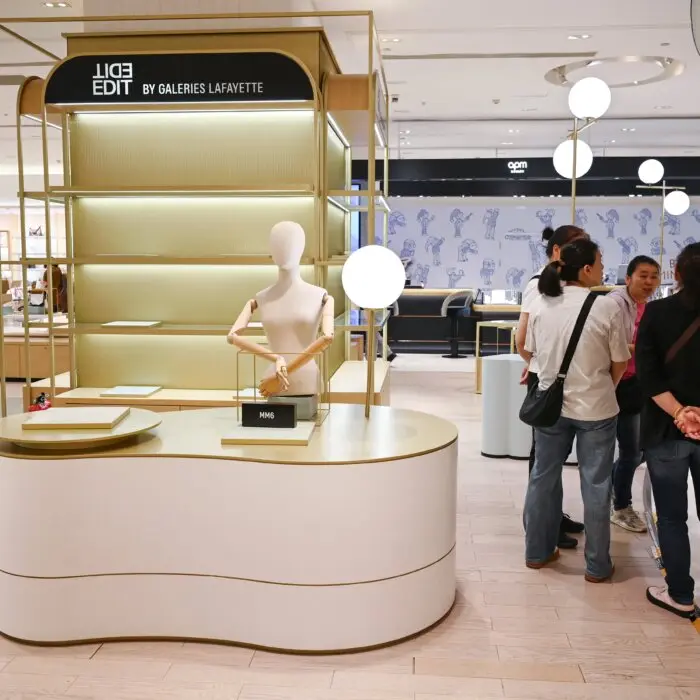
Official retail data showed Chinese consumers continuing to spend on food and clothing while cutting back on cars, appliances, furniture, and home-improvement materials.
Fan Chia-chung, professor of economics at National Taiwan University, described the pattern as consumers trading down: maintaining essential spending while postponing more expensive purchases.
“First, lifetime income has to rise,” Fan told NTD Television, a sister outlet of The Epoch Times, “Second, uncertainty about the future has to fall.”
A worker who fears losing a job will save against unemployment, Fan said. Families facing large medical bills or uncertain retirement support will also keep more money in reserve rather than spend it.
The CCP’s new consumption plan promotes services, tourism, health care, elder care, child care, digital products, automobiles, and other categories. However, it does not specify a major near-term funding package that would reduce employment, medical, or retirement insecurity.
“Uncertainty is a very important factor in consumption decisions,” Fan said. He pointed to Taiwan’s introduction of universal health insurance in 1995, after which, he said, the savings rate fell markedly, and consumption began to increase.
A Broad Chill
Li Daokui, a prominent mainland economist, said China was not experiencing a conventional K-shaped economy, in which one large segment advances while another declines.
The economy had been “cold across the board” for three years, Li said at the 122nd China Macroeconomy Forum seminar on July 11, according to the published account of his remarks.
The relatively stronger industries were too small to pull up the broader economic base, he said.
The government’s own figures also show broad investment weakness. Investment in property, infrastructure, factories, and other long-term projects fell during the first half of the year. Private investment dropped 8.5 percent, while real estate investment fell 18 percent.
Property Losses Weigh on Spending
China’s property downturn adds another source of household insecurity.
New-home sales fell 11.6 percent by floor area and 13.6 percent by value. Funding available to developers dropped 20.2 percent, while new construction starts fell 23.4 percent.
Housing is the primary store of wealth for many Chinese families. Falling prices and uncertainty surrounding unfinished or unsold developments can therefore affect spending far beyond home purchases.
Production Outpaces Domestic Demand
Financial writer He Yang told NTD Television that China’s former growth model relied on property development, infrastructure, foreign capital, and export-oriented manufacturing.
The collapse of the property sector weakened household wealth, developers, local-government land revenue, and demand across related industries, He said.
He also said private entrepreneurs had become increasingly defensive. Business owners who fear that expansion will bring greater political or financial intervention have less reason to invest, innovate, or hire, he said.
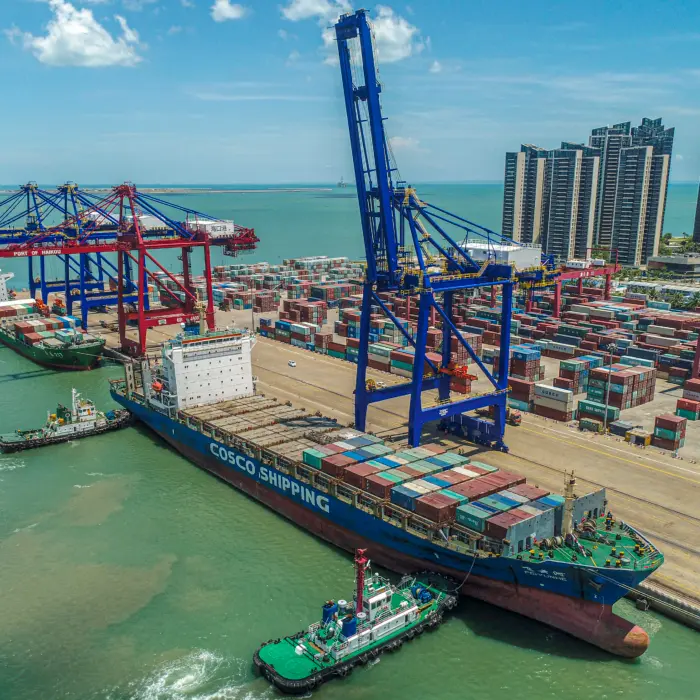
Exports, meanwhile, increased 13.4 percent during the first half, while industrial output grew 5.4 percent. Mechanical and electrical products accounted for nearly two-thirds of exports and rose more than 20 percent.
That combination leaves China producing more manufactured goods while demand from its own households and private businesses remains weak. It also gives Chinese producers greater reason to seek buyers overseas, adding competitive pressure in electronics, machinery, batteries, and automobiles.
Gao had raised a similar concern before his death. He questioned whether Beijing’s repeated interventions formed a coherent recovery program, describing them as opportunistic responses—putting out one fire and then another—rather than a plan addressing the economy’s underlying structure.