China has imposed a temporary ban on helium exports, adding fresh uncertainty to global supplies of a gas essential to semiconductor manufacturing, aerospace, medical equipment, and other high-tech industries.
The July 10 announcement by the Chinese Ministry of Commerce and General Administration of Customs comes as Beijing faces mounting pressure on its own helium supplies following disruptions to imports from Qatar and Russia.
Beijing Announces Temporary Export Ban
The Chinese regime stated that the export restriction was imposed under the country’s Foreign Trade Law. It took effect immediately. The regime did not specify how long the temporary measure would remain in place.Helium is a colorless, odorless, non-toxic inert gas extracted as a byproduct of natural gas processing. Since it cannot be manufactured or replenished, it is considered a strategic resource.
The gas plays a critical role in semiconductor production, in which it is used for wafer cooling, plasma etching, chemical vapor deposition, atomic layer deposition, photolithography support, and leak detection. It is also widely used in medical imaging, aerospace, scientific research, and advanced manufacturing.
Despite expanding domestic production, China still relies heavily on imported helium.
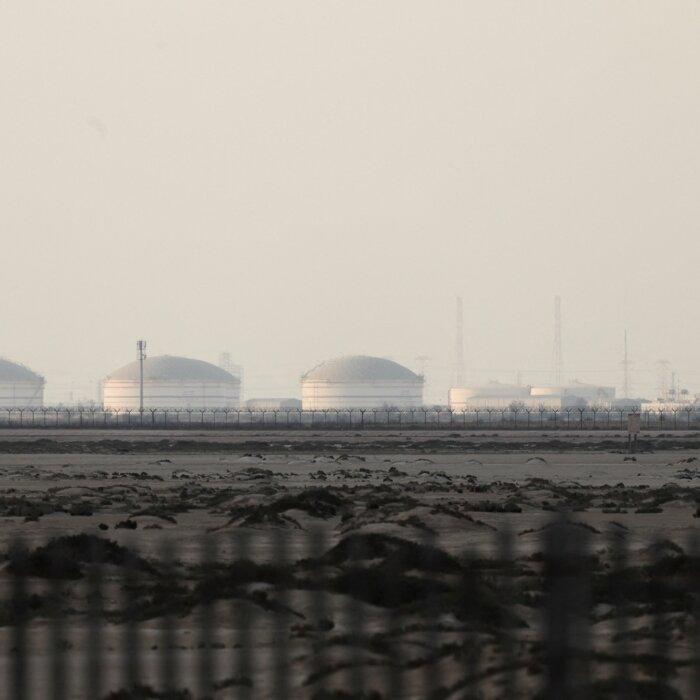
According to industry data from China Fortune Securities, approximately 84 percent of China’s helium supply is dependent on foreign imports, with natural gas producers Qatar and Russia together accounting for nearly half of global helium production. The United States is the world’s largest helium producer, producing more than 40 percent of global production.
China sources roughly 46 percent of its helium imports from Qatar and about 35 percent from Russia. But these import channels have come under increasing pressure this year.
According to a report on Chinese news portal Sina, maritime routes carrying Qatari helium through the Persian Gulf were disrupted amid the Iran war. In April, Russia announced temporary export controls on helium through the end of 2027, reducing export quotas to Asia to roughly 40 percent of 2025 levels. The China Liquefied Natural Gas Association estimated that those developments have created a helium supply shortfall exceeding 60 percent for China.
Cheng Cheng-ping, a professor of finance at Taiwan’s National Yunlin University of Science and Technology, told The Epoch Times that Beijing’s decision appears to be driven largely by domestic supply concerns rather than geopolitical retaliation.
“The timing suggests this is primarily an act of self-preservation,” he said. “It is different from previous export controls on rare earths, which were more directly aimed at the United States.”
“China is engaged in intense competition with the United States in high-end industries but remains behind technologically,” Cheng said. “Restricting exports allows it to retain more resources to support its own advanced manufacturing.”
Shen Ming-shih, a research fellow at Taiwan’s Institute for National Defense and Security Research, told The Epoch Times that several factors likely influenced the decision, but domestic industrial demand appears to be the primary consideration.
China’s Role as a Russian Helium Middleman
While the export restrictions may help preserve domestic supplies, they could also tighten international markets because Chinese companies have become important intermediaries in the global helium trade.According to a June report by U.K.-based industry intelligence firm Gasworld, Western sanctions have largely prevented Russia from exporting helium directly to Europe. Instead, Chinese companies have been importing Russian helium at relatively low prices—often in volumes exceeding China’s own domestic consumption—and re-exporting part of those shipments to overseas markets, including Europe.
Russian helium exports to China averaged 38 million cubic feet per month in 2025, a 60 percent increase from the previous year, according to the report. Shipments reached 71 million cubic feet in December alone.
China’s export ban could further tighten global helium supplies because of the country’s growing role as a redistribution hub for Russian helium.
Cheng said the United States is unlikely to be significantly affected because of its own supplies.
According to the U.S. Geological Survey, the United States accounted for 44 percent of global helium production in 2024, followed by Qatar at 34 percent, Russia at 9 percent, and Algeria at 6 percent.
“The impact will be much greater for Europe and other countries that previously relied on Russian or Qatari helium but increasingly obtained those supplies through China,” Cheng said.
With Russian exports constrained by sanctions and Middle Eastern supplies facing periodic disruptions, China has gained considerable leverage as an intermediary, he said.
“By restricting exports now, China is increasing risks across the global supply chain,” Cheng said.
He noted that Beijing has previously leveraged its position in global supply chains to exert pressure on agricultural imports from Australia, Brazil, and Taiwan.
“Now, helium has become another example,” Cheng said. “China is only an intermediary, but it is using that position as a tool to influence markets and supply chains. Companies trading with authoritarian regimes need to factor these risks into their supply-chain planning.”
Shen said the ultimate impact of the export restrictions will depend on how heavily individual countries rely on Chinese helium exports and whether they can secure alternative suppliers.
European countries may experience greater short-term disruptions, he said, but the move could also encourage importers to diversify their sources and reduce dependence on China.