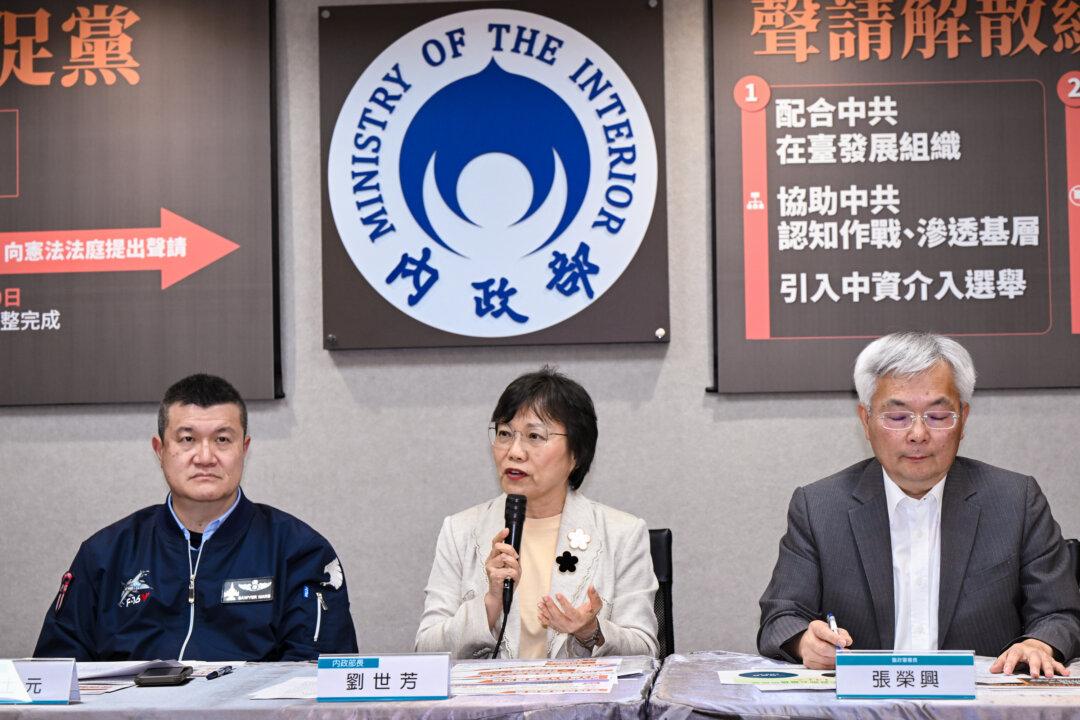
The Chinese Communist Party (CCP) has set an unusually political agenda for its upcoming Fifth Plenum, elevating internal party discipline over the economy in a move that analysts say signals Beijing is preparing for another round of high-level purges.
The CCP Politburo announced after a July 30 meeting that the Fifth Plenum of the 20th Central Committee will convene in Beijing in October. According to state media Xinhua News Agency, the meeting’s primary agenda will be to hear a work report from the Politburo and study “major issues concerning comprehensively and strictly governing the Party.”
The decision marks a sharp departure from the role Fifth Plenums have typically played over the past three decades.
Since the 1990s, CCP Fifth Plenums have generally focused on China’s next five-year economic development plan. While the current “15th Five-Year Plan” was approved ahead of schedule during last year’s Fourth Plenum, this year’s meeting would normally be expected to assess its implementation during the first year of the plan.
Instead, the leadership has shifted the spotlight to Party discipline, which analysts say is a signal that Beijing views political stability as a more pressing concern than China’s struggling economy.
Political Crisis Takes Priority

U.S.-based China affairs commentator and author Chen Pokong told The Epoch Times that the phrase “comprehensively and strictly governing the Party” carries significant political implications.
According to Chen, Chinese leader Xi Jinping is likely preparing to intensify political purges within both the Party and the military as he seeks to consolidate his authority ahead of next year’s 21st National Congress, where he is likely to pursue another term in power.
“He wants to eliminate not only current opposition but also anyone who has opposed him in the past,” he said.
U.S.-based China current affairs commentator Tang Jingyuan, said the decision to make Party governance the meeting’s central theme suggests the CCP may launch another internal “rectification” campaign—a political movement aimed at enforcing ideological loyalty and rooting out perceived dissent.
China’s economy has struggled through years of sluggish growth, weak domestic demand, and deflationary pressure, Tang noted. Yet despite mounting economic challenges, the leadership has chosen not to make economic recovery the centerpiece of the plenum.
“That indicates the Party believes its political crisis has become more urgent than its economic problems,” he said.
Analysts Expect More High-Level Cases
The upcoming plenum could also become the venue for announcing the outcomes of investigations into senior officials swept up in Xi’s latest anti-corruption campaign, Tang noted.
According to The Epoch Times’ preliminary tally, nearly 70 members of the CCP’s Central Committee have been removed or placed under investigation, representing roughly 18 percent of the committee’s membership. That makes it the largest turnover of a single Central Committee since the end of the Cultural Revolution in 1976.
Neither case has seen further official developments in the six months since.
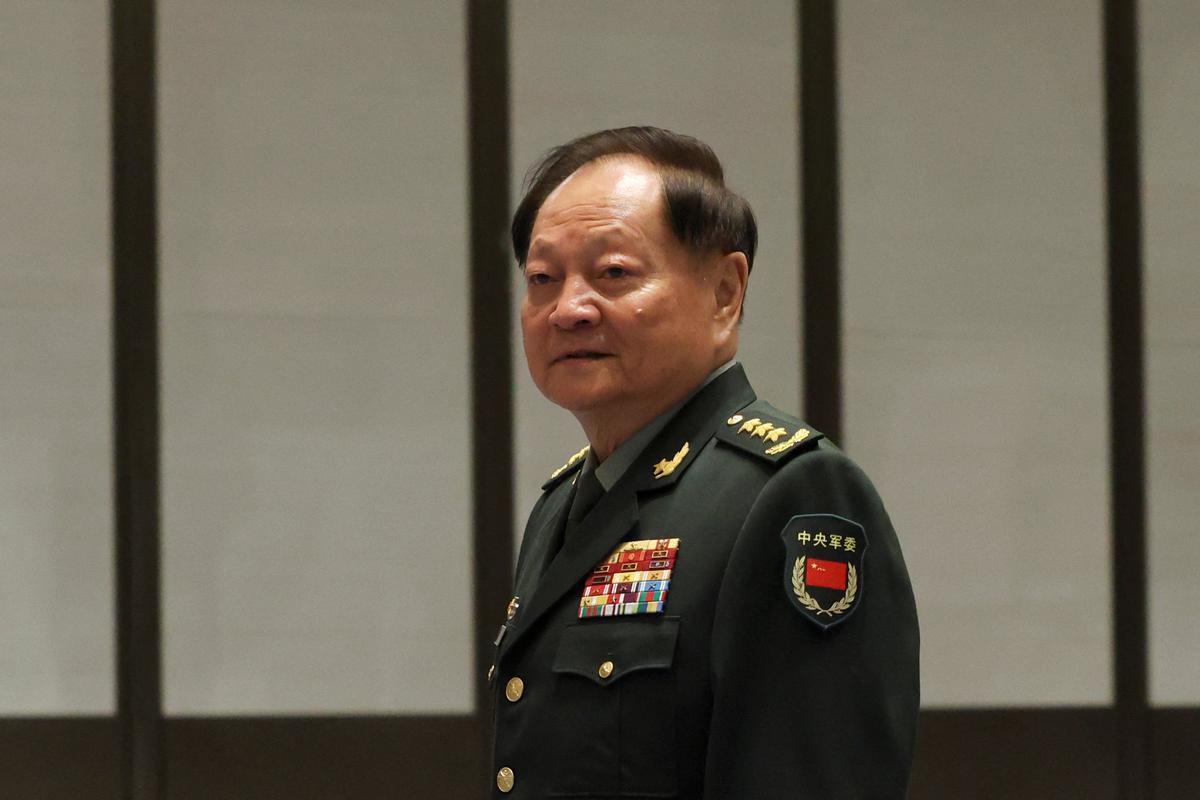
Chen said the Fifth Plenum could unveil dramatic political announcements, including the possibility that Zhang, Liu, and others could be labeled members of an “anti-Party clique.”
Such a move, he said, would serve as a warning to senior officials that Xi retains extensive political leverage over both current and former Party leaders.
Tang said Zhang’s case would normally be expected to receive formal Party handling at the Fifth Plenum.
Political Campaigns Could Further Weigh on Economy
Although the Politburo also reviewed China’s economic conditions during the meeting on July 30, the discussion largely reiterated existing policy priorities.
State-owned Xinhua News Agency reported that officials acknowledged difficulties and challenges facing the economy and pledged to expand domestic demand, optimize supply, and further develop trade in services during the second half of the year.
Chen said Xi has struggled to revive the economy but places greater emphasis on political loyalty than economic performance.
He pointed to recent calls by Politburo Standing Committee member Cai Qi urging officials to adopt what Beijing describes as a “correct view of political achievement”—a message Chen interpreted as signaling that demonstrating political loyalty now outweighs delivering economic growth.
As a result, local officials are increasingly focused on political positioning rather than economic development, he said.
Tang said another Party-wide rectification campaign would inevitably divert officials’ attention away from economic management.
“Officials will devote their energy to ensuring they don’t become targets of the political struggle,” he said. “Their priority will be choosing the right political alignment and protecting themselves, not figuring out how to meet economic targets.”
Hours after the Politburo meeting, Xi chaired a collective study session on military affairs, where he again called for advancing the Party’s anti-corruption campaign, according to state-owned Xinhua News Agency.
Chen argued that Xi’s anti-corruption campaign serves multiple political purposes.
With government finances under pressure, confiscating the assets of disgraced officials provides additional revenue while reinforcing Xi’s public image as an anti-graft leader, he said.
Tang said Xi transformed anti-corruption into a political weapon years ago by using it selectively against rivals.
In recent years, however, many of those caught in the campaign have come from Xi’s own political network, reflecting growing factional struggles within the Party, he said.
Chen said that after Xi consolidated power at the CCP’s 20th National Congress, the subsequent downfall of numerous senior officials from the Central Committee, Politburo, and Central Military Commission exposed shortcomings in Xi’s own personnel decisions.
Rather than acknowledging those failures, Xi has continued to remove his own appointees under the banner of anti-corruption to project an image of impartiality while masking what Chen described as a broader political failure.