Under these changes, a stock could be fast-tracked into the index 15 days after its IPO, from the previous requirement of at least three months.
Hundreds of investment products in the United States track the tech-heavy Nasdaq-100 index, which includes the largest nonfinancial Nasdaq-listed names, such as Alphabet, Amazon, Meta Platforms, and Nvidia.
Combined, the index’s value is approximately $40 trillion.
When funds track the index, they must purchase SpaceX shares, meaning passive investors also gain exposure to the megacap, high-growth stock, whether they want to or not.

“The change forced index funds to purchase billions of dollars of shares regardless of valuation,” Mark Malek, CIO at Siebert Financial, said in a note emailed to The Epoch Times.
“Millions of retirement investors now indirectly own SpaceX through Nasdaq-100 funds and target-date retirement plans. Most received this exposure automatically without making an active investment decision.”
SpaceX has already been added to benchmark indexes run by major providers such as FTSE Russell and MSCI.
But S&P Dow Jones Indices has not revised its methodology, leaving the $2 trillion company ineligible for the broad‑market S&P 500 until it completes the required one‑year seasoning period.
“The S&P 500 deliberately rejected adopting similar fast-track inclusion rules. Its existing profitability, float, and seasoning requirements kept SpaceX out of the index for now,” Malek added.
Despite being one of the largest publicly traded companies in the United States, it will have a smaller weight and influence than its counterparts—for now.
Index methodology takes into account the number of shares available for trading.
Since SpaceX debuted with a tiny float—about 5 percent of its shares are publicly traded—fund exposure will be minimal for the time being.
As lock-up periods expire and more shares become available, SpaceX’s weighting could increase over time.
The next expiration date is on Aug. 11, when 20 percent of shares are unlocked.
SpaceX Stock and the IPO Craze
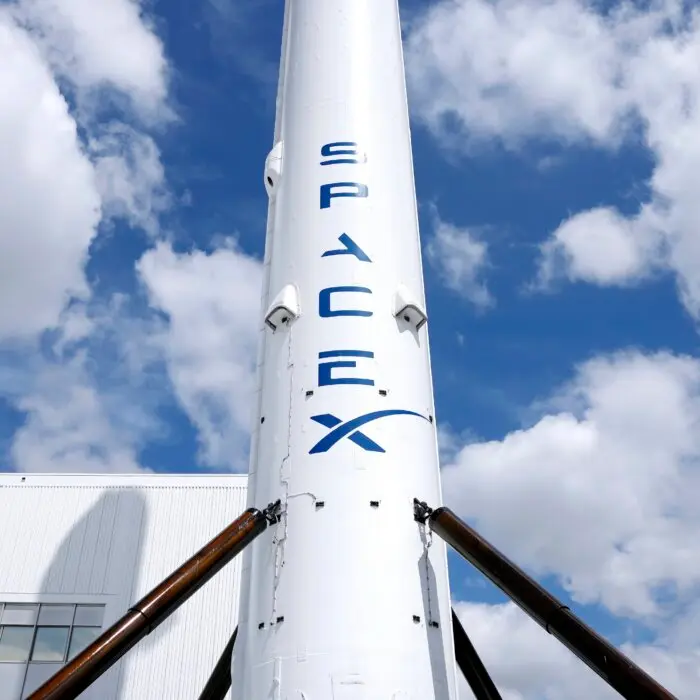
On June 12, SpaceX began trading under the SPCX ticker, with a fixed price of $135 and a target market valuation of $1.77 trillion.
The stock opened at $150 and peaked at nearly $202 on June 16. Shares have erased almost all of their post-IPO gains.
To date, SpaceX stock maintains a “Moderate Buy” rating and a 12-month upside of 41 percent, according to MarketBeat.
For active traders, it might not be “too early” to purchase SpaceX shares, says Nancy Tengler, CEO and CIO at Laffer Tengler Investments.
“I think this is a thematic play because if you believe that space is going to change the way we live, which I believe, then you want to own this name. If you buy it at $150 and it goes to $130, wait a year,” Tengler told The Epoch Times in an emailed note.
Amazon had experienced a decade of little growth, but the stock is up 273,000 percent since its IPO.
“That company changed the way we live. I think you’re going to get that from SpaceX as well,” she said.

Numerous IPOs have delivered massive returns over the past 30 years.
Data compiled by online trading platform Taurex found that early investors in Tesla Motors were the biggest winners.
A $1,000 stake is now worth more than $24,000.
Chipmaker Nvidia debuted in the middle of the dot-com boom in 1999 at a price of $12 per share. The stock has since topped $200.
Investors are on the hunt for IPOs that will generate similar returns, with two artificial intelligence (AI) giants poised to garner the spotlight.
But while they are generating sizable revenues, their costs are also surging. This makes it difficult to determine the value of Anthropic and OpenAI, according to market analysts at Taurex.
“SpaceX is a different kind of bet: it has real contracts, real hardware, and a dominant position in commercial launches,” they wrote.
“But both carry the same fundamental risk that any IPO does: you’re buying a story about the future, and the future has a way of not going as planned.”
Shares of SpaceX fell about 5 percent on July 7.