Investor bets on the U.S. dollar have climbed to their highest level in more than a decade, according to new Commodity Futures Trading Commission data.
The greenback has been the top-performing traditional safe-haven asset since the start of the war in Iran, outperforming gold, Treasury securities, and the Japanese yen. Its rally comes after last year’s post-election and tariff-fueled decline of around 10 percent.
Wall Street sentiment toward the greenback has shifted from bearish to bullish in recent months.
Long speculative positioning in the U.S. dollar among hedge funds and asset managers increased by about $43 billion for the week ending July 21, the highest in 15 years.
Conversely, net short positions slipped last week.
A hawkish Federal Reserve, solid economic performance, surging capital inflows into U.S. assets, and weakness in other currencies have bolstered the chief global reserve currency.
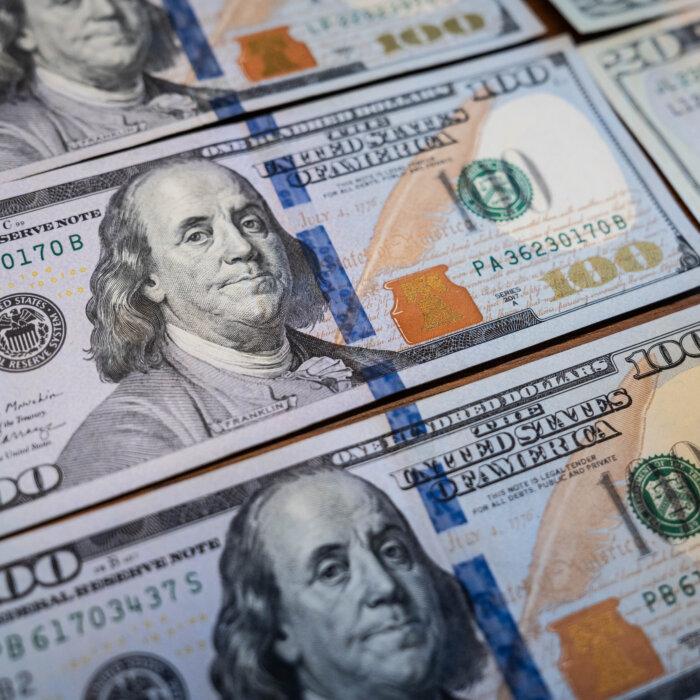
The U.S. Dollar Index—a measure of the greenback against a weighted basket of currencies—is up about 3 percent this year and is at its highest level since early 2025.
The White House’s preferred Nominal Broad Dollar Index, which measures the greenback against the currencies of major trading partners, has also risen about 3 percent since reaching its February bottom.
Year-to-date, the dollar has strengthened by 3 to 4 percent against the euro, the Japanese yen, and the Canadian dollar. It has also posted modest gains against the British pound.
The near-term outlook for the dollar could shift, says Bas Kooijman, CEO and asset manager at DHF Capital.
“A deeper and sustained decline in oil could reinforce disinflationary pressures and curb monetary policy tightening expectations, extending the drag on yields and the dollar,” Kooijman said in an emailed note to The Epoch Times. “Conversely, renewed escalation could revive inflation concerns and drive Treasury yields higher.”
The benchmark 10-year Treasury yield is trading at around 4.6 percent, and the 30-year is firmly above 5 percent. The 2-year yield, which tracks Fed policy, is about 4.2 percent.
Investors have been spooked by war-driven inflation, prompting forecasts of interest rate hikes as early as the September Federal Open Market Committee policy meeting.
On-again, off-again hostilities between the United States and Iran have clouded the inflation outlook, making it challenging for the Fed to commit to a specific policy stance.
While markets are penciling in higher-for-longer interest rates, the 10-year inflation breakeven rate remains well anchored, hanging around 2.2 percent.
It is a vital measure because it reflects investors’ expectations for the average inflation rate over the next decade.
Parallel Times
Overlooked in the dollar’s latest performance has been its parallel to developments in the aftermath of the 2016 presidential election, according to strategists at LPL Financial.
Like last year’s 10 percent drop, the index fell about 8 percent from January 2017 to February 2018. It then rebounded about 9 percent from the bottom until April 2020.
“If the post-2018 playbook is any guide, this breakout could represent the beginning of another sustained move higher,” Adam Turnquist, chief technical strategist for LPL Financial, said in an emailed note to The Epoch Times.
“While the similarities are compelling, context remains important.”
Almost a decade ago, monetary policy was extremely accommodative, and inflation was running below the central bank’s 2 percent target. Today, the Fed has kept policy restrictive, and the institution has struggled to bring inflation back to its target.
“While history rarely repeats exactly, the dollar’s recent price action appears to be rhyming closely with the pattern observed during the Trump 1.0 era,” Turnquist added.
A stronger dollar could undermine the administration’s trade agenda by making U.S. exports more expensive for the rest of the world.
Shipments of American goods have registered back-to-back monthly declines after reaching an all-time high in April. The United States has observed lower exports of industrial supplies, capital goods, and foods, feeds, and beverages.