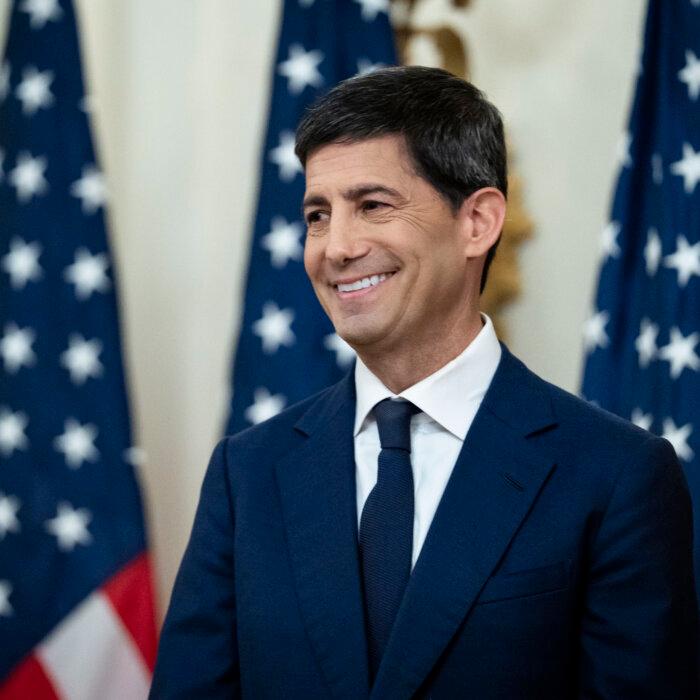
Beginning on July 28, Federal Reserve leadership will be immersed for two days in what Chairman Kevin Warsh has termed a “family fight” over whether to raise interest rates or keep monetary policy unchanged.
Investors widely expect the U.S. central bank to leave its benchmark federal funds rate—a key policy rate that influences business and household borrowing costs—unchanged in the current target range of 3.5 percent to 3.75 percent.
The futures market is betting on a 62 percent chance of no policy change and 38 percent odds of a rate hike, according to the latest CME FedWatch numbers.
This would be the fifth consecutive Federal Open Market Committee meeting at which interest rates were left steady.
The latest data indicate that inflation has slowed as energy markets have stabilized.
A resumption in attacks between the United States and Iran in the Middle East reignited a push in crude oil and gasoline prices this past week. Although a pause in hostilities over the weekend calmed investors, the near-term inflation outlook remains murky.

The 12-month headline inflation rate could ease to 3.4 percent in the July consumer price index report, according to the widely watched Cleveland Fed Inflation Nowcasting Model. Core inflation, which has been tamer, as it strips out the volatile energy and food categories, could slow to 2.5 percent.
The Fed’s preferred inflation measures—the headline and core personal consumption expenditures price indexes—are both expected to remain above 3 percent in July.
“Financial markets will likely focus on the Committee’s assessment of core inflation, since the Fed ended forward guidance after Kevin Warsh became Chair,” Bill Adams, chief U.S. economist at Fifth Third Commercial Bank, said in a note emailed to The Epoch Times. “The policy statement will likely lay out another mixed picture of inflation’s drivers.”
Since rejoining the Fed, Warsh has repeatedly stated a commitment to preventing inflation from remaining above the institution’s 2 percent target—something it has missed for 64 months.
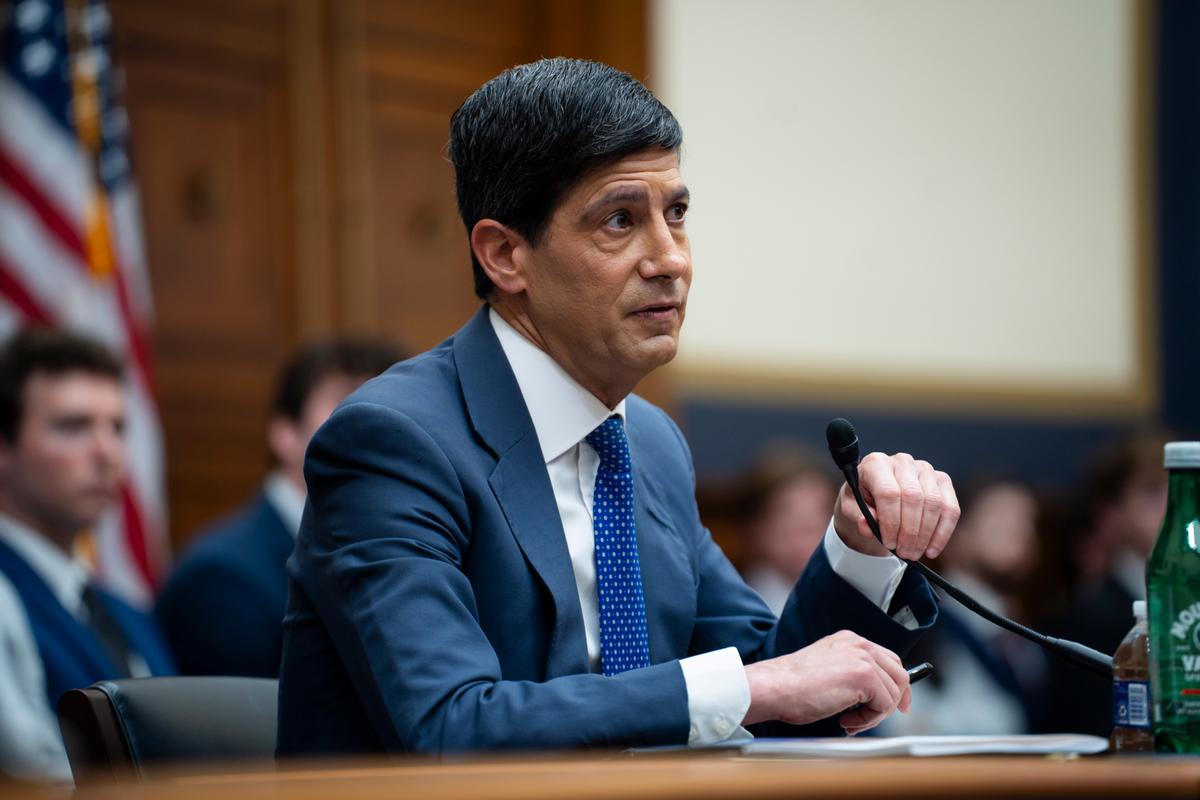
Appearing before Congress for his semiannual monetary policy report, the new central bank leader stated that the Fed will have “no tolerance” for elevated inflation.
Rate hike expectations have been supported by Warsh’s view that the labor market—the other side of the Fed’s dual mandate—remains healthy.
Markets will receive additional commentary from the chairman at the post-meeting press conference at 2:30 p.m. ET on July 29.
Warsh has been reluctant to offer forward guidance, and policymakers may reaffirm their commitment to letting the data drive their decision at upcoming meetings.
“If the Committee or Chair Warsh offer even an inkling of guidance, they likely will indicate that the decision between holding rates steady or hiking in September will be data dependent,” Adams said.
Hawks and Doves Read the Tea Leaves
Investors’ rate forecasts have fluctuated since the start of the war in Iran in late February. Wall Street expects the Warsh-led Fed to tighten monetary policy beginning in September.
As of July 27, the probability of a 25-basis-point increase in September sat at 55 percent. There was also a 26 percent chance of a half-point hike.
Additionally, the U.S. bond market is bracing for at least two rate hikes over the next year.
The two-year Treasury yield, which typically tracks Fed policy expectations, is above 4.32 percent, having risen by almost 1 percentage point over the past five months.
Ultimately, every data point could become a policy trigger for the central bank, according to Mark Malek, chief investment officer at Siebert Financial.
“Those of you who have been waiting for the pivot—positioned for the rate-cut narrative that dominated entering 2026—need to reckon with the possibility that the pivot is now moving in the other direction,” Malek said in an emailed note to The Epoch Times.
Warsh has often said that he and his colleagues will engage in a “family fight.” By the time the Fed meets again in mid-September, the rate-setting committee will have two batches of inflation and employment statistics (July and August) to debate over.
“When the Fed’s doves start talking about rate hikes, investors should stop assuming cuts are inevitable,” Malek said.
Asked on July 27 whether he was worried the Fed might raise interest rates, President Donald Trump said they should instead be lowered. He called Kevin Warsh “fantastic,” but he also said that Warsh has to contend with a “political” board.
“He wants to do the right thing,” Trump told reporters, referring to Warsh.
“Rates should be lowered. This country could be at 8 percent, 9 percent, 10 percent, 12 percent GDP. We should have the lowest interest rate in the world.”