Contemporary culture repeatedly tells us to “listen to our feelings.” If you’re angry, express it; if you’re sad, make room for that feeling, and if something “feels right”—maybe that’s a sign to act on it.
TV shows reinforce the message that “emotions are an inner compass” and the path to authentic living runs through adherence to them. Career advice often includes “following your heart.”
But it’s not only emotions that play a major role in our life—thoughts do, too. We live in an era in which ideas are a currency: tweets, podcast analyses, witty prose flowing endlessly through our feeds. Society encourages us to “think out loud,” to articulate insights with ease and precision, and to constantly bring up personal and collective opinions.
To what extent do these thoughts and feelings truly belong to us? In one of his lectures, psychologist Jordan Peterson invoked the words of famed Swiss psychiatrist Carl Jung: “People don’t have ideas—ideas have people.”
According to Peterson, more than 90 percent of what we think does not originate with us. It comes from our parents, teachers, friends, and the culture we have absorbed over the years. When we speak or think, it is often not “us,” but someone else’s voice speaking through us.
“This is something very important to think about, because then we will begin to notice which ideas we have in our heads and find out where they came from. We will likely discover that the ideas control us the way a marionette is controlled by its puppeteer,” the Canadian psychologist said during a lecture.

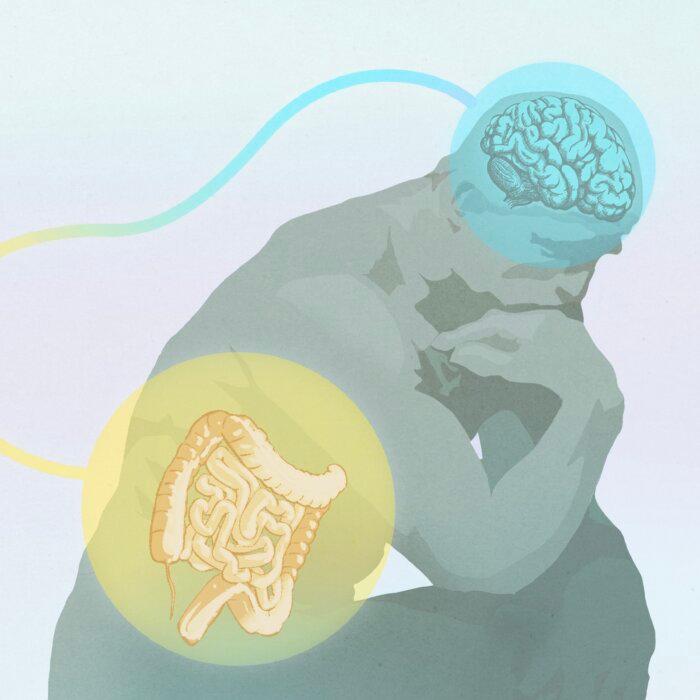
If thoughts are truly our own, why do they often come up uncontrollably, uninvited, and at times even against our will? And why is it so difficult to silence them when we want to?
This is where science offers an answer: the brain’s Default Mode Network. In the early 2000s, researchers at Washington University in St. Louis observed a distinctive phenomenon through fMRI scans: even when we are not engaged in any particular task, certain brain regions remain consistently active.
This pattern was dubbed the Default Mode Network. Neurologist Marcus E. Raichle, a leading figure in the field, found that this network is responsible for three central processes that recur across studies: the generation of a spontaneous stream of associations, self-referential thinking, and the retrieval of memories.

In simpler terms: it fuels our thoughts about the past or future and lets our minds wander freely among ideas. Yet it does not answer the fundamental question: where do these thoughts actually come from?
The Default Mode Network does not conjure thoughts out of thin air; it only orchestrates, connects, and assembles materials that originate in the depths of our psyche and the experiences we have accumulated throughout our lives.
How We Internalize External Voices
In his book “Thinking and Speech,” Russian developmental psychologist Lev Vygotsky said that our inner voice is not born out of nothing. Rather, it is cultivated from external voices we hear from as early as our childhood.
At first, the child uses language to communicate with others—parents, caregivers, and friends. Around the ages of 3 to 7, children begin to speak aloud to themselves during play or problem-solving. Vygotsky called this “egocentric speech”—language that is no longer directed solely at others but also serves to guide the self. For example: “Now I‘ll take this block … and then I’ll build a tower…”
Over time, this egocentric speech falls silent and turns inward. Children no longer need to vocalize it—instead, they “speak inwards.” This is how the inner voice we recognize as thought is born.
However, Vygotsky emphasized that this internal language has a distinctive form: it is abbreviated, condensed, and full of omissions. Instead of thinking the full sentence, such as “I need to take the pencil from the table in order to write,” the internal speech only states “pencil … write.”
The crucial point is that language itself is not a personal invention. Children do not create their own words or syntactic structures; they are learned through interaction with others. Even when speaking out loud to themselves, children are recycling language patterns they had heard around them. The words, the sentences, and even the habit of narrating actions out loud are all rooted in prior social contexts. In other words, the voice in our heads is, first and foremost, an external voice that has been internalized.
Alongside this process, we also internalize the “voice” of our social and moral expectations. Sigmund Freud described this as the “superego”—the part of the personality that develops in childhood through identification with parental authority, and later, with educators and other role models. It is, therefore, unsurprising that many people sometimes experience the voice in their heads as the voice of their parents or other significant authority figures from their past.
Yet even though the inner voice seems to “belong to us” and operates within our mind, we don’t fully control it. Psychoanalysis showed that a substantial portion of mental activities takes place outside of our awareness. Freud formulated this in his famous statement: “The ego is not master in its own house.”
That is, our consciousness does not hold complete sovereignty. There are psychic forces—such as those arising from the unconscious—that shape our thoughts without any conscious command.

Do We Have Free Will?
Because we do not “choose” each and every thought has led researchers to question the nature of free will and the autonomy of thinking.
Psychologist Daniel Wegner, for example, said that the feeling of conscious will is often an illusion: the brain generates thoughts and actions through unconscious processes, and only afterward do we experience the subjective sense that we have willed them, as if we had initiated these thoughts. This view aligns with the aforementioned Freudian insight that unconscious parts of us “speak” and “think” through us.
Wegner, however, did not rely on the Freudian model. Instead, he supported his claims with a series of experiments and empirical evidence from multiple fields. A classic experiment that illuminated this issue was conducted throughout the 1930s–1950s by Canadian neurosurgeon Wilder Penfield.
During brain surgery on fully conscious epilepsy patients (their brains felt no pain), he gently stimulated different areas of the cortex and asked the patients what they experienced. When he stimulated the motor cortex, the patient’s hands, legs, or face would move, sometimes even in complex, coordinated movements that looked entirely voluntary.
Yet the patients themselves reported that the actions were not their own. They said things to the effect of: “You made my hand move; I didn’t want to do that.” The experiment revealed that movements—even complex movements—can be triggered without the subject experiencing them as “voluntary.”
In other words, the feeling of “will” may be an after-the-fact addition—something that has been layered on after the brain has already initiated the action, rather than the cause of it.

Neuroscientist Benjamin Libet’s famous experiment in the 1980s pointed to a similar finding. He asked participants to move a finger at a time of their choosing and to note the exact moment they felt the “intention” to act.
Brain electrical activity measurements showed that the brain had begun preparing the action roughly half a second before the person became conscious of their will to act. In other words, the subjective feeling of “I have just decided” came after the neural process had already begun.
Nevertheless, Libet did not dismiss free will. He noted that although the brain begins preparing the action before the conscious awareness arises, consciousness still appears approximately 200 milliseconds before the movement occurs, creating a brief window in which the action can still be stopped. He called this the “veto right.”
Even if we do not consciously initiate every thought or action, we still retain the ability to prevent them from being carried out.
“The existence of a veto possibility is not in doubt,” he wrote, noting that many participants reported feeling an urge to act, but chose to suppress it.

From a philosophical standpoint, this suggests that our responsibility may not begin with the formation of thoughts themselves, but rather with our ability to stop, regulate, and choose which of them we allow to become actions. This idea aligns with many moral and religious traditions that place greater value on self-control than control over thoughts themselves.
God, Muses, and Devils
Sometimes, the voice or thoughts in our heads can become so intense that they feel entirely foreign to us. In psychopathology, phenomena such as hearing voices (auditory hallucinations) or thought insertion—the experience of having thoughts seemingly “inserted” by an external force—are well documented.
These phenomena are particularly prominent in the context of schizophrenia. But the idea that our thoughts or inner voice might originate from an external source is not limited to pathology; it recurs throughout philosophy, classical literature, and religious writings. Generations of thinkers have grappled with whether reason, inspiration, and intuition are born of the individual or given to us by external forces: God, muses, or other entities.
One of the best-known accounts comes from Socrates.
As Plato described in Dialogues, Socrates claimed that throughout his life, he was accompanied by an inner voice which he called the daimonion. This voice always appeared as a warning and prevented him from taking certain actions, but never commanded him to do anything.
Plato reported on Socrates’ famous defense speech at his trial: “You have heard me speak at sundry times and in diverse places of an oracle or sign which comes to me, and is the divinity which Meletus ridicules in the indictment. This sign, which is a kind of voice, first began to come to me when I was a child; it always forbids but never commands me to do anything which I am going to do. This is what deters me from being a politician. And rightly, as I think. For I am certain, O men of Athens, that if I had engaged in politics, I should have perished long ago, and done no good either to you or to myself.”
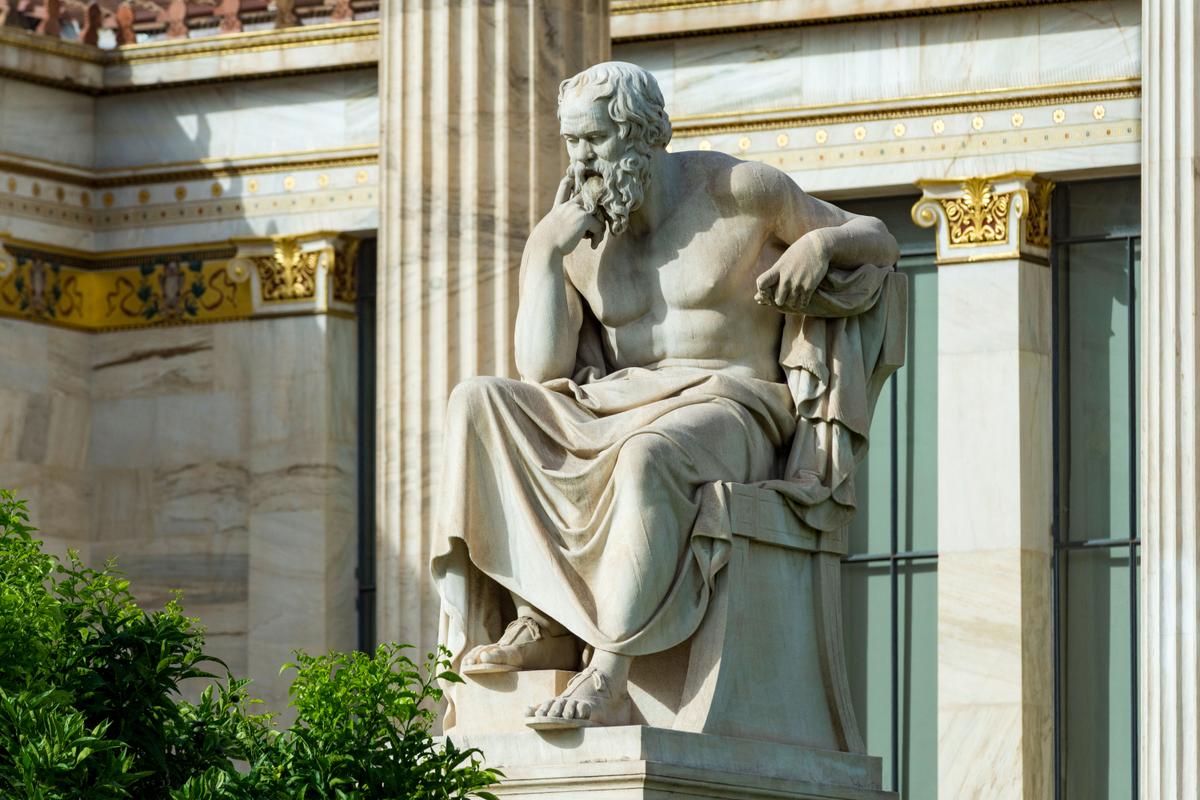
Over the generations, various interpretations of Socrates’ daimonion have been proposed. Platonic philosophers saw in it a divine guardian spirit. Early Christian writers interpreted it as a guardian angel—and at other times, conversely, as a deceiving demon. Others suggested it was nothing more than a poetic description of his conscience or a deep moral intuition. Plato left it open to interpretation.
What is certain, though, is that the experience is real—we hear an inner voice that guides or warns us, whether we understand it to be the workings of moral reason or the embodiment of a divine power.
Socrates himself chose the transcendent interpretation: his voice was not his alone, but an expression of divine presence within him. As early as antiquity, poets and artists were believed to not possess complete control over their ideas; instead, they were guided by muses or divine entities.
Homer’s “Odyssey,” for example, opens with a direct invocation to the muse, asking her to tell the story through the poet. In Plato’s dialogue “Ion,” Socrates developed this idea further: the poet is a link in a chain of divine inspiration: the muse “touches” the poet’s soul, the poet is filled with excitement and sings, passing the message to the audience.
In other words, the poem and the idea are not really the poet’s, but an expression of a divine power working through him. A similar idea appears in biblical tradition. The prophets repeatedly began their prophecies with “And the word of the Lord came to me, saying ... ”
The prophets did not formulate their ideas on their own; they heard the word of God—sometimes as an actual voice (as Moses heard at the burning bush), sometimes as a vision, and sometimes as a subtle inner experience. Centuries later, Russian novelist Fyodor Dostoevsky explored this idea in a grimmer context.
In the novel “The Brothers Karamazov,” the author portrayed a lengthy conversation between Ivan Karamazov, the tormented intellectual, and the Devil. It is unclear whether this is a real demon, a hallucination, or the reflection of a mental illness.
The Devil reveals himself as Ivan’s double, speaking in the voice of his doubts, despair, and mockery, as though the inner voice had taken on a separate form. Ivan cries out: “You are my hallucination. You are the incarnation of myself, but only of one side of me… of my thoughts and feelings, but only the nastiest and stupidest of them. From that point of view you might be of interest to me, if only I had time to waste on you.”
But then the exchange takes a darker turn: the Devil (the inner voice) tells Ivan details that Ivan himself did not consciously know. Ivan is shaken: “This cannot come from me!” The Devil responds with a sharp psychological insight: sometimes in a dream, “I,” your inner voice, can tell you original things you have never known, and yet the Devil is none other than yourself in your dream.
In the novel “Demons,” Dostoevsky develops a similar idea in symbolic terms: revolutionary and godless ideas are described as “demons” penetrating the souls of young people and taking hold of them.
From his perspective, collective ideologies are almost like alien entities—dark spiritual forces that assume the shape of ideas and take up residence in human consciousness.

Pulling Out the Arrow
In a lecture by Eckhart Tolle, a popular spiritual teacher and self-help author, one woman asked him how it could be that she experiences thoughts and emotions, such as jealousy, competitiveness, and fear, that did not feel truly her own. Where do they come from, she wondered, and are they an unavoidable part of life itself?
Tolle responded with a Buddhist anecdote: “The Buddha was asked a similar question, and he answered by means of a parable. Imagine that someone shoots you with an arrow, and it is lodged in your body. Instead of pulling it out, you are busy finding out who shot it, why, and where it came from. The message is that the most important thing is to pull out the arrow, not to investigate its origins.”
Buddhism indeed emphasizes the impermanence of thoughts and the fact that they have no fixed “self.” Meditative practice teaches one to observe thoughts as they appear and disappear in exactly the way they came, without identifying with them.
In this sense, Buddhism offers a third take: thoughts are neither internal nor external—they arise and pass without belonging to any enduring self. Tolle also offered a more modern, metaphysical explanation.
“Many of your thoughts are not truly yours,” he replied to the woman. “They arise from the collective mind—fields of energy or energetic entities that can be thought of as thought-forms floating around us. If one of them resonates with something internal to you—for example, a feeling of negativity—it connects to it and amplifies it. This is how a small irritation can quickly inflate into great anger.”

According to Tolle, what we experience as “our mind” is actually something much broader that exists beyond us yet influences us. Many thoughts are not personal, and the emotions associated with them are not personal either, even though we experience them as such.
“You can see how collective thought-forms took hold of entire peoples,” he said, “as in Soviet communism or Maoism in China, when millions of people thought in the same pattern. In today’s culture as well, collective thoughts are distributed through the media and become nearly unchallengeable basic assumptions. Being unaware of this can be devastating.”
In the end, we may never know “whose” thoughts reside within us. Are they ours, others’, the unconscious’, or the collective mind’s? But when we are able to pause, observe, and ask ourselves where this voice that I am now hearing in my head comes from, we already exhibit a degree of freedom from these thoughts.
Perhaps our freedom lies not in absolute control over our thoughts, but precisely in the ability to recognize them, to choose whether or not to go with them—and to make room for the silence that ensues when we stop chasing after them.
This article was originally published by Epoch Magazine Israel.