In this day and age, we don’t need a war or a security threat to unsettle us. Sometimes, something far less significant will do: 10 minutes of silence. There is no great drama here—only a minor inconvenience, like a grain of sand in a shoe.
Try this simple exercise: turn off your phone, set it face down, and just sit. No scrolling, no reading, no “let me just quickly check something.” Simply be.
After half a minute, thoughts start popping up. After a minute and a half, your hand reaches for the phone on its own. Two minutes in, and it already feels strange, almost unnatural.
We live in a culture that has invented countless ways to avoid boredom—essentially, countless ways to avoid encountering ourselves. We dodge the deep questions and skip past whatever awaits us the moment we turn off the noise.
However, we used to believe that silence allowed a person to connect with something deeper and greater than themselves, something that could not be encountered when everything was moving rapidly. In a world built around a stable framework of meaning—for many, it was God; for others, traditions, or a moral order—silence was perceived as the moment one returned to one’s self in a familiar setting. There was nothing necessarily mysterious about it; it was simply part of life’s natural order, where people knew where they belonged and what guided them.
Today, we tend to dismiss it with excuses: “I don’t have the energy for existential drama,” “these are pointless thoughts,” or simply, “there are more pressing things to do right now.” Silence, which supposedly allows us to turn inward, has become something to avoid—another void we rush to fill before we come face to face with questions we didn’t ask to confront.

What is remarkable is that as far back as the 1930s, long before push notifications and algorithms, a Swiss philosopher by the name of Max Picard already saw this happening. He posited that humanity was engaged in an ongoing project he called “the flight from God”—not from institutional religion, but from what was once understood as the center and depth of life.
Nearly a century later, it is hard not to feel that his diagnosis was written for us.

‘World of the Flight’
Picard was born in 1888 into a Jewish family in Germany. He trained as a physician, only to discover that the human being interested him more than the human body. He left medicine, turned to the study of philosophy, and eventually settled in Switzerland.There, he built a quiet life of writing and contemplation, independent of academia and institutions. In midlife, he drew closer to Catholicism and was baptized; though later in life, he returned to Judaism.
French philosopher Gabriel Marcel was among the first to recognize Picard’s uniqueness. He described him as “one of the most original thinkers of our time.” In Marcel’s view, Picard was not a professor of philosophy in the conventional sense, but rather a modern sage—a man who did not set out to convince people but instead gave voice to feelings that people already sensed deep inside without being able to name them.
Stenico explained that before the modern period—and Picard called the modern world the “World of the Flight”—there existed a world in which faith was the human default. God was not a personal concept but the center around which life was organized—morality, law, time, and community. A person did not need to “choose” faith; they were born into it, just as they were born into a language.
In the modern world, however, the order is reversed. It is no longer the individual who chooses to flee—rather, culture itself pushes people toward flight. Faith has become the exception, and silence, depth, and engagement with big questions require a conscious effort.
Picard wrote that, in the “World of the Flight,” a person is not born so they might fulfill themselves in faith, but rather so that “with birth, something new begins: the Flight. Birth is the leap into the Flight.”
One visible sign of the culture of “Flight” is a constant sense of urgency, as though one must always be rushing somewhere and getting one more thing done. Modern man, Picard wrote, is “always en route,” caught in ceaseless movement that prevents him from pausing for the deep questions. Not because he does not want to, but because rhythm of the cultural itself drives him forward.

Politics, Cinema, Technology
According to Stenico, modern politics is a prime example of the world of “Flight.” It stirs excitement, rage, and anxiety, as if every momentary clash could affect our life. It pulls us in daily and has become the place where we search for justice, identity, and meaning.“For many, politics replaces the search for truth or holiness,” Stenico said.
Picard continued a tradition of thinkers—from Maimonides to Kierkegaard—who saw humanity’s purpose in moral and intellectual development rather than in entrenching oneself within transient news events. In that light, politics can become another form of “flight from God”—flight from questions that are not political at all: What truly matters to me? Who am I? What is the purpose of my life?
Rather than working on our character and spiritual growth, we are drawn into an endless cycle of accusations, defenses, and conflicts. “Instead of creating order and meaning, politics accelerates the chase of momentary and dissolving goals,” Stenico said. In short, rather than calming the waters, it becomes a mechanism that pulls us outside ourselves—a collective escape machine.
“Similarly, Picard also saw in cinema a clear symbol of the ‘World of the Flight,’” Stenico said. “Cinema is fast, flowing, moving. The images change incessantly and reflect what has happened to the modern soul. It creates a parallel world of images that replaces reality rather than deepening it.”
This is a medium that enables one to be swept into another story, another identity. Instead of a world anchored by stable points of reference, cinema presents one in which the heroes pursue money, fame, success, or self-fulfillment again and again; it dangles endless “opportunities”—career, status, excitement, and experience. As Picard wrote, “In this world, there is nothing ‘impossible,’ only that which is ‘not yet possible.’”
And in a world of endless possibilities, thoughts tend to scatter and lose their spiritual center of gravity. They are pulled in every direction, dissolve into the constant movement of the world, and have to be “remade moment by moment,” Picard wrote.
Modern culture, according to Picard, is structured so that we are never left alone—not even for a single moment—to face the deep questions. “The void that is created fills up with production, technology, and entertainment—instead of silence, listening, and presence,” Stenico said.
This mechanism is not necessarily malicious; it is simply highly efficient. It draws us out, so that we do not linger too long over words like “meaning,” “good and evil,” or “truth”—let alone utter the word “God” without immediately wrapping it in a joke.

No Room Left for Love
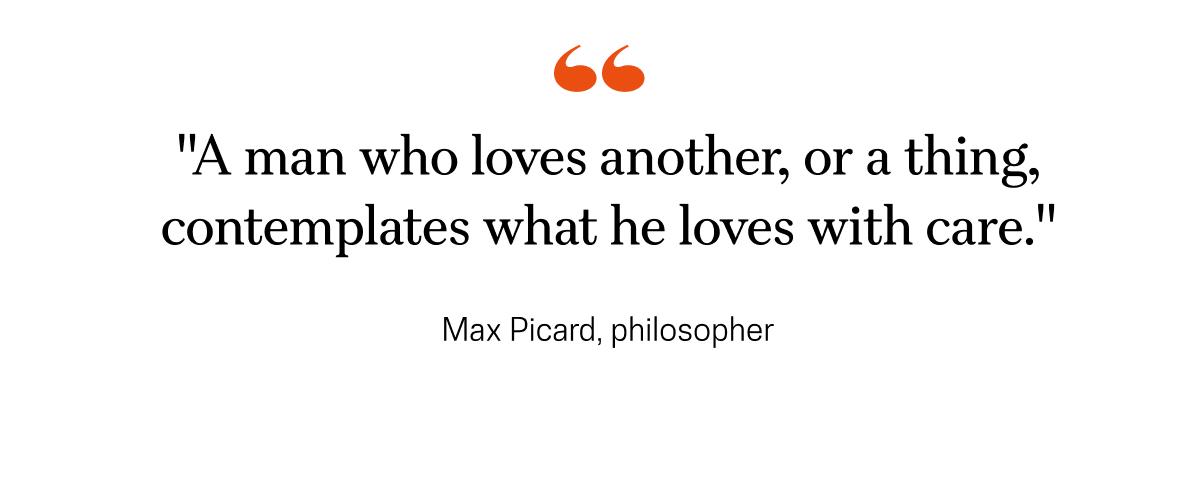
“Picard argued that relationships between people have become instruments of ‘Flight,’” Stenico explained. “They lose the vertical dimension—people no longer see in the other a ‘divine image’ or sacred depth.”Take the example of love. In Picard’s view, love is not merely a burst of energy but a process of contemplation: “A man who loves another, or a thing, contemplates what he loves with care and for a long time, careful to discover in his contemplation if there is a part he has so far neglected to love,” he wrote.
Love requires lingering. It is a slow process of discovery, demanding time, stability, and the capacity to be still.
But in a world where people move without pause—from screens to news to work to new “possibilities”—there is no such span of time. Therefore, Picard observed, many relationships remain external. Not because people do not want love, but because the world no longer provides the conditions in which love can grow and deepen.
People “are together,” he wrote, not to truly meet one another, but to flee together—to Netflix, to the next vacation, to whatever offers momentary relief. “According to Picard, we use others to escape loneliness—not to truly encounter another person,” Stenico said.
Thus, the frameworks within which depth, love, and spirituality grow—marriage, family, and friendship—sometimes become, in the “World of the Flight,” escape mechanisms in themselves. Instead of serving as places of contemplation, stability, and mutual transformation, they become external forms that enable a shared flight from a higher essence.

When History Lost Meaning
“This system [of the Flight] expands,” Picard wrote, “for through its very size, it draws everything into itself.”One of the things drawn into it is the way we understand history. “History is no longer perceived as a deep story but as a sequence of events,” Stenico said. In the past, history was seen as a story written from above; great events, such as victories, defeats, and plagues, were understood as part of a broader order with meaning and intention. Individuals were not authors of history but characters in a drama larger than themselves.
With modernity came new theories: history as the product of instincts and heredity (Charles Darwin), of class struggle and material interests (Karl Marx), or of personal human choices (Ayn Rand). All of these frameworks describe a world propelled forward by human forces—biology, interests, impulses. This, in Picard’s view, is a clear sign of the “World of the Flight”—a world skilled at analysis and explanation, yet increasingly struggles to grasp an overarching meaning.
“In Picard’s view, history becomes a race rather than a sphere of meaning,” Stenico said. “History exists in the sense of headlines and chronology, but it lacks a sense of grounding, memory, tradition, or a perspective that is not subject to constant change. It is a story without roots, one that does not look upward.
“He did not believe the problem lay with science itself, but with scientism—the belief that science can explain everything,” Stenico said. “Science describes laws and relationships but not the overall picture, not the meaning. When science becomes reality’s sole language, depth, holiness, and wonder are lost.”
And so science becomes—through no fault of its own—yet another expression of the “World of the Flight,” a world that knows how to measure everything except the center, the essence.
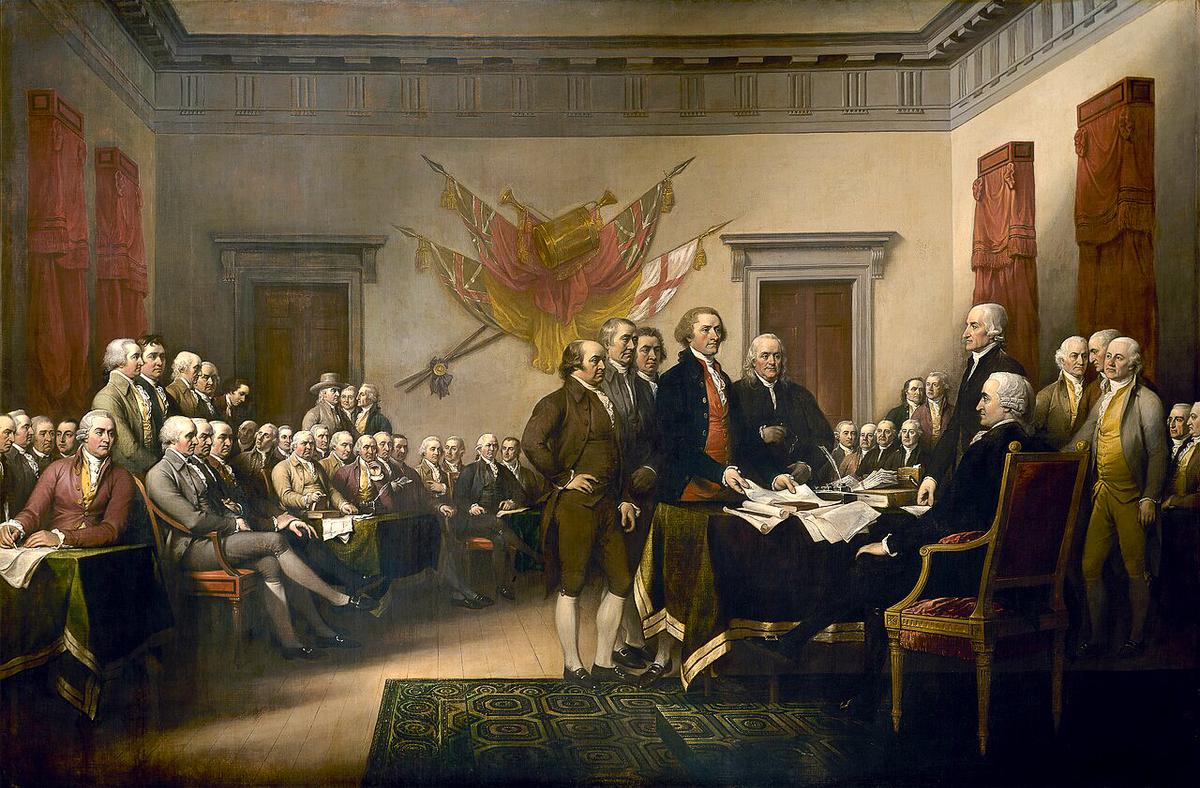
Art, too, Picard said, has suffered the same fate. In the past, art sought to open a window into what lies beyond, the order, and the threshold between the earthly and the heavenly. The artist stood before something greater than himself and tried to capture a line, a radiance, or an echo of it.
In the “World of the Flight,” the direction of the gaze has changed. Art is no longer born from an encounter with the sublime but from an encounter with the self. “The birth of a picture,” Picard wrote, “is no longer accompanied by a special act.” Things lose their outlines, and everything blurs into everything else. Instead of leading toward a divine center, art often becomes another form of movement, dispersion, and flight.
Hope in a World of Flight
Yet Picard’s philosophy of Flight was not intended to dispirit people. On the contrary: he believed that our era contains within it the seed of hope. “The Flight is the falling away of mankind from God,” he wrote, “but it is not an absolute dereliction, for if there are those who flee, there is One who pursues them.”The very existence of the Flight, in his view, shows that something greater continues to call the person back home.
“Picard’s philosophy is a therapeutic one,” Stenico said. “He was first and foremost a physician, and here, he sees the soul of the human being. He offers a path back to presence and the stable foundation that modernity has dismantled. He shows that although a person lives in crisis and constant motion, they do not entirely lose access to the sacred, to the essence.”
Picard called this “the Pursuit”: not a pursuit of compulsion, but of compassion, a gentle voice that continues to accompany the person even as they flee to the most distant of places. Some will call this God; others will call it conscience, an inner truth, or that small stillness that appears suddenly as a moment of revelation. Picard reminds us that a person is not entirely lost within the Flight—something still calls out to them.