Is the American Dream still alive? Readers displayed mixed feelings in a July 23 poll by The Epoch Times.
On one hand, three-quarters of respondents (77 percent) said they felt more confident about the U.S. economy now than they did two months ago and believed it would continue to improve this year. Eight in 10 believed that hard work still leads to a better life in America.
On the other hand, respondents in nearly equal numbers expressed some level of concern about the cost of living (79 percent), the prospect of home ownership (75 percent), and the level of federal debt and spending (84 percent).
On the key question—will the next generation have better opportunities than Americans today?—readers were indecisive.
Just one quarter had any confidence the situation would improve for their children and grandchildren, and 40 percent were either neutral or didn’t know.
A plurality (43 percent) professed little or no faith that the next generation would find greater opportunity than today.



Demographic Gaps on Economy
How readers felt about the economy correlated somewhat to their age, political affiliation, and, to a lesser degree, their gender.Generally, men and women had similar views on the economy, usually separated by no more than two or three percentage points on any question.
However, women were slightly more pessimistic on financial matters, more often saying they were “very much” concerned about economic issues at a higher rate than were men. That gap was 5 percent or more on questions about the cost of living, the prospect of home ownership, and the rewards of hard work.
That gap reversed and widened on the matter of federal spending and the national debt. There, men were far more likely to be very much concerned (70 percent) than were women (60 percent).
Asked to name their greatest concern, 33 percent of men named the federal debt compared to 21 percent of women. However, government accountability was the biggest issue for both genders, 45 percent for women and 40 percent for men.
Respondents under age 35 were more pessimistic about economic issues than were older respondents.
The sharpest divide, 39 percentage points, was on the rewards of working hard.
Only about a quarter of younger folk (26 percent) were convinced that hard work leads to a better life these days. Nearly two-thirds of those 65 and older (65 percent) very much believed it does.
Those aged 36 to 64 generally scored between other groups on economic questions, but closer to the older readers.
Democrats were much more likely to be very much concerned about the cost of living (73 percent) than were Republicans (47 percent) or Independents (52 percent). And Republicans were far more likely to be very much more confident about the economy now (54 percent) than were Democrats (11 percent).
The political divide narrowed significantly on other questions. The spread dropped to 26 percentage points, whether or not home ownership is becoming out of reach.
Concerning the federal debt and spending, the gap between Democrats and Republicans who were either somewhat or very much concerned was within 3 points (82 percent to 85 percent). For independents, that number was slightly higher (87 percent).

For Context—
Home ownership is less affordable now than five years ago. The median price of a home in the United States topped $400,000 in June, a record high.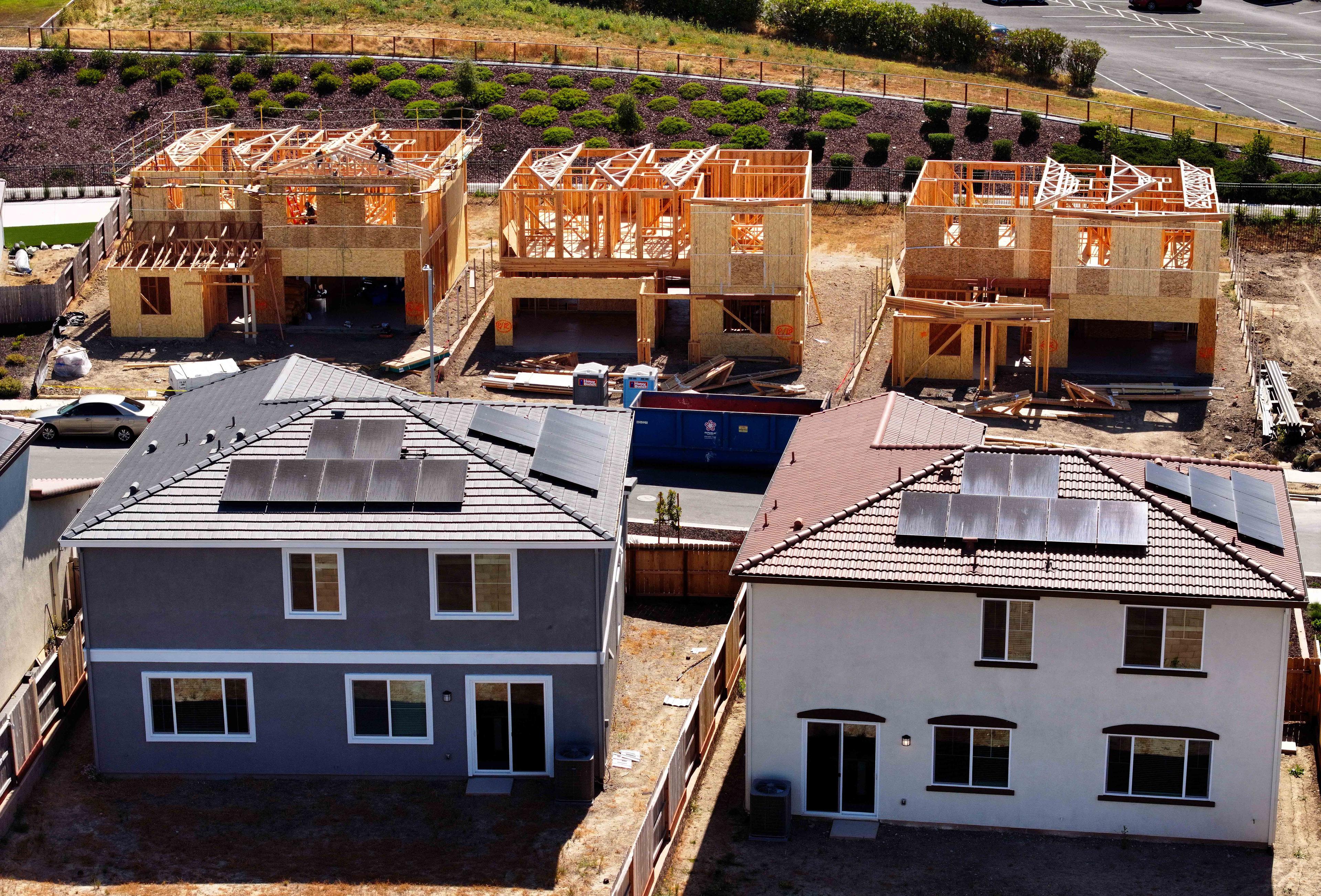
Readers Said—
“It is embarrassing that the kids of today cannot afford a home or raise a family affordably.”“I would love to see cost-of-living increases, or bring down the high cost of living.”
“We have to get inflation under control. A new car used to be a third of the average annual salary. A home was the cost of one year’s annual salary, now it is four times the average annual salary.”
Shared Mistrust of Government and Media
Readers found something to agree on in mistrust of the government and media.A whopping 95 percent said major news outlets were becoming more biased, and 88 percent were concerned about the political and cultural divide in the country.
Eighty-nine percent believed these divisions had affected Congress’s ability to face major challenges.
Nearly all, 92 percent, lacked confidence that public officials are held accountable for wrongdoing.
The agreement largely held across all demographic lines.
More than two-thirds of Democrats and Republicans (70 percent, 68 percent) and nearly three-quarters of Independents (74 percent) did not believe that public officials are held accountable for wrongdoing.
Men and women in nearly equal numbers (89 percent and 90 percent) believe somewhat or very much that partisan divisions are weakening the government’s ability to handle major challenges.
Readers Said—
“I would like to see single issue bills introduced instead of mega bills with hidden agendas inserted.”“Judges need to enforce the laws that are on the books. No breaks for politicians, stars, or athletes. One justice system for all, fairly adjudicated for all.”
“Change the current administration to one that is transparent, honest, and has the American people’s best interest at heart.”
“I think we’re in big trouble, and there are too many entities working against the current administration’s efforts to cure the problems!”
“Networks need to hire better reporters, not activists.”