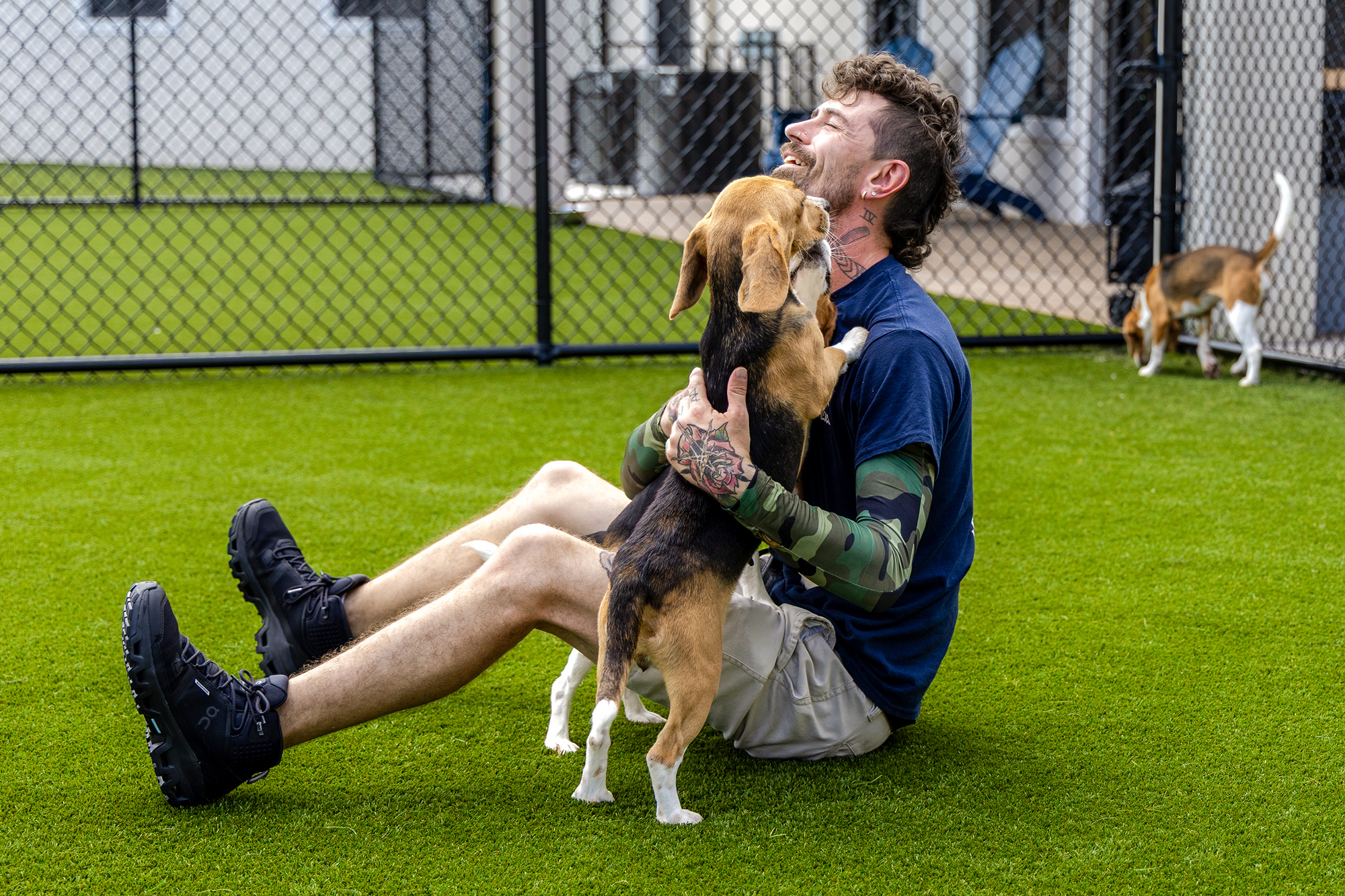
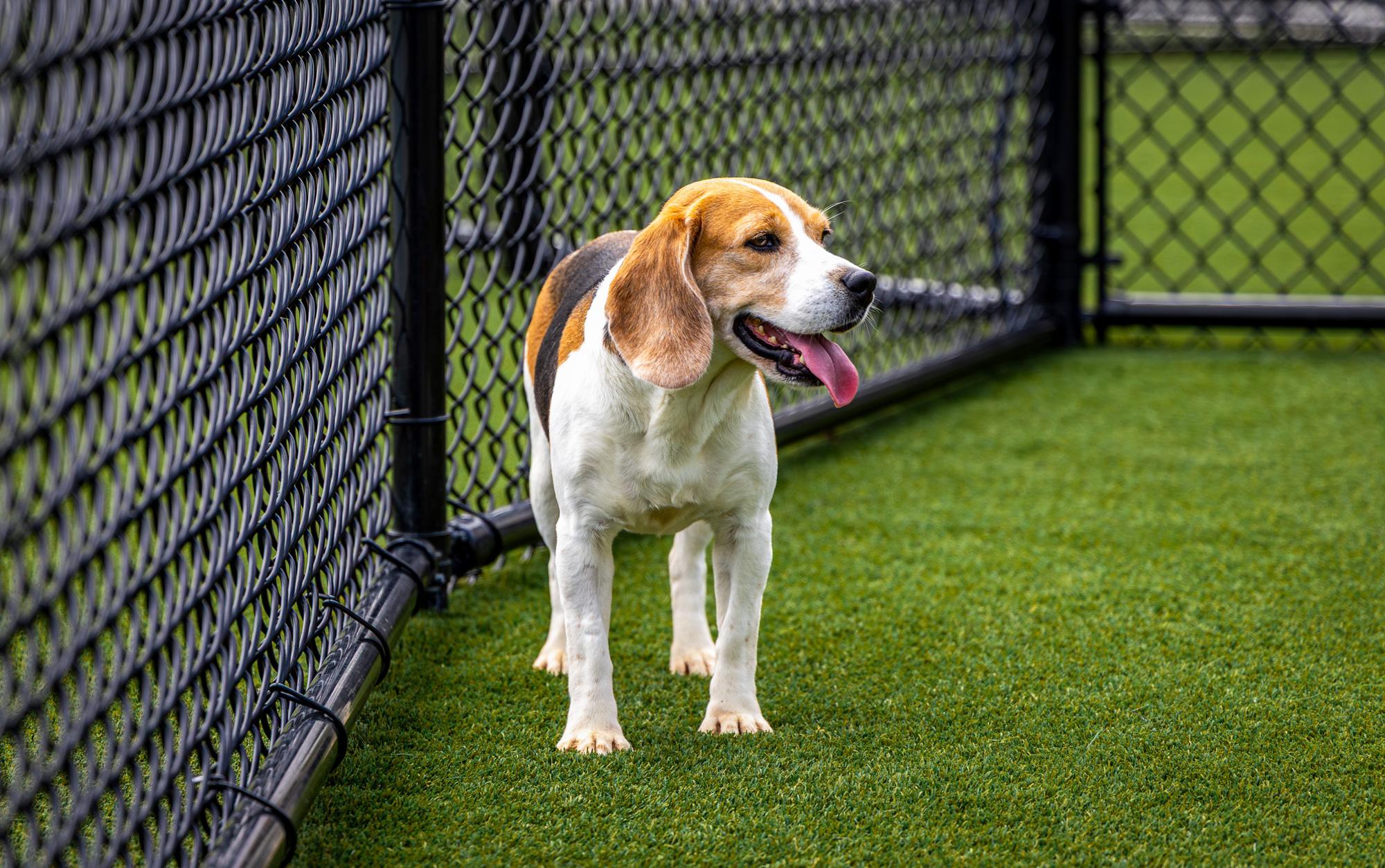
LOXAHATCHEE GROVES, Fla.—A dozen tan-black-and-white beagles romp and sniff inquisitively, tails wagging, paws padding over pristine artificial turf, noses exploring every inch of a shade-covered play yard.
Before May, these dogs and nearly 2,200 like them knew only the inside of stacked metal cages at a Wisconsin facility producing puppies for research labs.
The beagles—a breed developed for hunting and known as gentle, loyal pets—never experienced sunshine, never felt grass under their soft paws. The unusually docile dogs are used in research because of their consistently sweet temperament, even when experiencing “torture,” experts told The Epoch Times.
But life is changing for them now.
Before the operation to free them, the beagles of Ridglan Farms in Blue Mounds, Wisconsin, walked and slept on wire mesh. They produced litter after litter of puppies, bound not for outside adventures and homes filled with love, but for research facility cages to be used in medical testing.
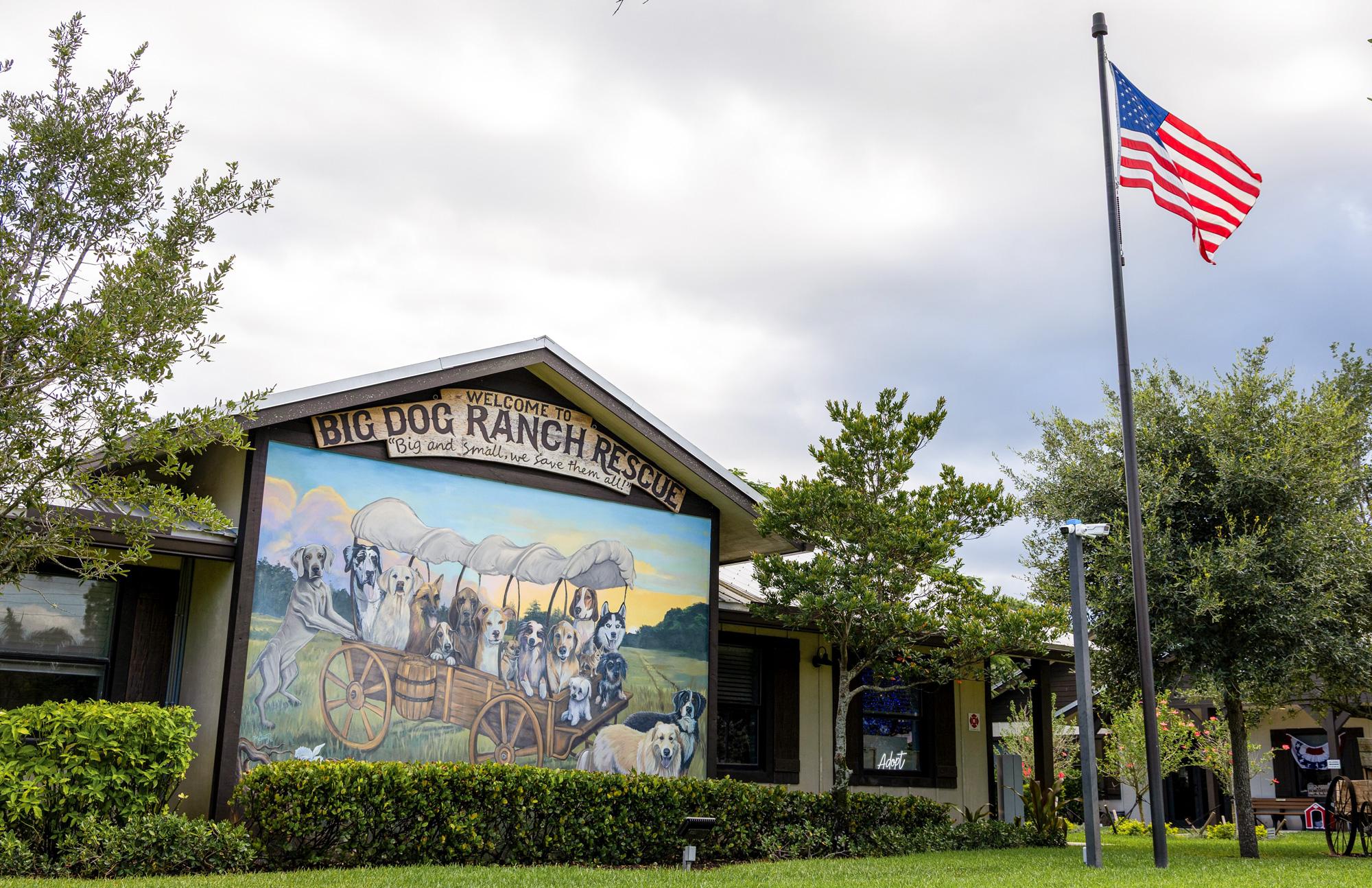
The negotiation involved critical pressure applied by the Trump administration’s newly formed animal cruelty task force, said Evan Nader of Big Dog Ranch Rescue, the beagle operation’s lead organizer.
The task force is led by Agriculture Secretary Brooke Rollins and Health and Human Services Secretary Robert F. Kennedy, Jr.
“No one’s done more for dog welfare than the Trump administration,” Nader said. “But there’s still more work to be done.”
Ridglan Farms did not respond to requests from The Epoch Times for comment. The company website states that “no credible evidence of animal abuse, cruelty, mistreatment or neglect at Ridglan Farms has ever been presented or substantiated.”
Journey to a New Life
Since May, beagles relinquished by Ridglan Farms have flooded animal rescues around the country.Meanwhile, Big Dog Ranch Rescue has identified beagle breeders in New York and England as its next targets, said Nader, the South Florida organization’s vice president of development.
It’s too late to spring the tens of thousands of beagles already owned by universities and pharmaceutical companies, Nader told The Epoch Times. Legally, those pups are considered private property, and performing tests on them is legal.
But the steady supply of beagle puppies isn’t needed anymore.
Federal laws passed in recent years have removed longstanding requirements to test drugs in development on animals before human trials.
Now, researchers can use alternatives such as human cell-based testing and computer modeling, instead of caged dogs and other animals.
Nader hopes that will make it possible to “save more dogs from senseless animal testing.”
Breeding dogs for use in research labs “is global,” he said. “This is not unique to just the United States.”
And the people behind Big Dog Ranch Rescue won’t stop, Nader said, until all remaining puppies-to-research pipelines are dismantled.
Their next target, said rescue founder Lauree Simmons, is Marshall BioResources in North Rose, New York. They believe there are about 22,000 dogs at the upstate facility that provides “Marshall beagles” for lab research.
Marshall BioResources said that number “is substantially overstated,” but declined to “share specifics,” in responding by email to a request for comment from The Epoch Times.
The 86-year-old company also provides cats and ferrets to clients for use in testing.
“Marshall provides humane and ethical care for our animals,” the company said in its statement.
“Enclosures provide space for exercise and social interaction, caregivers interact with the animals daily, and our kennels are spot cleaned every day and completely sanitized biweekly. Our animals’ health is monitored by trained professionals and on-site veterinary staff.
Transformed
Since May, Big Dog Ranch Rescue staffers and volunteers have welcomed more than 600 of the freed beagles to the facility a little west of West Palm Beach. Some rode there from across the country in cars. Some rode in private planes piloted by rescue supporters, Nader said.
The rescue plans to retrieve the last of about 150 of the Ridglan Farms beagles—all puppies—in mid-August, Simmons said. The 33-acre campus houses up to 800 dogs.
When the first beagles arrived, ribs showed through tawny coats. Wary, chocolate-colored eyes flashed with fear. The beagles often backed into corners of rooms where they were housed in small groups, Nader said.
But with every kindness shown to them, a transformation began.
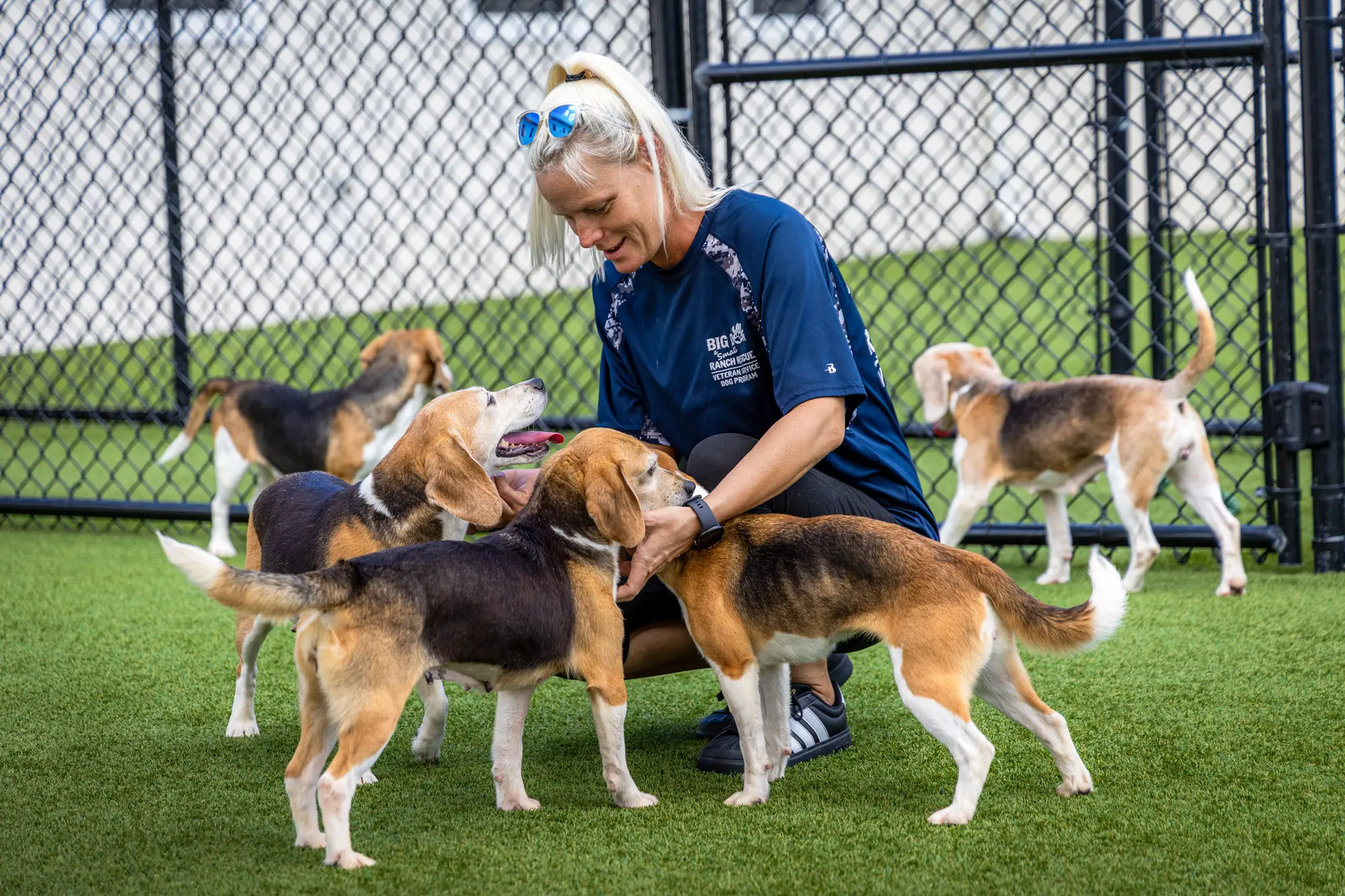
Eyes brightened. Tails wagged. The dogs began to relax, explore ... and play. Hundreds of volunteers and staffers gently helped them gain confidence in their unfamiliar surroundings.
They quickly got over the surprise of touching grass for the first time, feeling sunshine on their backs, lapping water from bowls instead of licking dripping dispensers, and discovering that humans can be kind.
There’s not always a symphony of yelps in their play yards. Many—not all—have had their vocal cords cut, Nader said. Cordectomies often are performed on lab dogs to stifle barking.
Since May, the rescue has placed about 400 of the beagles in homes with screened applicants.
One by one, those dogs now carry around their first toys, dash after balls in their first games of fetch, and snuggle into their first cuddles on couches.
These moments are happening by the hundreds across the United States as other rescues assist with the rehoming mission.
By the end of June, Big Dog Ranch Rescue had received about 7,000 requests from people hoping to adopt.

And daily, the staff of 250 and hundreds of volunteers work to prepare the beagles for life as pets, Nader said.
They show them that life outside a cage is good. And veterinarians at the facility address any health concerns and perform as many as 40 sterilization surgeries a day to get them ready for adoption. All of the beagles will be spayed or neutered before leaving the facility.
Adoption fees for dogs range from $100 for dogs older than 7 to up to $750 for purebred puppies. The fee covers pre-adoption healthcare, take-home supplies, and more. Every beagle also leaves with a Fi GPS-tracking collar because of the breed’s penchant for escaping yards to roam.
“All the money we raise goes right back to these beautiful dogs and our facilities, too,” Nader said.
He beams when asked whether he thinks every beagle will get a home.
“One thousand percent,” he said. “Every single one of them.”
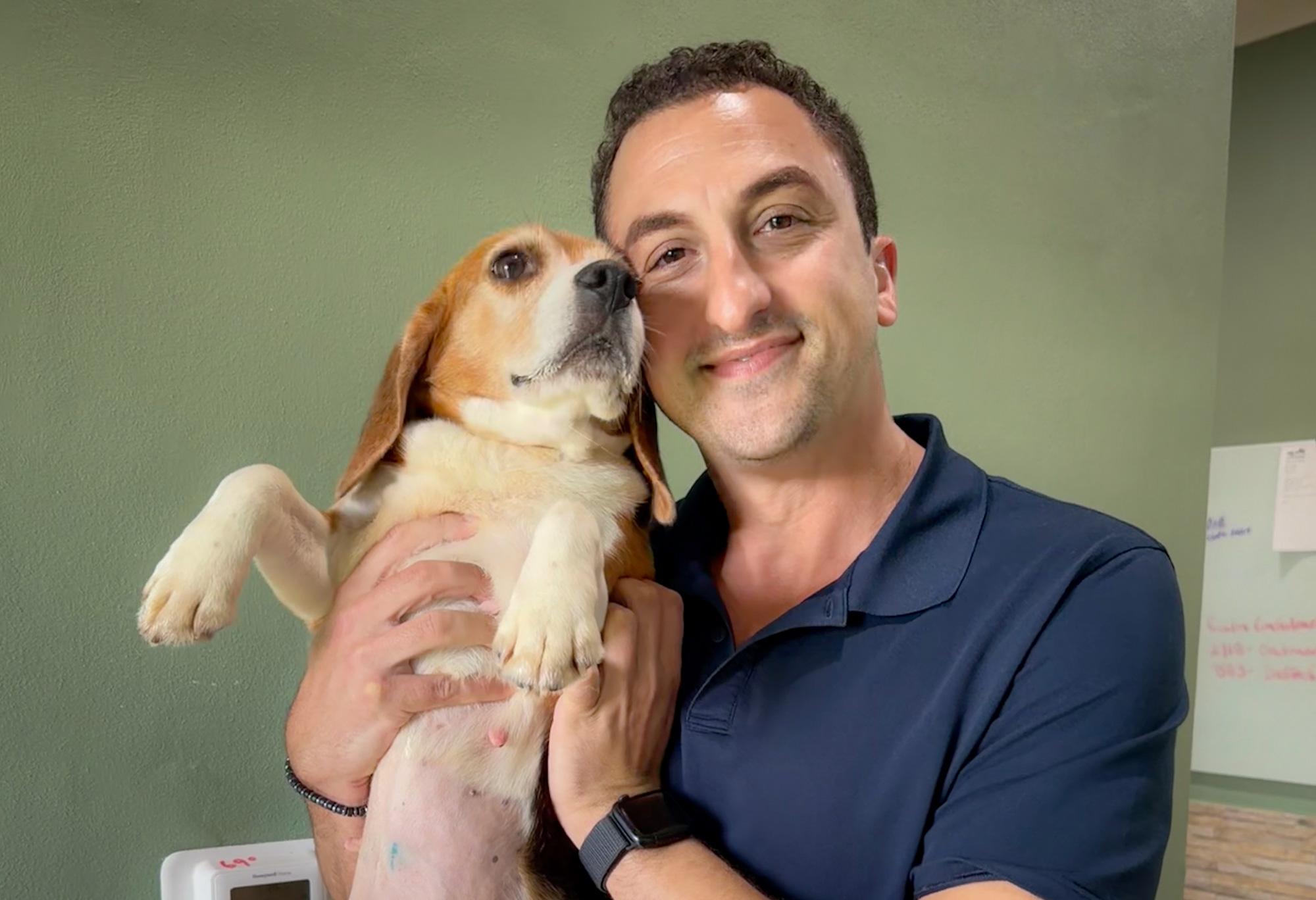
The answer is heartbreaking, dog expert Michael Gould told The Epoch Times.
He’s a founding member of the New York Police Department’s K-9 unit and is president of Hounds Town Charities, which rehabilitates and trains abandoned or unwanted animals.
“Lab animals are selected or bred for compliance, not scientific relevance,” Gould said. “The entire reason beagles are selected for research is the same reason they make perfect household pets—they are trusting, nonaggressive, and generally don’t bite even when exposed to pain.”
But even dogs who have only known life in a cage can become wonderful pets, Gould said.
“These aren’t damaged dogs,” he said. They’ve just “never met the outside world.”
“Simple truth: Dogs live in the moment. Dogs don’t worry about yesterday or ponder the future.
“These beagles were selected for research because they never stopped trusting humans, even when given every reason not to. Find them the right home, and they will spend the rest of their lives proving my point.”
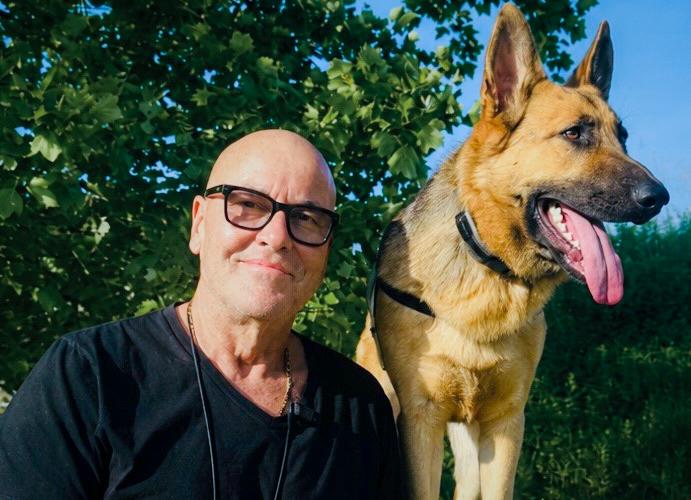
Nader, who spends his days around abandoned dogs of many different breeds, agrees.
‘Good Girl’
A decade ago, Melissa Duncan and her husband grieved the loss of one beloved elderly dog after another until all four of their pets had passed away.In one year, their hearts broke four times, and never quite healed, Duncan said.
Then, in October, her husband passed, too. With him gone, she didn’t even want to sleep in her own bed anymore. She fell asleep on the couch night after night.
But hearing about the beagles’ plight from a friend triggered something. Duncan felt ready to open her heart again.
In early June, she applied to adopt through Big Dog Ranch Rescue. A few weeks later, a staffer invited her to make an appointment to choose a dog.

A trusted friend made the three-hour drive to South Florida with her. And when they rolled onto the manicured campus, Duncan spied a group of beagles playing in the sunshine.

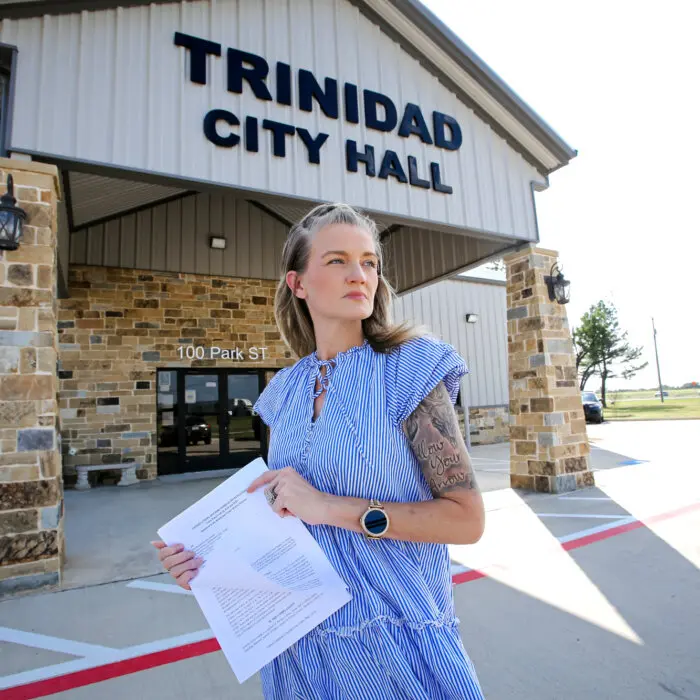

One, a young female with a velvety coat and sad eyes, stood at the fence looking out—looking at her.
Inside, as she waited to meet the dogs selected as potential matches for her, Duncan wondered how she’d know the “right” dog. Then a door opened, and a staffer carried in the little female she’d seen outside. Her name: Lady.
Duncan knew right away.
“She’s the one,” she said with a smile.
Cradling year-old Lady in her arms, she explained that she didn’t need to see any other dogs. Lady had found her second chance, her forever home.
With paperwork quickly completed, Duncan carried Lady outside and gently placed her new companion on a pink dog bed in the back seat of her car, wondering aloud if she should ride in the back with her.
“She’s a good girl,” she said, stroking the pup.
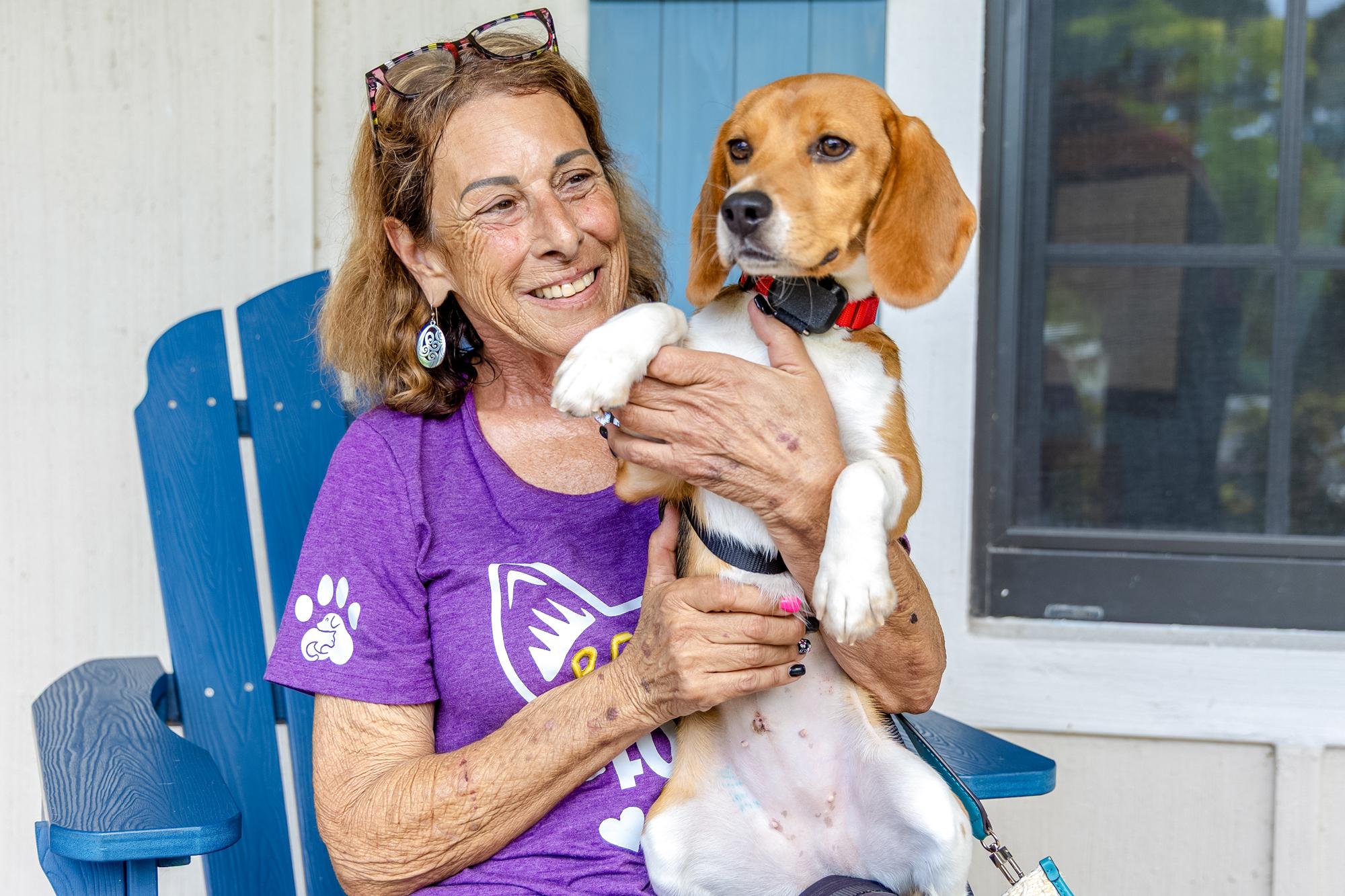
A week later, Duncan shared pictures of Lady like a proud grandmother.
Lady doesn’t love car rides. She’s scared of shadows. She’s having a hard time winning the affection of an elderly cat Duncan calls “an old grump.” And during her first bath, she leaped out of the tub and streaked through the house.
The beagles “just need a little time,” Duncan said.
Lady now bounds outside for walks on a leash and is excelling at “potty training.” She now sleeps through the night without making a peep.
She chews on her new toys like an old pro. Her favorite: a large, colorful, stuffed monkey that she drags through the house.
“She loves that thing—it’s bigger than her,” Duncan said.