For so many around the world, this city’s name is synonymous with a dream come true. You might be saying “Honolulu,” but when you do, people are thinking “paradise.”
Arrival
Daniel K. Inouye International Airport (HNL) is named for Hawaii’s longest-serving senator, who, incredibly, held a seat in the upper chamber of Congress for half a century. It was built in 1927 as the first full-service airport in the state and once had the longest runway in the world. Before jet technology improved to the point at which planes could fly all the way across the Pacific, HNL served as a refueling stop for flights bound for Asia (or on the way back). Thus, in the 1950s, this was the third-busiest airport in the United States.Today, Honolulu’s airport still serves as a gateway to Asia and a hub for Hawaiian Airlines. HNL is also serviced by most major North American carriers, connecting the island of Oahu, Hawaii, to cities across the continent. And in the other direction, both Hawaiian and Asian flag bearers fly nonstop routes to Tokyo; Seoul, South Korea; Sydney; Melbourne, Australia; Manila, Philippines; Auckland, New Zealand; and beyond. (Plus, of course, flights to neighboring islands, including Maui and Kauai.)
Morning
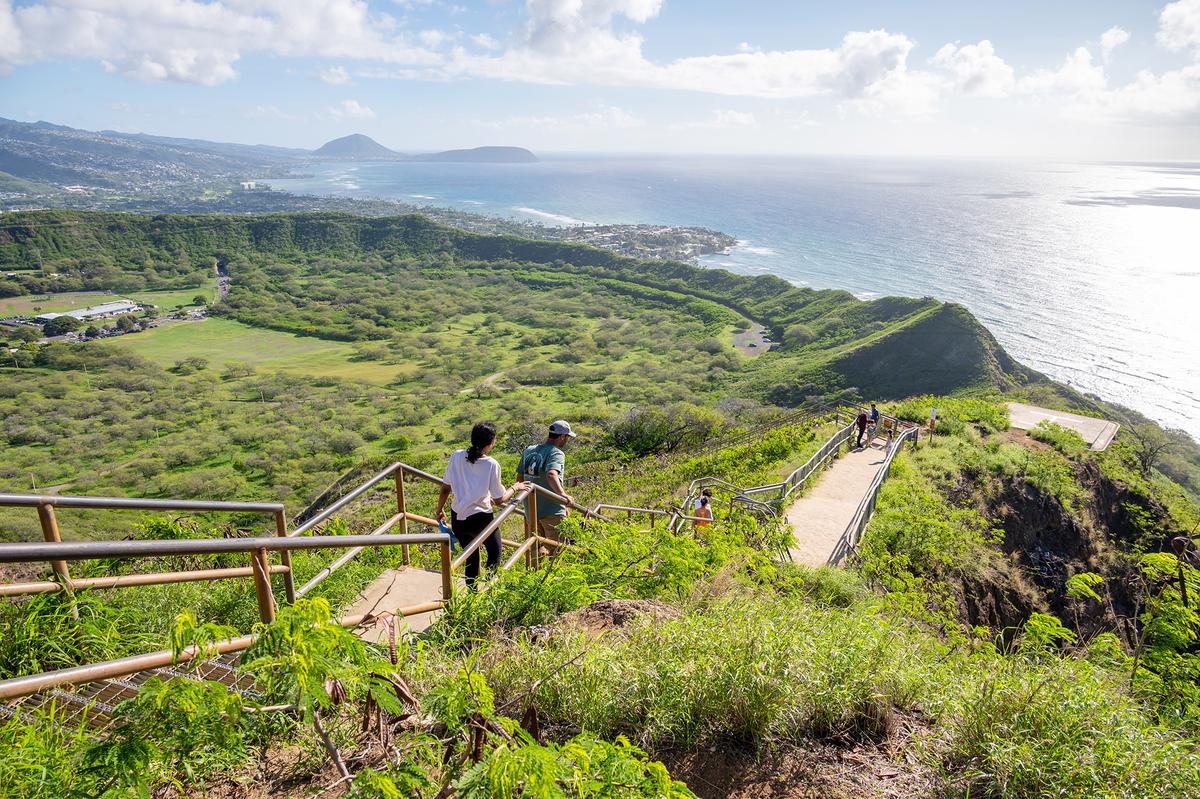
Ready to really stretch your legs? After a long flight out into the middle of the Pacific, the perfect wake-up is a big hike up the slopes of Diamond Head. This is Hawaii’s most recognizable landmark, a state monument and a National Natural Landmark.The trek to the highest point of this volcanic tuff cone is one of the most popular tourist hikes on Oahu. But while the path is well-kept, with paved stairs, don’t underestimate it. Wear good shoes, bring plenty of water, and allow sufficient time to enjoy the 1.6-mile round trip. There and back will take about 1 1/2 to two hours.
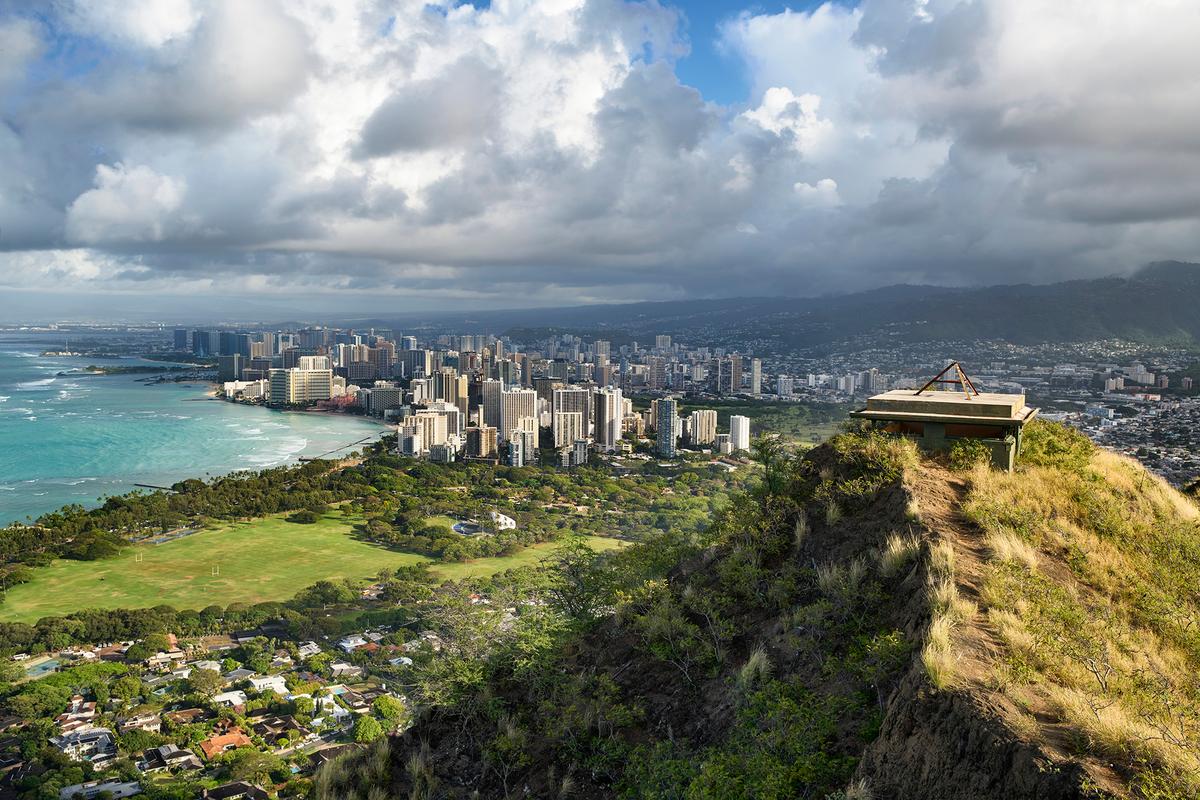
But you’ll want to tarry at the top. The whole of this dynamic city spreads out below. Take photos. Feel the breeze. It’s just the perfect introduction to this place you’re about to explore more fully.
Once back at the base, hop into an Uber. Yes, it’s about 20 minutes (or more) back in the direction of the airport, depending on traffic. But you’ll be close to the first major stop of the afternoon.
Unlike many major cities, Honolulu’s downtown was, for a long time, not a destination. The area has a checkered past, serving as a red-light district during World War II and, more recently, grappling with issues related to crime and homelessness. But anyone will tell you that the heart of Honolulu, sometimes known as “DoHo,” is on the rise.
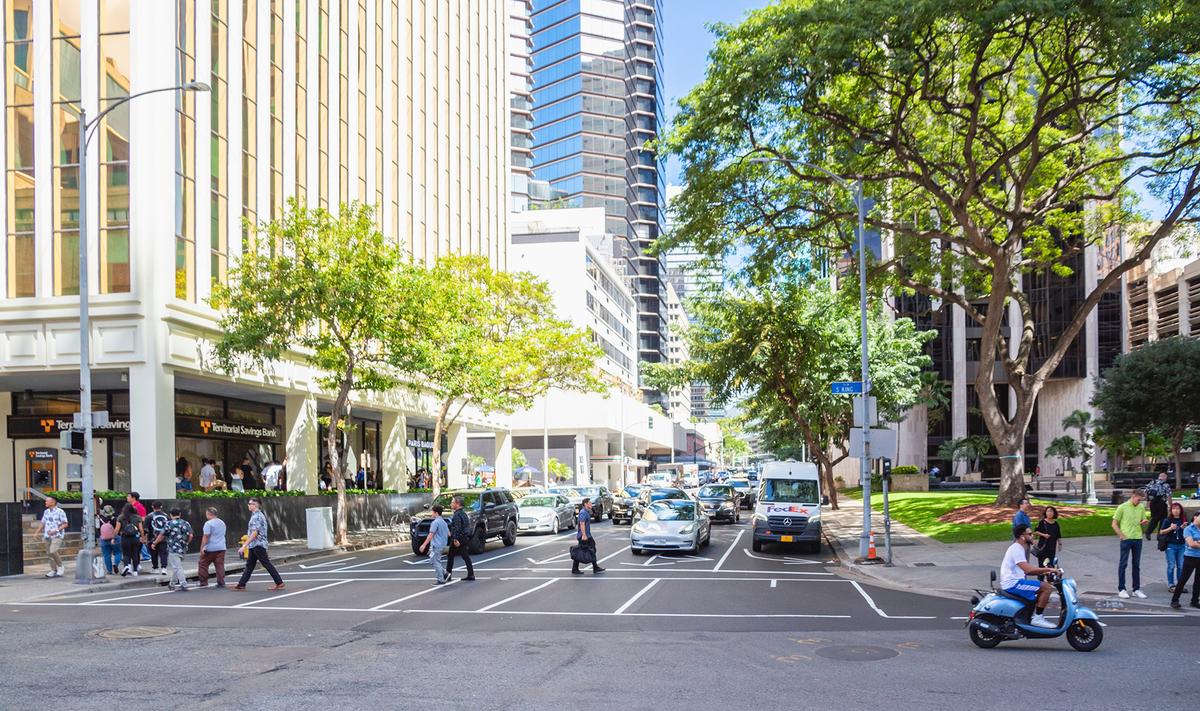
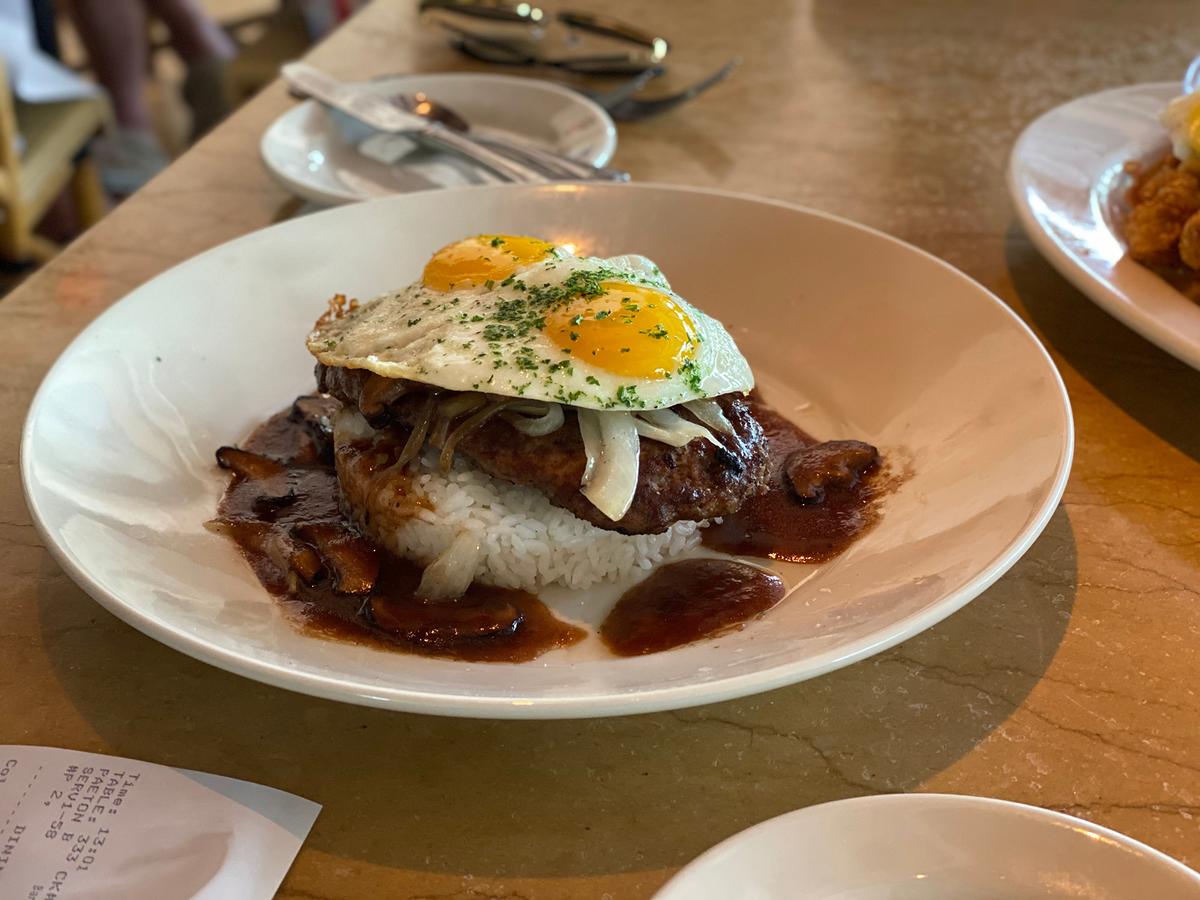
Investors are pumping in billions of dollars, and long-term plans aim to improve pedestrian access and even connect downtown to the airport by rail. Today, all sorts of creative types have moved in. The streets are lined with boutiques and flower shops and cafes and artist studios and locally owned restaurants. Browse around, then settle down for an early-ish lunch at one of the latter.
Afternoon
As every student of U.S. history knows, Dec. 7, 1941, is “a date that will live in infamy,” according to President Franklin D. Roosevelt. The Japanese military launched a surprise strike on the U.S. fleet anchored at Pearl Harbor. It sank battleships and killed thousands of people. The United States had been neutral until that point but declared war the next day.Today, a visit to the Pearl Harbor National Memorial is a somber, if compelling, affair. Book ahead online. After watching a film that outlines important background information, ride a boat out to the site of the USS Arizona. Boats leave every 15 minutes at peak times and sail out to the site where 1,177 men lost their lives.
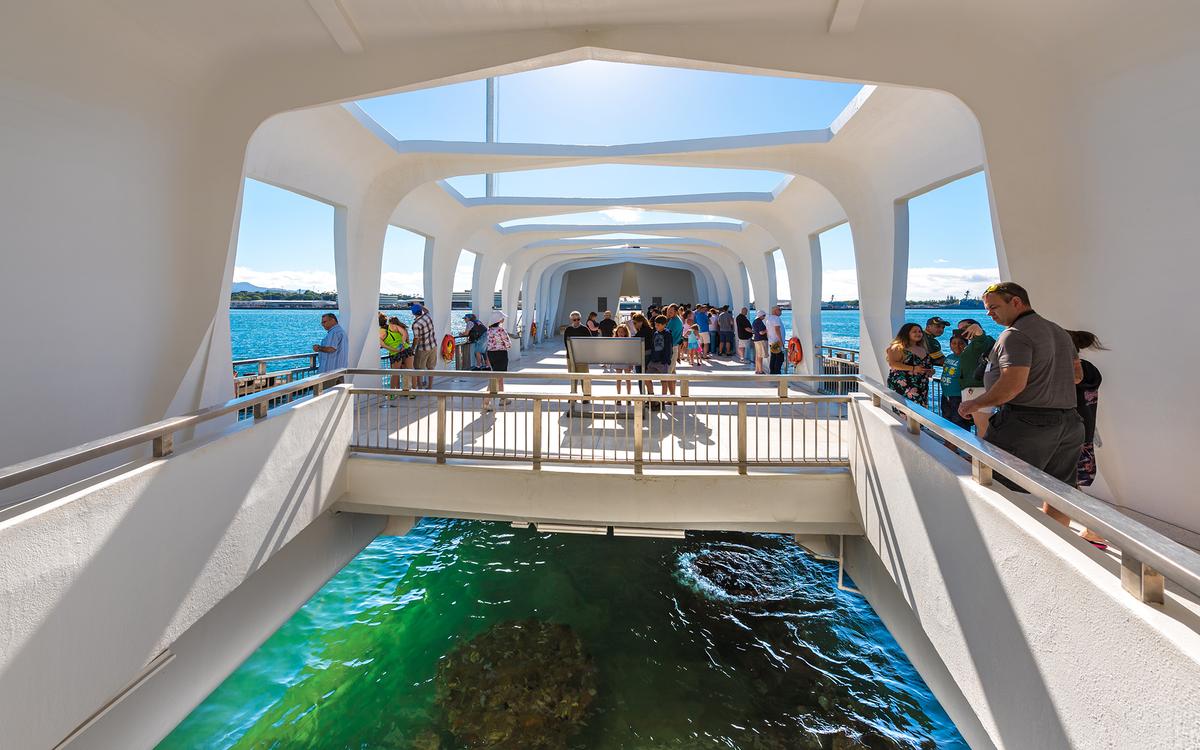
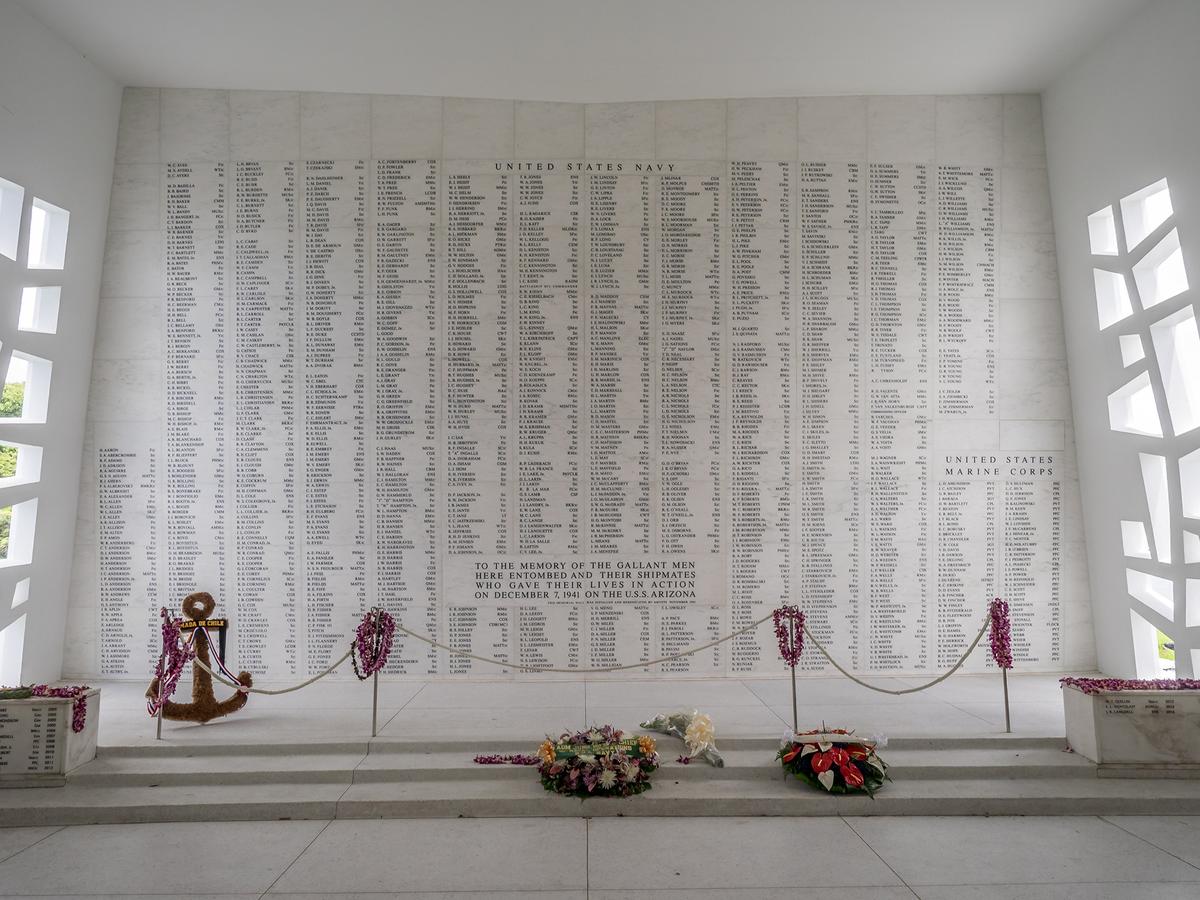
The Arizona was struck by four Japanese bombs. One ignited ammunition on board the ship, sparking a huge fire. About 900 bodies of those who perished aboard the USS Arizona remain inside and are considered “buried at sea.”
The whole experience takes about 90 minutes, but don’t rush away. Back on shore, the site offers several other museums to tour. These include the USS Bowfin, a submarine you can walk through from the visitor’s center. Plus, there’s a memorial to the USS Oklahoma and an excellent aviation museum.
Evening
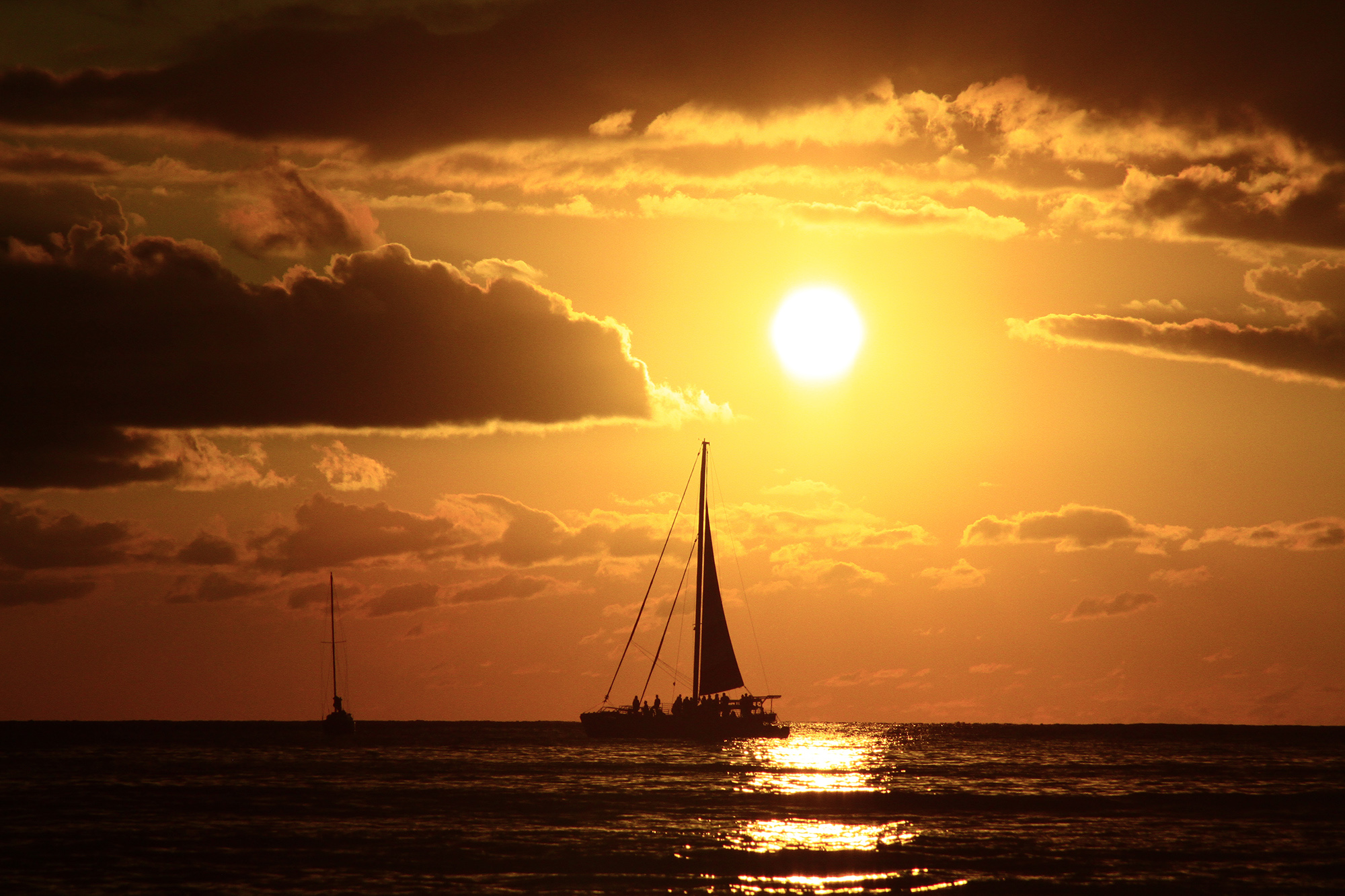
Golden hour has arrived. Time to watch that big, fiery orb sink into the Pacific. And the best vantage point? Obviously, out on the water.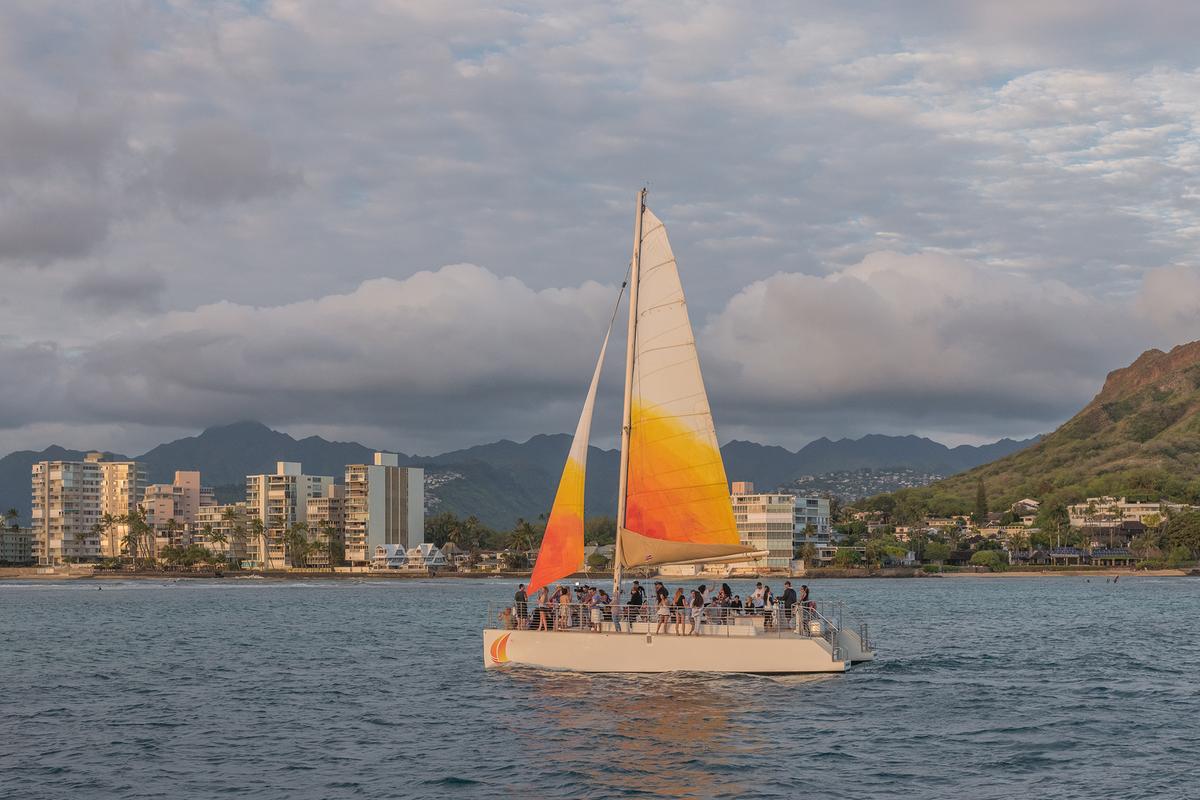
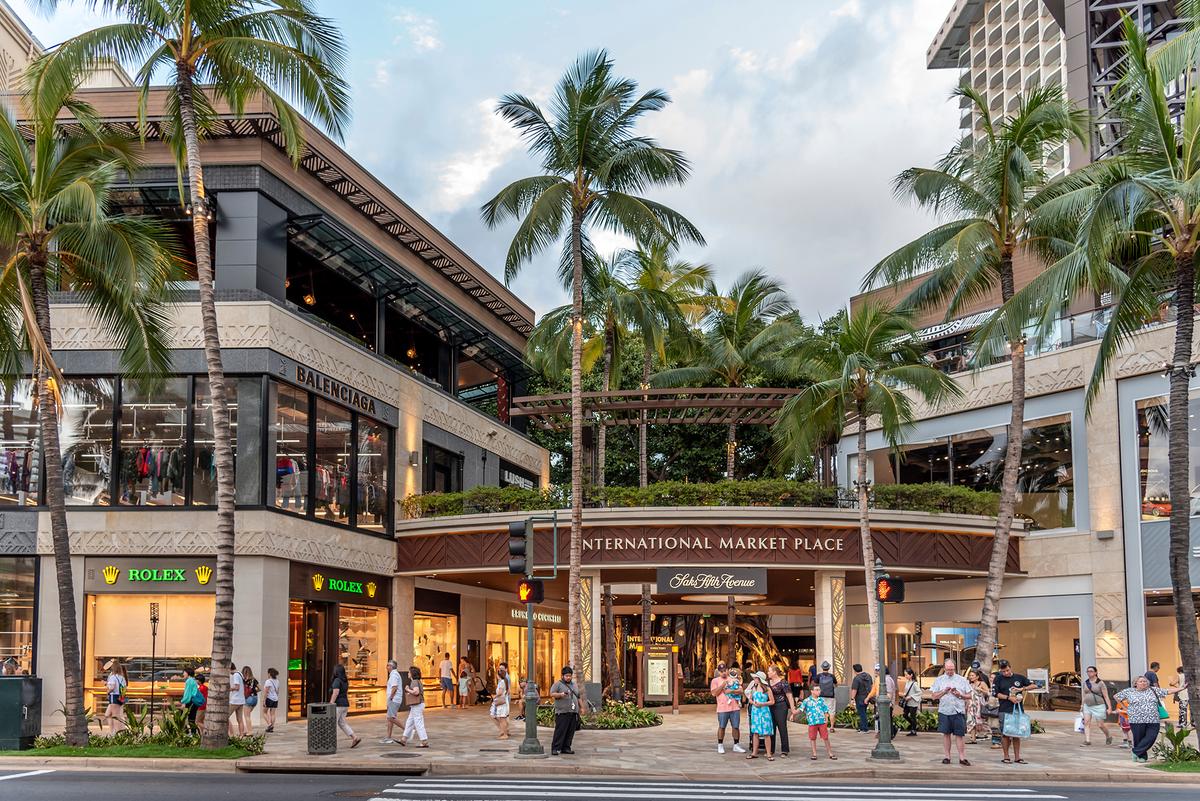
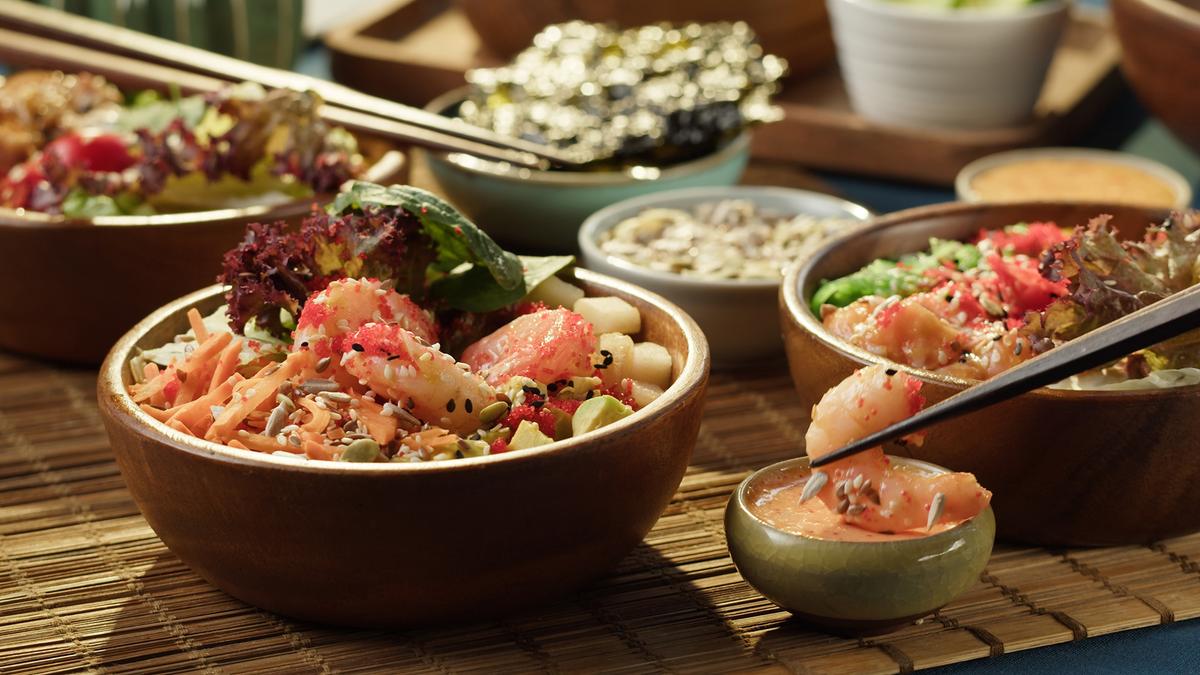
But the night’s not finished yet. Grab a quick dinner at the open-air International Market Place. There are all sorts of flavors, from true Americana to the edge of the Pacific Rim. Steak and seafood, pizza and poke, and sushi. The best bite in the place is Eating House 1849, by renowned Hawaiian chef Roy Yamaguchi. Dishes honor local culinary history and heritage. And beyond that, they’re delicious. The paella rice stew is amazing. Or for something simpler, even the burger impresses, with local beef mixed with wild boar, plus bacon jam and caramelized onions.
Then walk a couple blocks and finish the night with a smile on your face. I promise you: Rock-A-Hula is a lot of fun. Backed by a live band, a cast of talented performers takes you through relatively recent Hawaiian history, from the 1920s to today. Think Hapa Haole Hula and a fire knife dancer, but also Michael Jackson and Elvis Presley.
From the theater in the heart of Waikiki, you can probably walk back to your hotel. Or opt for a little nighttime stroll on the beach, perhaps to feel the thunder of the Pacific one more time before bed and lay a lei on the arm of Hawaiian hero Duke Kahanamoku. His bronze statue stands right on the beach. Breathe in the salty air. Close your eyes. And think of all the memories you’ve just made here in lovely, tropical, unforgettable Honolulu.
A Note on Language
Although Hawaiians speak English, they also have an ancient culture—and language. In recent years, there’s been an effort to integrate elements of both into contemporary hotels, restaurants, and attractions. Learning a few words will make you feel a part of the place, especially “aloha” (hello or goodbye) and “mahalo” (thank you).Take a Day Trip
Yes, there’s so much to see just in Honolulu. But it’s absolutely worthwhile to rent a car and drive up to the North Shore, even for just a day. Although the island of Oahu is only 44 miles long and 30 miles across, the North Shore feels like a world away.From Waikiki, the surfers bobbing and hanging 10 out on the Banzai Pipeline are about an hour away. Make this your destination, then meander. Sample the food trucks serving up everything from mahi-mahi to teriyaki chicken. Visit the historic Dole Plantation. Or just chill for the afternoon on a stretch of beautiful, unspoiled beach.