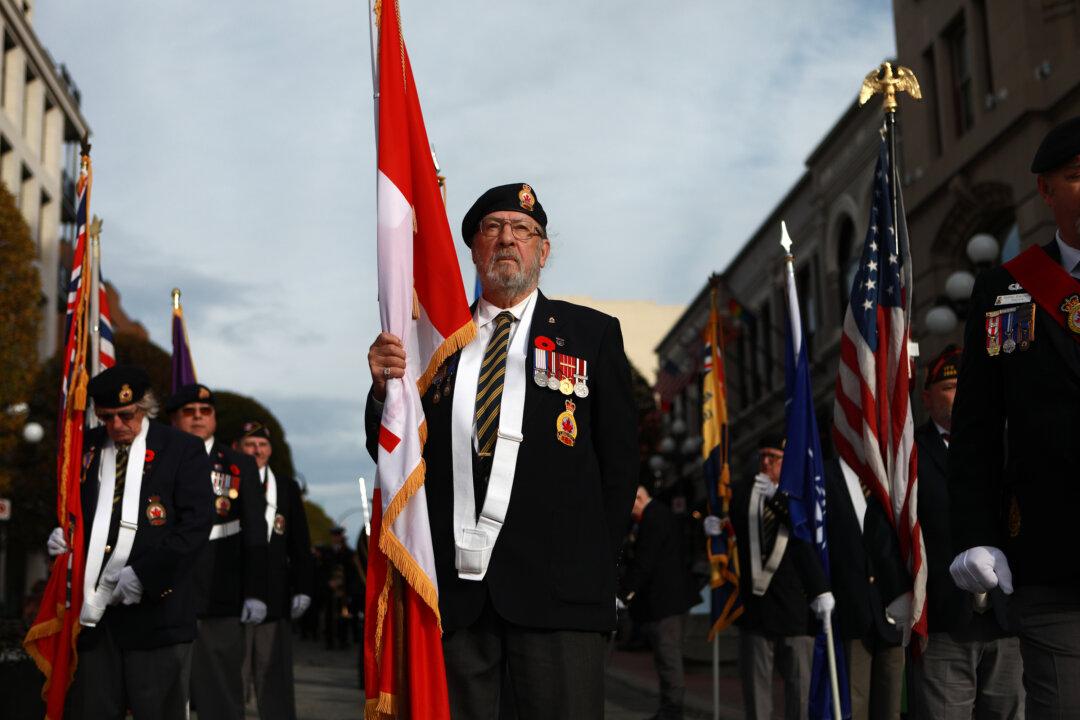
Director Zach Dunn is racing against time to record the stories of veterans from World War II and the Korean War, an initiative he started after finding his grandfather’s war memorabilia.
Dunn, from Toronto, was cleaning his parents’ basement in 2021 when he discovered a box belonging to his grandfather, John L. Williams. Inside, he found the man’s World War II medals and photos of his time in Africa and Europe.
The then-21-year-old learned that his grandpa had served—he enlisted in London, England, in September 1939 at age 18—but rarely discussed that period of his life.
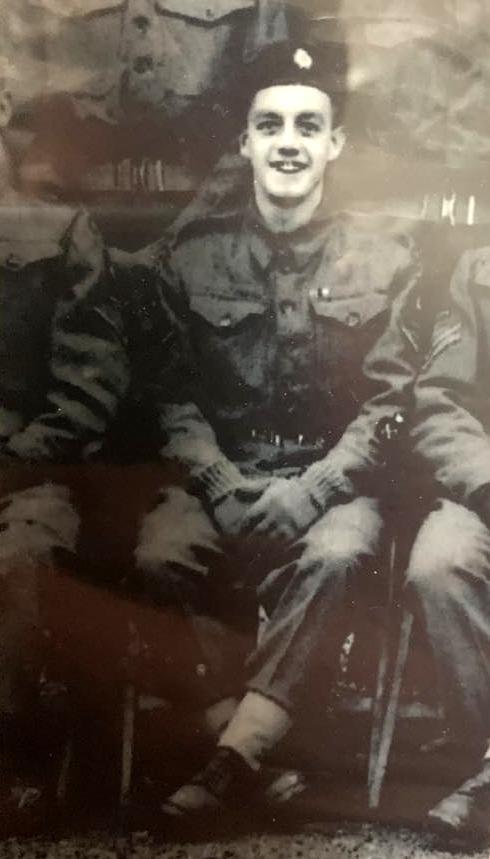
However, after digging online and speaking with relatives, Dunn learned that his grandfather was a British paratrooper who fought in North Africa and parachuted into Normandy on D-Day on June 6, 1944.
After the war, Williams spent a year performing peacekeeping duties in the Middle East. He later immigrated to Canada and had eight children.
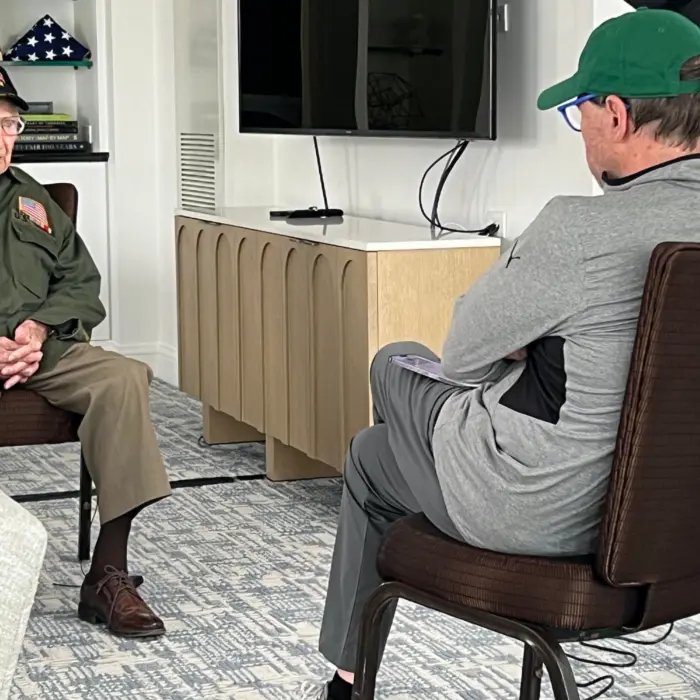
“I thought that was real interesting [because] he had this incredible career, but never talked about it,” said Dunn, now 26.
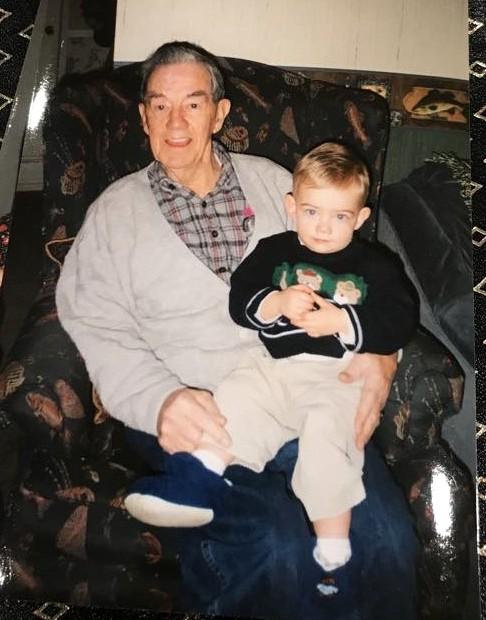
Williams died in 2003 at age 82, when Dunn was 3 years old; a handful of pictures show the two interacting. The grandson noted that his grandfather was a quiet and humble man, typical of “the greatest generation” who fought for today’s freedoms.
Dunn said he has acquired a better understanding of Williams’s wartime experiences after gathering information during the past five years and finding pictures of the man in uniform. His conversations with other veterans have also broadened his knowledge, especially with history in general.
Williams’s past prompted Dunn to find a World War II veteran with whom to speak. The first veteran he met was Arnold Graham, of Lakefield, Ont., in November 2021.
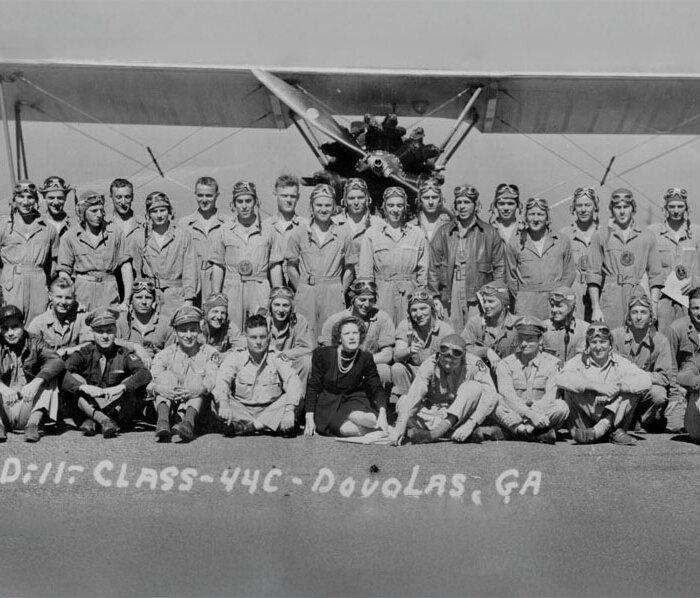
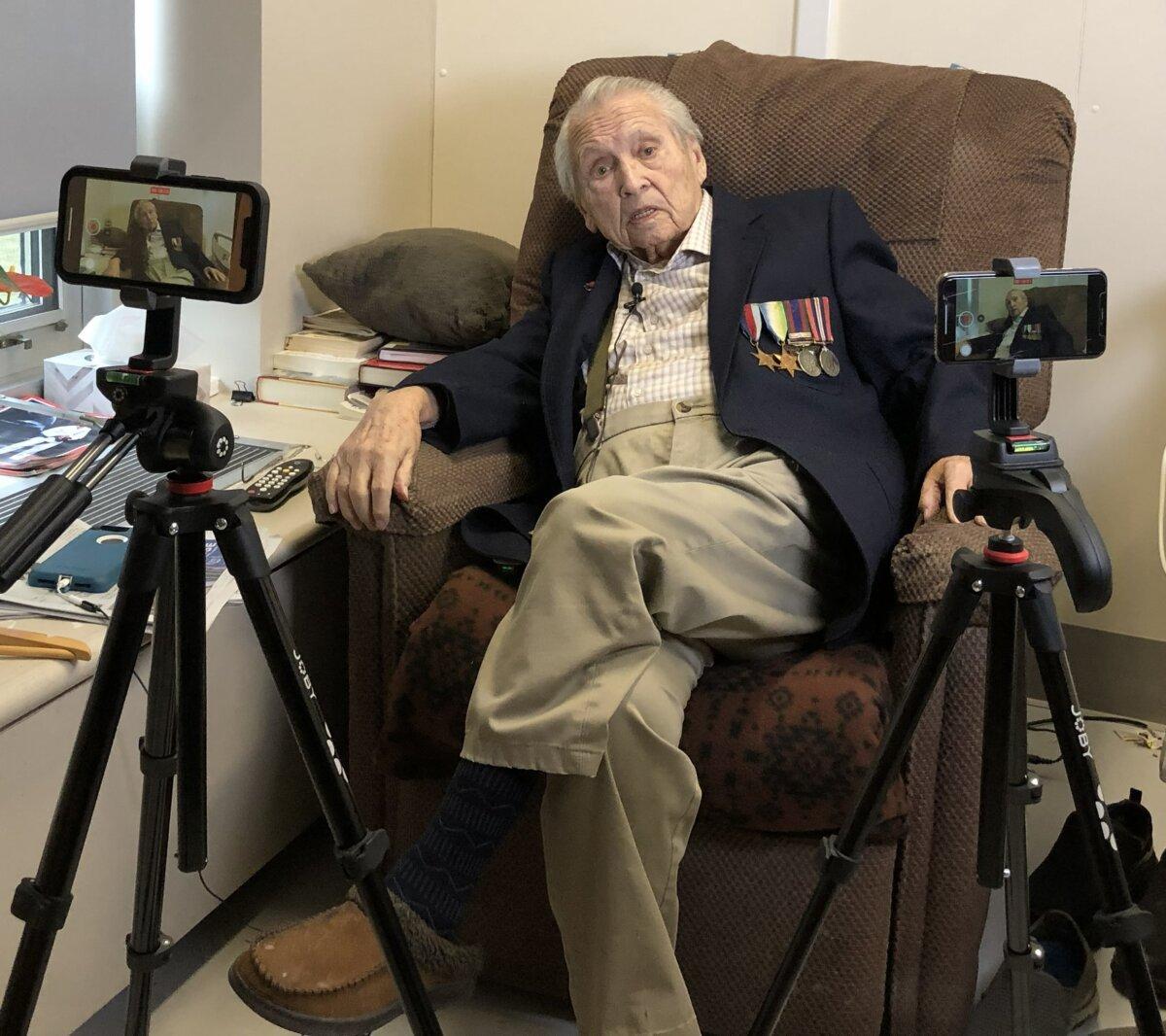
With an iPhone and a $20 tripod, the young man recorded the then-96-year-old’s story, learning that he joined the Royal Canadian Air Force (RCAF) in 1942 at age 17—because he wanted to help bring home his six brothers safely. By age 18, Graham was flying in bomber missions over Germany as a mid-upper gunner.
“I had an incredible interview with him,” Dunn recalled. “As a 21-year-old, this interview kind of changed my life. … This first interview inspired me, and I had to meet one more [veteran]. I wanted to be able to share their stories.”
So far, Dunn has spoken either in person or by video conferencing with veterans from 19 Western and non-Western countries.
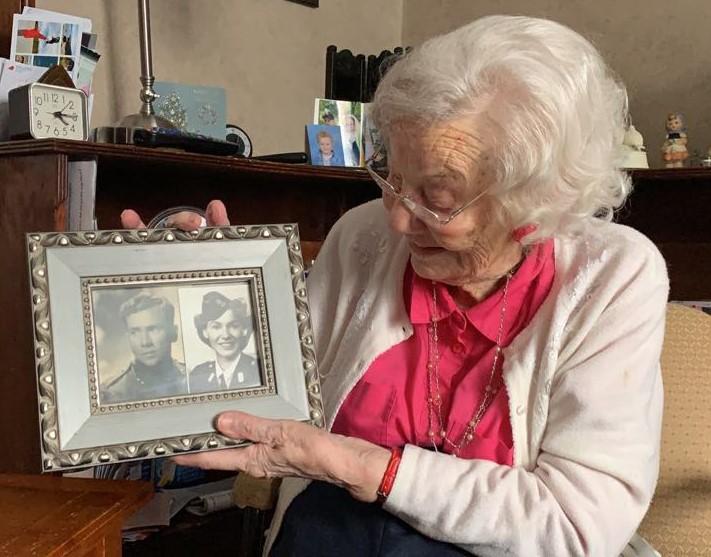
One such veteran was Sytske Drijber, a Dutch-born woman who immigrated to Canada and became a schoolteacher. When World War erupted II, she volunteered for the Royal Netherlands Army Intelligence in 1943 at age 23, went to Australia for training, and was then sent to the Dutch East Indies (now Indonesia) to support operations.
“She had an amazing laugh,” Dunn said, adding that he helped Drijber’s hometown of Rockwood, Ont., erect a veteran’s banner to honour her—something he does for many veterans.
Other veterans Dunn has interviewed include 110-year-old Burdett Sisler, who was Canada’s oldest World War II soldier; a Vietnam vet who spent six years living in a small cage as a POW; Colin Wagner, Australia’s oldest WWII veteran at 108 years old; and 101-year-old Joseph Hammond, Ghana’s last WWII veteran who fought the Japanese in Burma.
Dunn noted that his favourite interview was with Jack C. Thomas, a 103-year-old RCAF tail gunner who was shot down over the Netherlands in September 1944, broke his back upon landing, became a prisoner, and faced beatings from the Hitler Youth.
About 80 percent of interviewees had never shared their stories, so the conversations are emotional, said Dunn, noting that he shares the interviews with families, schools, Legion branches, and other organizations. He has been asked to also interview German and Japanese veterans but has declined the requests.
Dunn acknowledged that his journey to interview veterans—and “be a messenger” for them—is a race against time, since only about 3,000 World War II and Korean War veterans are still living.
“These veterans’ stories are very, very quickly slipping away and the veterans need to be encouraged to share their stories,” he said, noting many decline the spotlight despite deserving it. “So, family members need to be able to push them to share their stories so they don’t get lost in memory.”