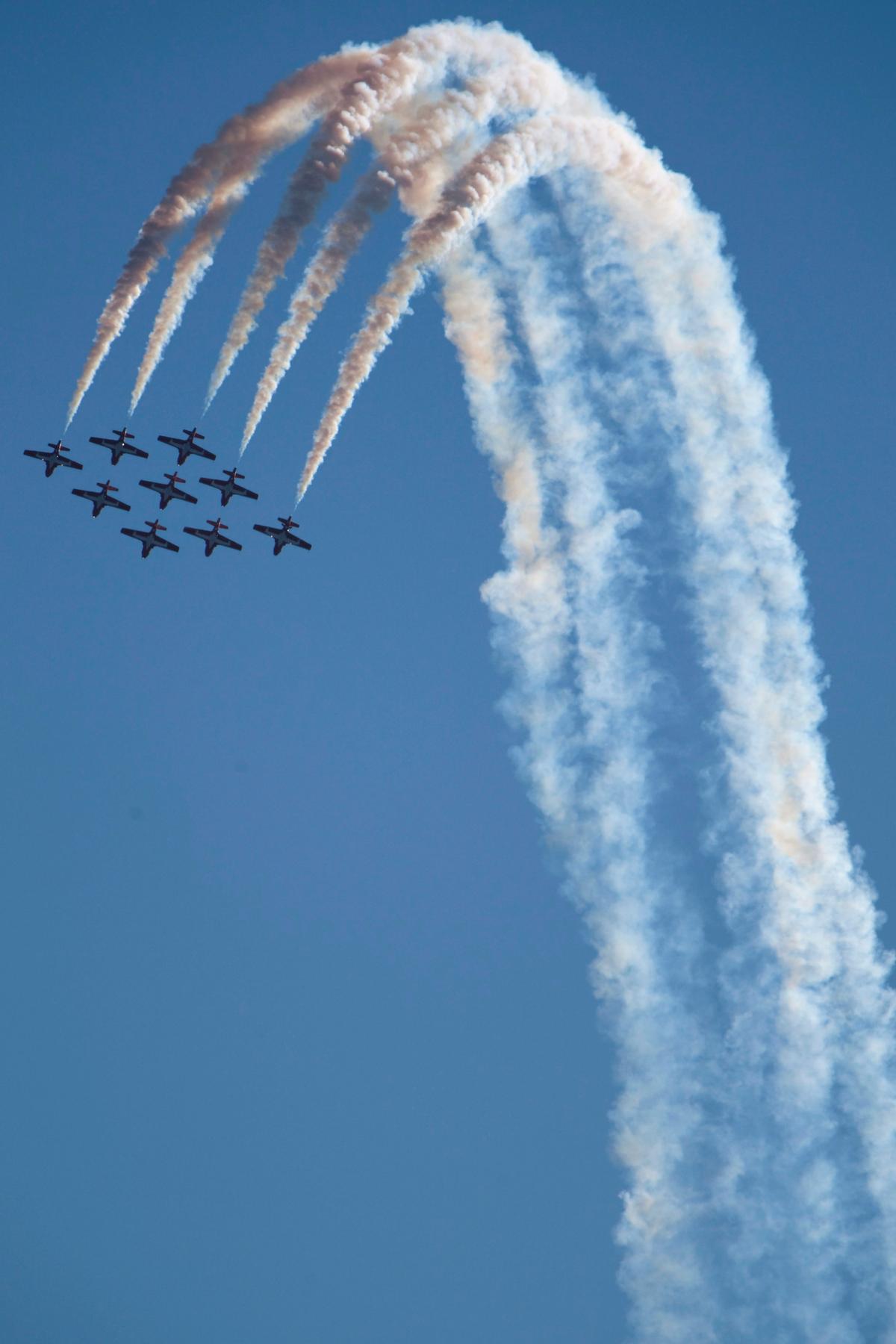
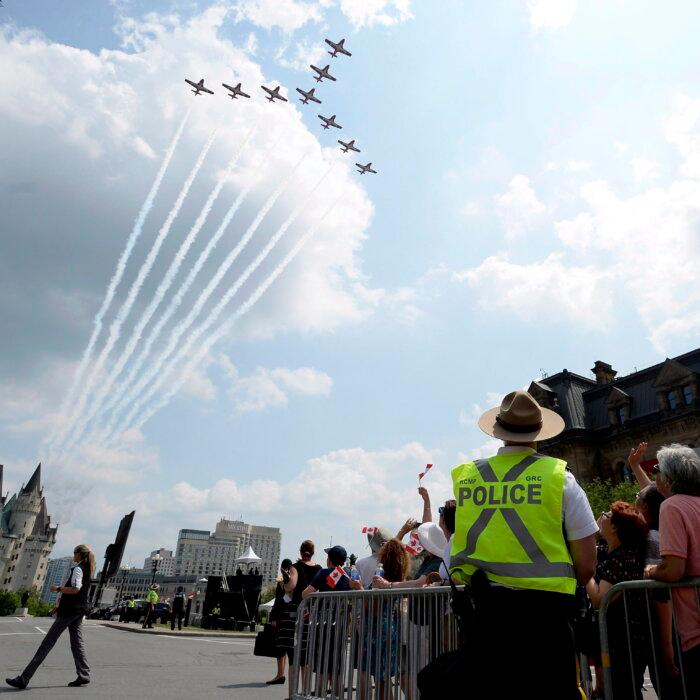
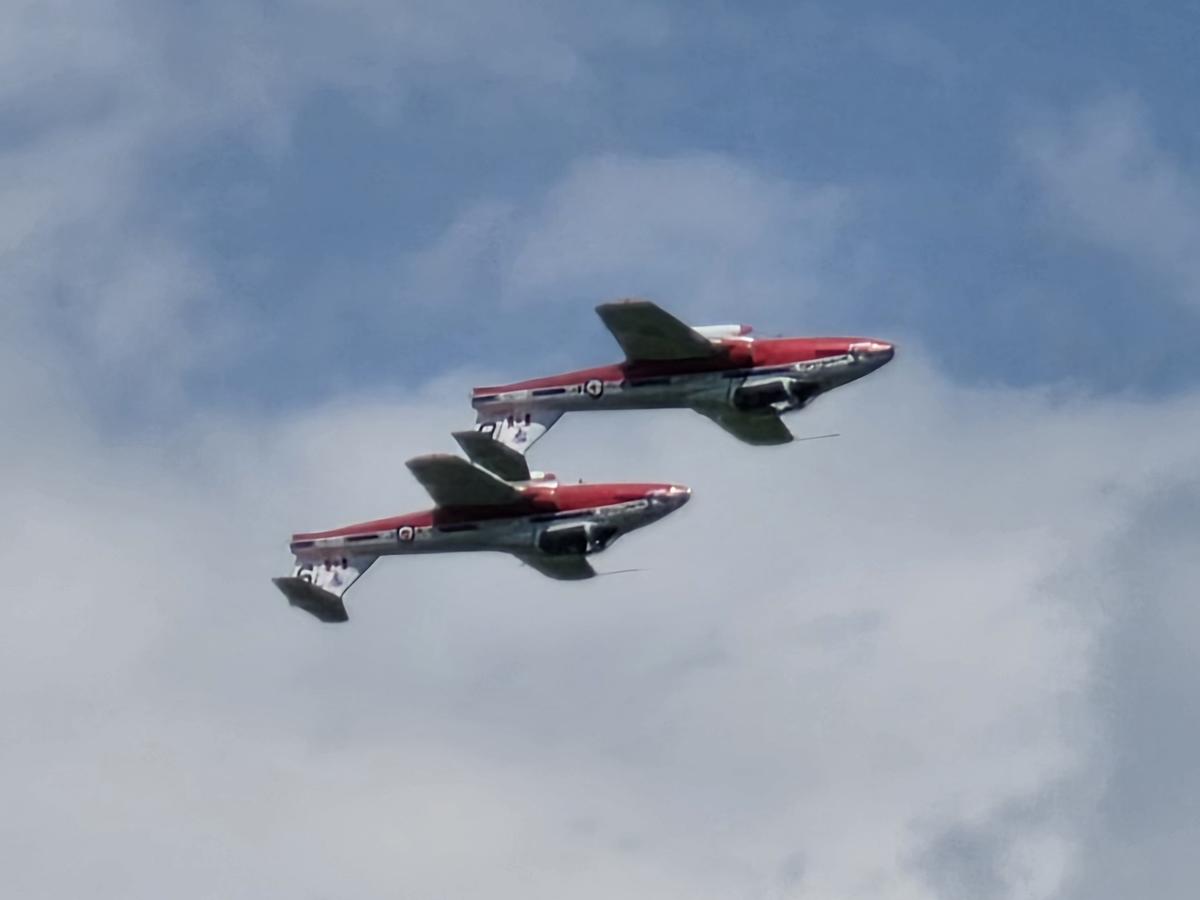
MOOSE JAW, Sask.—The roar of jet engines fills the skies every summer as the Canadian Forces Snowbirds dazzle crowds with precision loops, rolls, and white smoke trailing behind their red-and-white aircraft.
Now, as 431 Air Demonstration Squadron prepares for its final season flying the iconic CT-114 Tutor jet, a plan to pause flights has sparked debate over whether one of Canada’s best-known military institutions should disappear from the skies for several years.

Ottawa announced in May that it plans to replace the nine aging Tutors with CT-157 Siskin II turboprop aircraft, but the new fleet won’t be ready until the early 2030s, leaving the team grounded until then.
The 63-year-old Tutors have entertained audiences across Canada and the United States as the Snowbirds’ aircraft for 55 years.
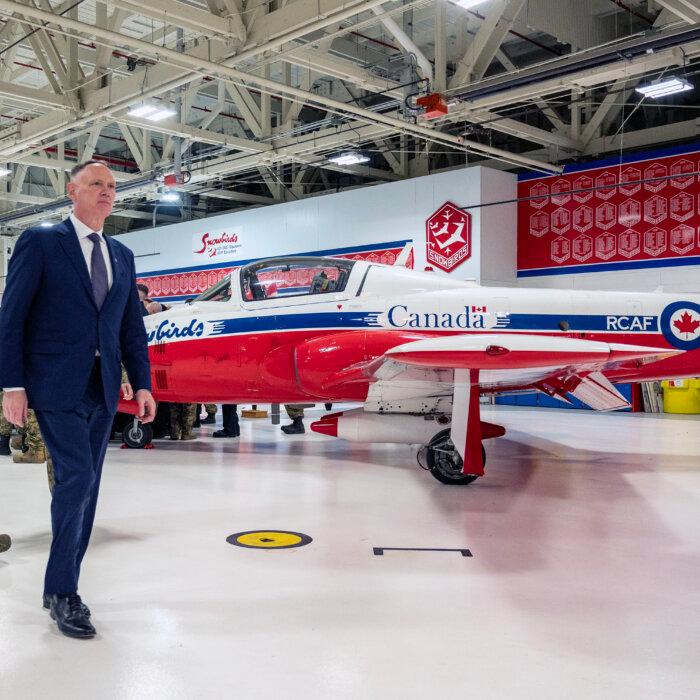
For decades, the Snowbirds have been based at 15 Wing Airbase in Moose Jaw, Sask. In announcing the squadron’s future, Defence Minister David McGuinty said the replacement aircraft will remain based in Moose Jaw and continue flying under the Snowbirds name.
Snowbirds Alumni Association
The Snowbirds Alumni Association launched a campaign in May called “No Pause — Keep the Snowbirds Flying” to keep the aerobatic team in the air.
The association said in a statement that its goal is to encourage the decision-makers to develop “practical transitional solutions” to keep the jets flying while preserving operational knowledge, specialized expertise, public connection, and inspirational value.
The alumni association suggested that the Royal Canadian Air Force (RCAF) lower the number of planes to seven and reduce the length and complexity of the shows to preserve the planes’ structural integrity, similar to steps taken recently by the Royal Air Force’s Red Arrows, which is the UK’s premier aerial display unit.
The Red Arrows have demonstrated that it is possible to adapt during periods of transition without grounding “an iconic national team entirely,” the association said. Scaling back would preserve the pilots’ expertise, sustain recruiting and public outreach efforts, and ensure continuity for a program that is “deeply woven into Canada’s national identity,” the organization added.
“The Snowbirds have become a shining symbol of our very nation, uniting us in our pride and accomplishment,” Gen. Rick Hillier (retired), former chief of the defence staff, said in the statement.
“They are one of the very few Canadian symbols and are needed more than ever in these challenging times,“ he added. ”Their absence from the skies would make us less.”
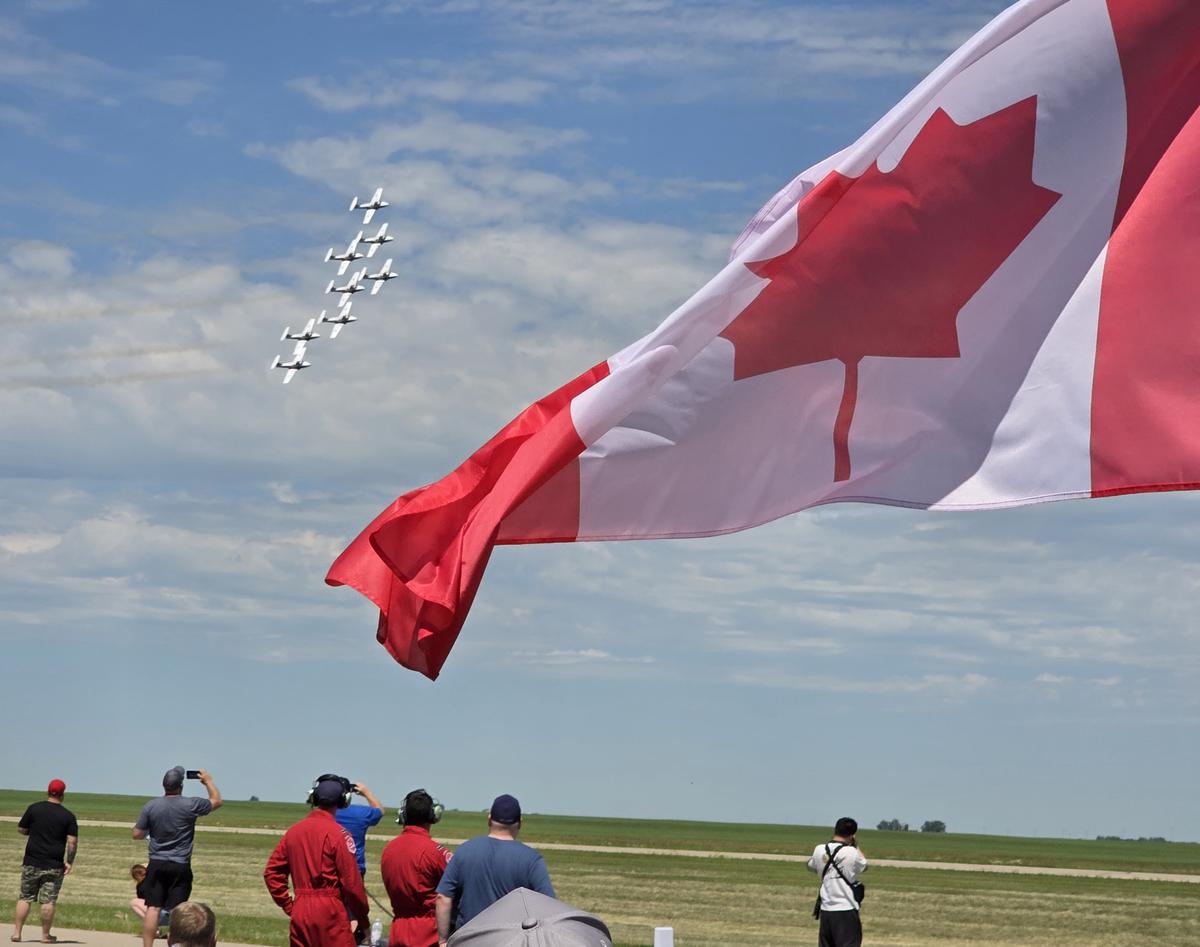
The Snowbirds performed their 2,893rd show in Moose Jaw on July 11, attracting more than 2,000 people to the municipal airport. July 11 is also the date the squadron first took flight in 1971, under the leadership of Col. Owen B. Philp.
Air Show Atlantic
Colin Stephenson first saw the Snowbirds as a youth in 1971 in Halifax, N.S. In 2001, he joined the Nova Scotia International Air Show Association, which organizes the annual Air Show Atlantic. He eventually became its executive director.
Stephenson said other board members also grew up admiring the Snowbirds’ “thrilling” performances. He said it will be a “monumental change” not to feature the aerobatic team—or the distinctive sound of the jets’ engines—at the annual show, which the association has organized since 1997.
“As with anything in the airshow world, we learn to roll with it, … and certainly we’ll adapt to this change,” Stephenson said in an interview with The Epoch Times. “Hopefully it will be as short as possible.”
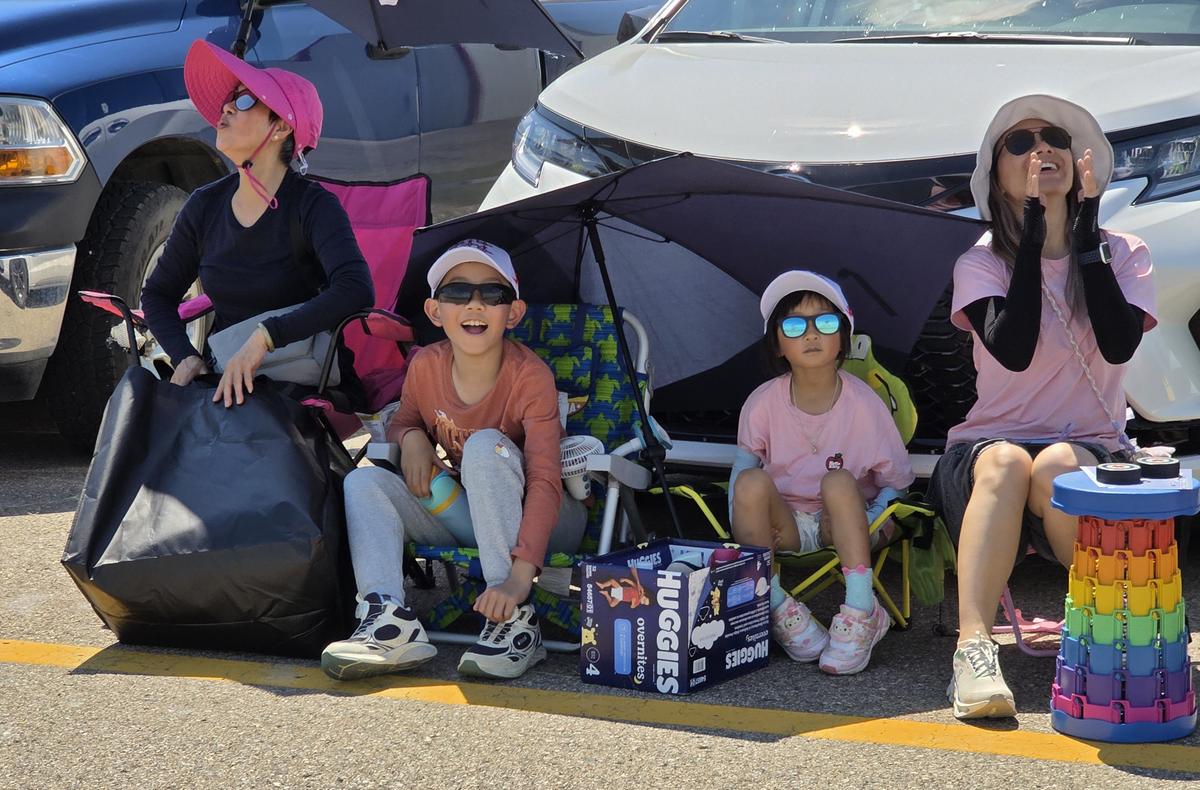
Air Show Atlantic—the only annual air show east of Quebec—draws thousands of spectators from across the Maritimes each year, with the Snowbirds serving as its headline attraction, Stephenson said. As the squadron enters what he called a “very difficult era,” the association wants to make the most of celebrating the iconic Tutor aircraft.
“There will be something missing” for aviation enthusiasts in the summers ahead, he added. In the meantime, Air Show Atlantic and other organizers will have to find new ways to keep audiences engaged.
Still, Stephenson believes a new “golden age” will begin when the Snowbirds return in the 2030s with the CT-157 Siskin II, based on the Pilatus PC-21. The new aircraft are outstanding machines, he said.
Petitions Launched
Two petitions have also been launched urging Ottawa to keep the Snowbirds flying during the transition.
“Families all over Canada have made memories watching the Snowbirds perform during the last 55 years!” Kenny’s petition says. “Let’s keep them flying so they can help create memories for 55 more years!”
The RCAF says the decision to ground the Tutors was driven by safety and engineering concerns.
In May, the air force’s commander said the fleet’s age is a significant issue, so the RCAF is retiring the planes three years earlier than planned. She also said the RCAF has pursued three projects since 2005 to extend the Tutors’ lifespan, and the latest project cost $10 million.
However, the commander added that engineering challenges and unfavourable feasibility studies “changed that situation” and prompted the military to retire the planes next year instead of 2030.
The Snowbirds will perform their final Tutor demonstration this October before landing the aircraft for the last time.