The content of the upcoming federal budget will remain a mystery to most until it’s tabled on Nov. 4, but opposition parties have nonetheless either given broad outlines of what they want to see or made specific red-line demands to the minority Liberals.
The ability of Prime Minister Mark Carney’s government to secure the support of one other party on the budget, other than the Greens, will be key to deciding whether the Liberals remain in power and if a new election is called within the span of a half year.
The Liberals currently have 169 seats in the House of Commons, three seats short of a majority. This means support from the seven NDP MPs would be sufficient to pass the budget.
Interim NDP Leader Don Davies said he didn’t make any specific budget requests when he met Carney earlier this month, noting his party doesn’t have a “shopping list.”
The NDP in the previous Parliament had a supply-and-confidence agreement with the minority Liberals to keep them in power, trading support on key votes for the advancement of its priorities, mostly around new health-care programs.
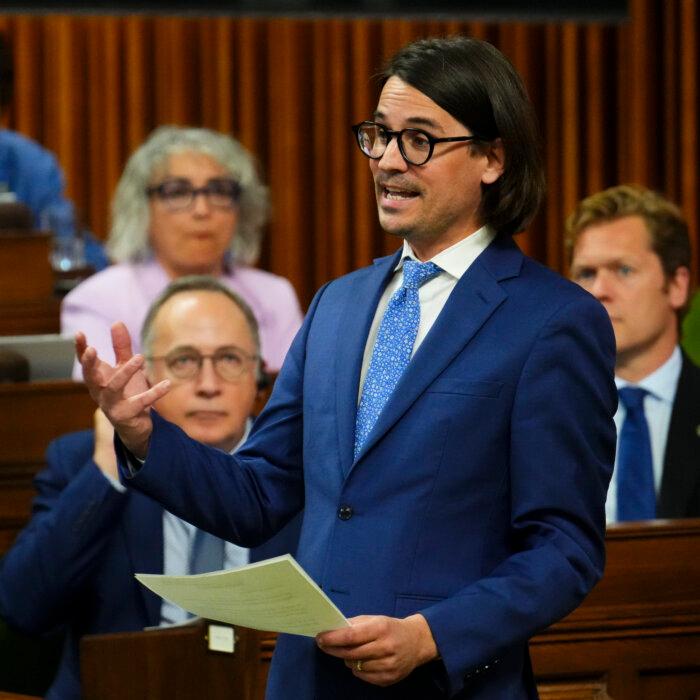
“We’re not bargaining either in public or privately,” Davies told reporters on Oct. 8. “What we are doing as New Democrats is laying out our vision of what’s required for our country going forward, very transparently.”
Though Davies said no specific requests have been made, he said he told Carney “very clearly” that the NDP would not support an austerity budget. The NDP leader said current circumstances such as economic pressures stemming from U.S. tariffs need to be met with increased federal investments in workers, businesses, communities, and infrastructure.
The Liberal government has indicated that its budget will include both austerity measures and investments, following Carney’s formula of “spending less” to “invest more.”
The prime minister has pledged to make government more efficient, deploring that its operational costs have grown faster than the economy in recent years. Meanwhile, Finance Minister François-Philippe Champagne has promised a budget with “generational investment.”
It remains to be seen how the NDP will weigh the expected proposed cuts to government services compared to the planned economic stimulus.
But at the end of the day, it could boil down more to political considerations than fiscal and economic matters.
Bloc Demands
Meanwhile, the Bloc Québécois has signalled it will not support the budget unless its key demands are met. The party released a list of 18 demands for the upcoming budget on Oct. 14, identifying six of those as “unavoidable.”“When I close my eyes and visualize, it’s difficult to see myself standing up and voting for a budget,” Bloc MP and finance critic Jean-Denis Garon told reporters in Ottawa. He wouldn’t say whether he expects an early election, or if he thinks Quebecers want one.
The key Bloc demands include raising Old Age Security payments from the age of 65, increasing federal health transfers and the infrastructure fund for the provinces without strings attached, and offering interest-free loans to first-time homebuyers.
The Bloc is also asking that Ottawa provide $814 million to Quebecers as compensation for the final Canada Carbon Rebate payment, which was issued to other provinces in April 2025 after the consumer carbon tax was suspended. Garon said this amounted to “buying votes” during the last election. Carney has countered previously that Quebecers didn’t pay the federal carbon tax since the province has its own system, so it is “not unjust.”
Garon said there hasn’t been much outreach done on the part of the Liberals to get the Bloc on board with the budget.
‘Substantial’ Deficit
The Liberal government has remained guarded on the size of the deficit to be unveiled in November, but Government House Leader Steven MacKinnon has said it’s “substantial.”Conservative Leader Pierre Poilievre has declined to say whether he will support the federal budget before having seen it, but he called on Carney in recent weeks to “keep his promise and reverse the massive spending increases that he has brought in.”
Carney responded that his government is conducting a “comprehensive” review of spending.
“The government is building houses. The government is building projects in the national interest. The government is building Canada strong,” Carney added.
Minister Champagne has asked cabinet ministers to find savings in their respective departments of a total of 15 percent phased in over three years, starting with 7.5 percent in fiscal 2026–27, followed by another 2.5 percent in 2027–28 and then another 5 percent in 2028–29.
The timing of the release of the budget, usually in the spring, will be changed to the fall starting this year. The Liberals say this revised timing provides greater certainty to businesses and provinces by giving them more time to plan financially. The budget will also follow a new methodology where operational spending will be separated from expenditures that are deemed to be investments.
The Conservatives have said this is an “accounting trick” to mask the real amount of deficit and debt, while Champagne has defended the practice, saying that it will bring more transparency.