The Liberal government appeared to have found a way early this week to pass its controversial hate crime bill by reportedly agreeing to Bloc Québécois amendments to remove the religious defence to hate speech, but backlash was quick and came from multiple sides.
The government’s position now appears in limbo, with the cancellation of a Dec. 4 House of Commons justice committee meeting, where the amendments were supposed to be tabled. The committee is currently going clause-by-clause consideration of Bill C-9, also known as the Combatting Hate Act.
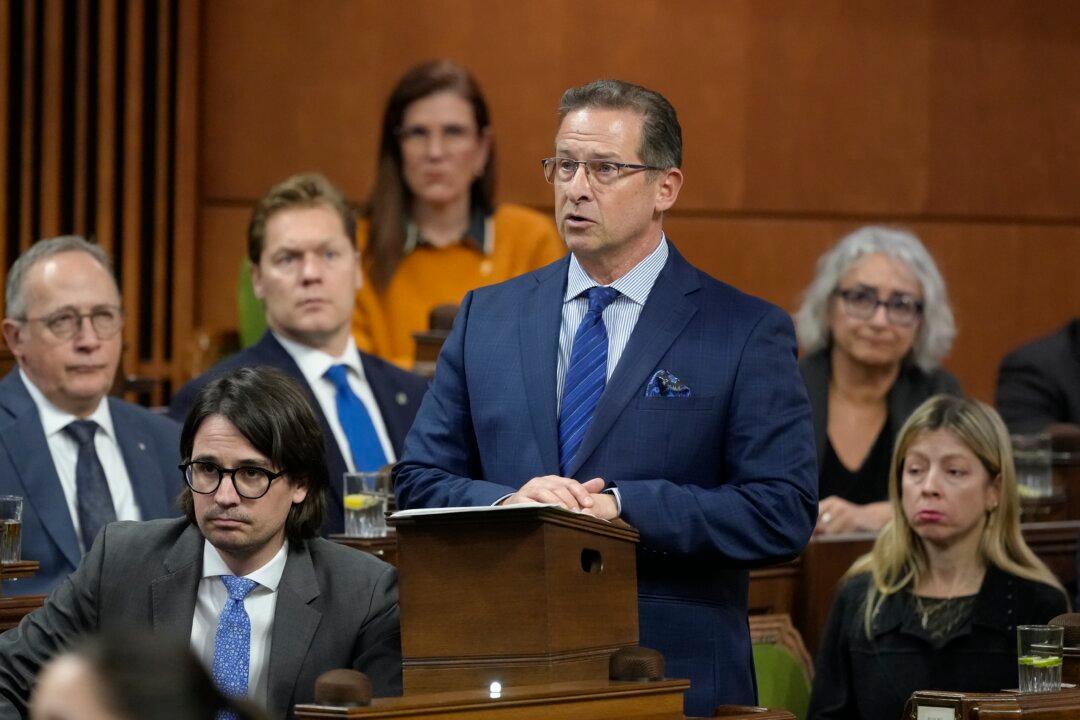
“We fear that because representatives, or would-be representatives of some [religious] groups came to the committee and sat there, that the Liberals fear backlash against them within some communities and that because of that they have cancelled today’s meeting,” Bloc Québécois Leader Yves-François Blanchet said on Dec. 4. “And we fear that they might do the same with next week’s two meetings.”
Tory MP Larry Brock, who opposes the Bloc’s potential amendments, relayed a similar account to reporters on Dec. 4.

“A number of faith leaders found out what was going on in our justice committee, decided to watch the proceedings; they saw them come in to the committee room,” Brock said. “Within minutes, the chair had abruptly ended the meeting.”
“It quickly became very apparent to me that the committee was having a great deal of trouble, emotions were running high and the members did not have a path forward to deal with some very important legislation that was before the committee,” he said in the House of Commons during question period. He added he cancelled the meeting to allow committee members to “regroup to find a path forward.”
On the same day the Liberals had accused Conservatives of using delay tactics to stall the process of Bill C-9.
“Our government remains willing to work across the aisle to look for constructive improvements to this bill,” said Liberal MP Leslie Church. “What we will not accept are endless delays and Conservative tactics designed to dodge a vote on this bill.”
The office of Justice Minister Sean Fraser, who sponsored Bill C-9, provided similar messaging when asked to comment on whether it supports the Bloc’s amendments.
Liberal MP Yasir Naqvi told reporters on Dec. 4 he’s “really concerned” the bill could be in jeopardy given the current situation.
Bloc Leader Blanchet said his party will not support the minority Liberals’s Bill C-9 without its amendments.
Bloc Amendments
The controversy started on Dec. 1 when the Bloc issued a press release saying it was “rejoicing” over having convinced the Liberals to remove the good faith religious defence to hate speech in the Criminal Code by amending Bill C-9.This news prompted the Conservatives to accuse the Bloc and Liberals of seeking to undermine freedom of expression and religion, which are Charter-protected rights.
“Liberal-Bloc amendments to C-9 will criminalize sections of the Bible, Quran, Torah, and other sacred texts,” Tory Leader Pierre Poilievre said.
Bill C-9 as currently written would create new hate-related offences, such as for intentionally blocking someone from attending religious worship, but it doesn’t touch the religious defence.
The bill is partly the government’s response to the rise in violent anti-Semitic incidents seen in the past two years, following the Hamas attacks against Israel in October 2023. But it is also another attempt by the Liberals to bring in broader controls over online speech and expand scrutiny over hate speech, as outlined in their platform in prior years. The Liberals tried unsuccessfully to legislate an earlier version of their online harms legislation in previous Parliaments.
For its part, the Bloc has cited the rise in anti-Semitic violence to argue the religious defence to hate speech must go, saying it’s been used to foment hate against Jews.
The Bloc has noted how an Islamist preacher in Montreal, Adil Charkaoui, was not charged after calling on Allah to “destroy the Zionist aggressors” and “kill them all” without exception, during a protest in October 2023.
Following the incident, the Bloc had tabled a private member’s bill in response to remove the religious defence to hate speech. The bill lapsed when Parliament was prorogued in January 2025.
Impact on Religion
While the Bloc aims to limit the kind of speech made by Charkaoui, it would have broader consequences for individuals quoting or teaching religious texts.“In Leviticus, Deuteronomy and Romans, there are passages with clear hatred towards, for examples, homosexuals. I don’t understand how the concept of good faith could be invoked if someone were literally invoking a passage from, in this case, the Bible, though there are other religious texts that say the same thing,” he said.
He said that when the Conservatives come out in favour of the religious defence they’re “defending people like Adil Charkaoui.”
The group said it recognizes the importance of condemning hatred and protecting vulnerable people, but that it has a “deep concern” with the potential removal of the religious exemption.
“We also understand the serious challenges that have emerged in recent years, including the increase in antisemitism and other forms of hateful speech and behaviours, many of which have targeted the Christian community,” the group said.
The bishops said the “good faith” defence has served as a safeguard to prevent Canadians from being prosecuted for their sincere beliefs.
“The removal of this provision risks creating uncertainty for faith communities, clergy, educators, and others who may fear that the expression of traditional moral or doctrinal teachings could be misinterpreted as hate speech and could subject the speaker to proceedings that threaten imprisonment of up to two years,” the bishops said.