Prime Minister Mark Carney took an unusual step this week when he released a single mandate letter for all of his ministers.
The mandate letter Carney released is quite different from the one his predecessor Justin Trudeau provided to his ministers following the Liberals’ election victory in 2021.
For one, Carney’s criticism of the past government is barely veiled.
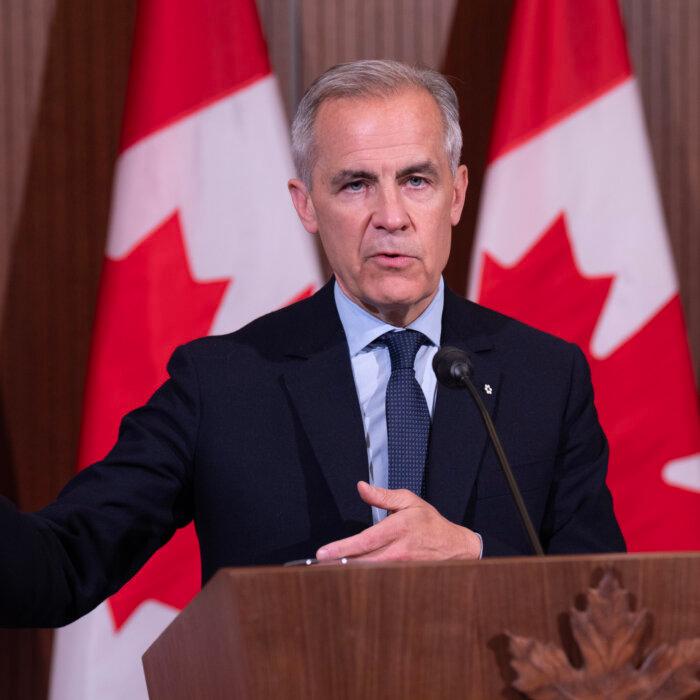

“Our longstanding weak productivity is straining government finances, making life less affordable for Canadian families, and threatening to undermine the sustainability of vital social programs on which Canadians rely,” he wrote.
Carney has also called for “new approaches to governing” amid what he says are “unprecedented challenges.”
Trudeau’s 2021 mandate also highlighted his priorities, with each of his ministers receiving the same introductory words in their letters issued that fall.
That last mandate letter was issued in the COVID-19 era, and Trudeau had promised during the election campaign to impose vaccination mandates on the public service and federally regulated workforces, as well for air travel. Trudeau said Canadians had entrusted Liberals to “finish the fight against COVID-19” and build a “brighter future through continued collaboration, engagement, and the use of science and evidence-based decision-making.”
After COVID, Trudeau identified climate change as an “existential threat,” saying “we must not only continue taking real climate action, we must also move faster and go further.”
Carney is facing different circumstances but, like Trudeau, he has been a strong advocate for climate change policies. He has also presented himself as a “pragmatist” and set the consumer carbon tax rate to zero on his first day in office, leaving behind a core Trudeau policy—though he is instead focusing the cost of carbon on industry, the impacts of which are yet to be assessed.
Carney mentioned climate change in his mandate letter before the last paragraph. “We will fight climate change,” he said, without elaborating. Higher in the letter, he says Canada must build an “enormous” amount of new infrastructure to help Canada become an energy “superpower” in “both clean and conventional energies.”
Immediately after establishing climate change as a top priority, Trudeau’s mandate letters in 2021 mentioned reconciliation with First Nations in the context of “unmarked graves” and “burial sites” near former residential schools. Four years later, many of these sites have not been excavated to confirm the presence of human remains. Among the sites that have been excavated, no remains have been found.
Trudeau’s fourth priority related to “profound systemic inequities” in Canadian society and institutions. He told his ministers to collaborate with various communities and incorporate their views, to include “women, Indigenous Peoples, Black and racialized Canadians, newcomers, faith-based communities, persons with disabilities, LGBTQ2 Canadians, and, in both official languages.”
Again, these themes surface in Carney’s mandate letter, but much less prominently. They appear in the second last paragraph where he says Ottawa will continue to advance reconciliation with indigenous peoples and that Canada is a “dynamic country that celebrates our diversity.”
Along with issuing general guidance to ministers on climate and diversity to all his ministers, Trudeau had also crafted specific instructions along those lines for each minister as a matter of top importance.
Trudeau told then-Minister of Public Safety Marco Mendicino that he should “prioritize policing reform to address systemic racism and ensure the Royal Canadian Mounted Police (RCMP) meets the needs of the communities it serves, and to ensure the RCMP continues its work to transform its culture and create a culture of accountability, equity, diversity and inclusion.”
Carney has not promised to roll-back any of these policies and programs brought in by Trudeau, but if his mandate letter is any indication, he has no stated intention of putting them at the core of his agenda.
One thing that Carney said he will put the brakes on is immigration. Immigration levels increased substantially under Trudeau. In his mandate letter to then-immigration minister Ahmed Hussen, Trudeau told him to bring in “more newcomers to all regions of Canada who will support Canada’s economic recovery from the COVID-19 pandemic.”