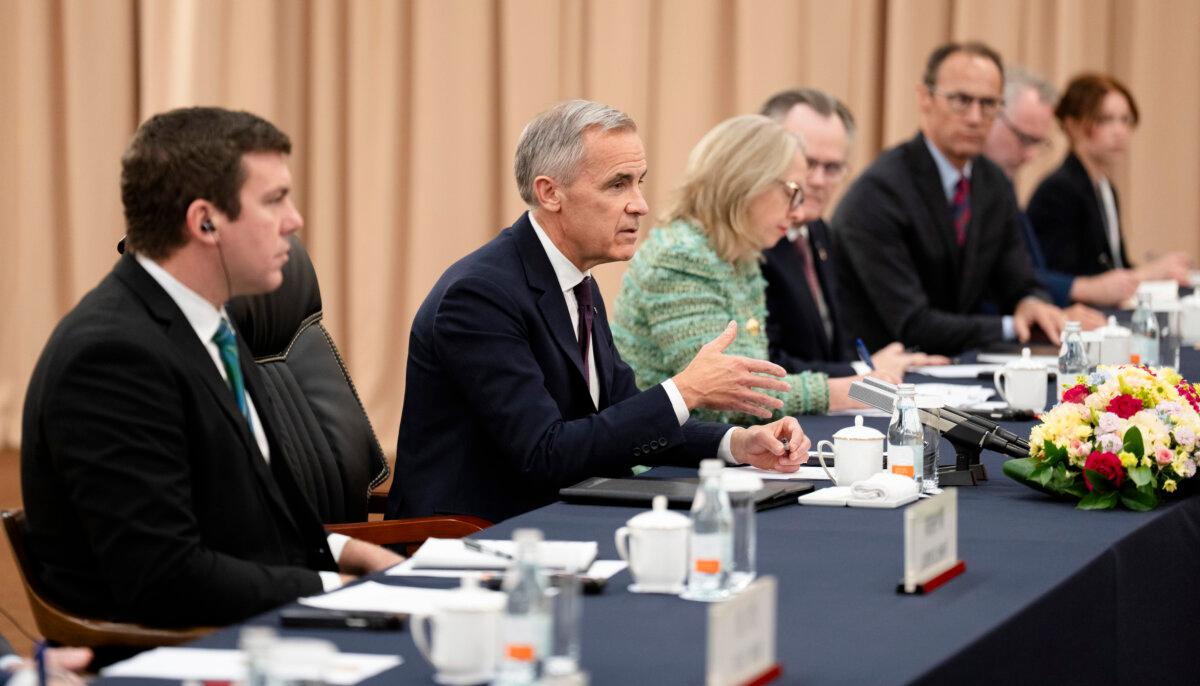
Prime Minister Mark Carney will be visiting China next week as his government seeks to deepen relations with Beijing.
The Prime Minister’s Office (PMO) said discussions will revolve around trade, energy, agriculture, and international security.
The PMO said Carney will be meeting with Chinese leader Xi Jinping, Premier Li Qiang, as well as business leaders. Carney will depart for China on Jan. 13 and leave four days later, on Jan. 17.
The visit comes after Carney met with Xi on the margins of the Asia-Pacific Economic Cooperation (APEC) forum in late October 2025. Carney had received the invitation to visit China at that time.
Attempts at closer ties derailed in late 2018 when Canada executed a U.S. extradition warrant for Huawei executive Meng Wanzhou, who was accused of fraud. In apparent retaliation, China arbitrarily detained Canadians Michael Kovrig and Michael Spavor and kept them in custody for over 1,000 days.
Efforts to repair ties with China began early in Carney’s term, with incrementally higher-level contacts over recent months.
Foreign Affairs Minister Anita Anand visited China in mid-October 2025, after which she said that Ottawa is in a “strategic partnership” with Beijing. Anand said Ottawa is approaching the relationship with “pragmatism.”
“We must be nuanced in our diplomacy,” she told The Canadian Press in an interview after her trip. “We must stress our concerns relating to security and public safety on the one hand, and we must seek to build additional supply chains on the other. That is pragmatism.”
The Conservative Opposition criticized Anand for the “strategic partnership” comment, noting how Carney had identified China as the top security threat to Canada during the election campaign in April 2025.
There have been heightened concerns in Canada over foreign interference in recent years, with security bodies and a public inquiry identifying Beijing as the primary perpetrator.
“There are areas where we will engage and cooperate, and there’s others where, again, in a relationship, we can establish an ability to make our views known directly to them,” he said.
Trade and Energy
Carney will seek to address other issues in the bilateral relationship, including the current trade conflict.The Trudeau government slapped a 100 percent tariff on Chinese electric vehicles and 25 percent on Chinese steel and aluminum in late 2024, following in Washington’s footsteps.
China retaliated months later, as the new Trump administration also started imposing its own duties on Canada, by targeting the agricultural and food sectors. Beijing slapped canola oil and peas with a 100 percent duty and a 25 percent duty on pork and seafood.
Aside from trade issues, after meeting with Xi, Carney said there could be greater cooperation with China on renewable energy.
Having identified an offshore wind farm in Nova Scotia as a project of “national importance,” Carney said this area is a “natural potential area for cooperation” with China given the competitiveness of its windmill companies.
In the current geopolitical context, oil and gas could also be part of the discussions with Chinese officials.
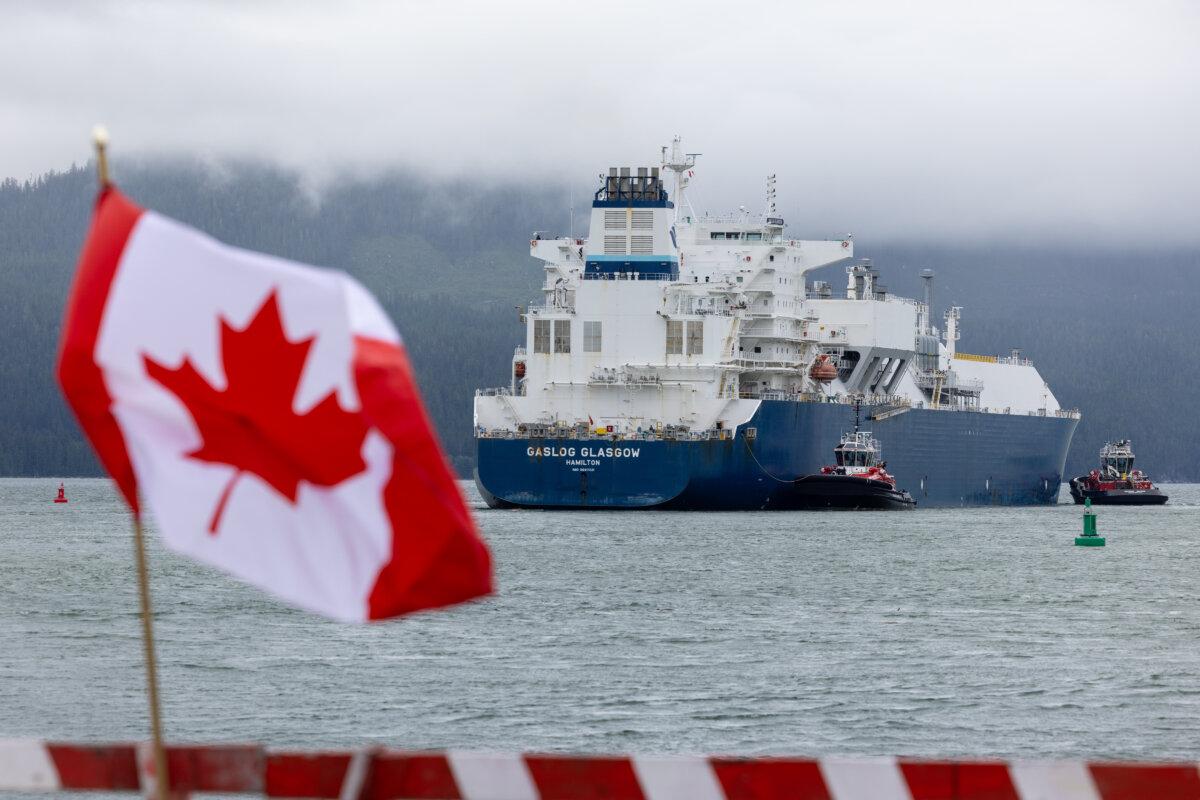
State-owned PetroChina has a stake in Canada’s only liquified natural gas (LNG) export facility in B.C., LNG Canada.
In relation to current events, Canada’s oil exports could also become a topic of discussion.
Most of the Alberta oil shipped through the Trans Mountain pipeline to the West Coast of B.C. is exported to China.
Oil sector advocates are pushing for a new pipeline to the B.C. coast to be built to diversify Canada’s exports, given the vast majority of oil production is sent to the United States. Canada and Venezuela produce similar grades of heavy crude, which U.S. refineries on the Gulf Coast are set up to process.
Carney put in place a memorandum of understanding with Alberta in November 2025 for the potential construction of a new pipeline to the West Coast to ship Canadian oil to Asia, if a private proponent comes forward. The project, however, comes with a number of conditions attached, including carbon capture and storage, as well as the agreement of the province of B.C. and impacted First Nations.
Geopolitical Risks
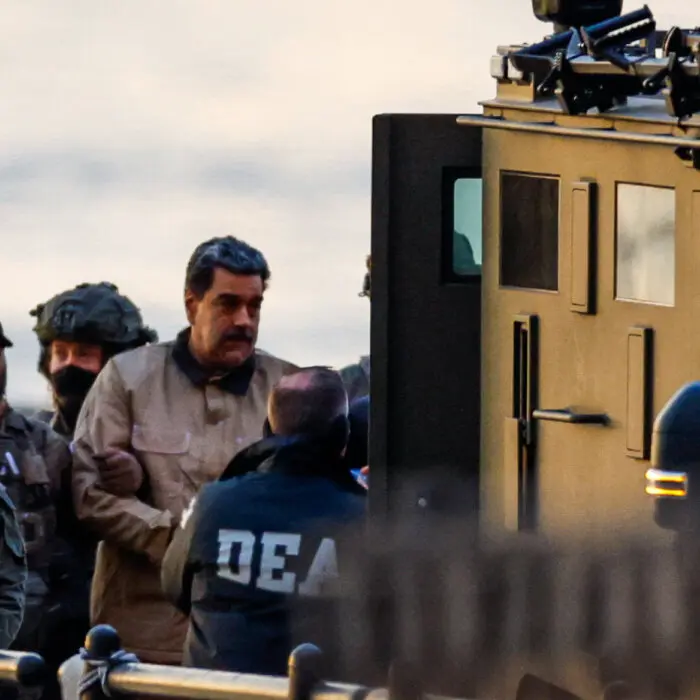
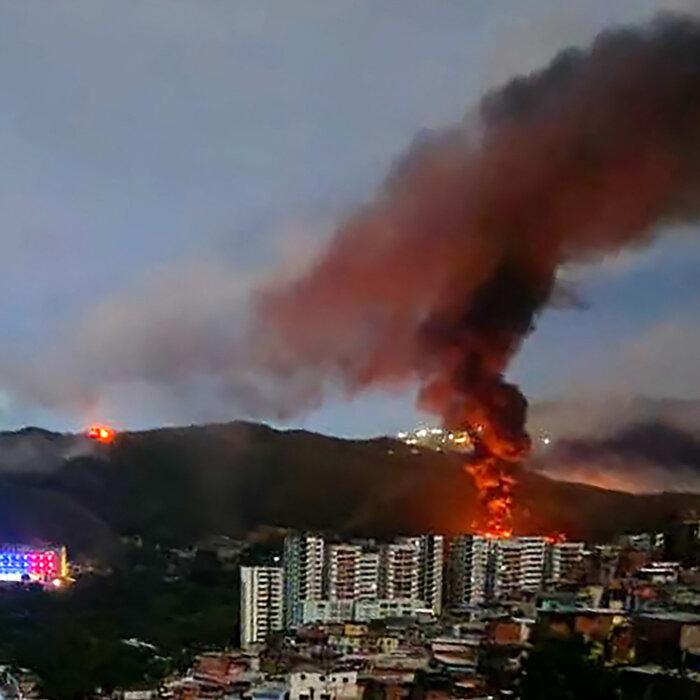
Carney’s trip to China carries some geopolitical risks given the current posture of the United States.The recent events in Venezuela, and the Trump administration’s comments about wanting to acquire Greenland, indicate the full-blown implementation of the new U.S. National Security Strategy finalized in November 2025.
A core tenet of the strategy is the revival of the Monroe Doctrine, aimed at reasserting the Western Hemisphere as an exclusive U.S. sphere of influence. This approach involves curtailing the presence and influence of China and Russia and dismantling transnational narcotics trafficking networks.
A relationship between Ottawa and Beijing that Washington sees as growing too close could become an issue.
Carney has so far not suggested there would be increased cooperation with China on sensitive files, nor a loosening of current rules preventing Chinese companies from acquiring Canadian assets with a national security nexus. These rules were strengthened under the Trudeau government.
The Carney government has also singled out Chinese production overcapacity as a concern, as well as China’s cornering of some sectors like critical minerals.
“We’re looking at ways where we can work together, and I think it’s a good thing,” he said. “At the same time, within the framework of the G7, we need to make sure that we have a common approach when it comes to non-market practices, overcapacity, which are affecting the G7 economies.”
Some China watchers, however, say Ottawa’s push for closer ties with Beijing is ill-advised and that its approach also lacks maturity.
“That message may sound pragmatic at home, but to hostile or rival states it can signal vulnerability — even desperation,” Tohti said.