U.S. forces began carrying out new strikes on Iran on July 11, in response to an Iranian attack on a commercial vessel in the Strait of Hormuz.
The U.S. Central Command (CENTCOM) said the strikes began around 7:15 p.m. ET, and were made in response to an Iranian attack on the Cyprus-flagged container ship M/V GFS Galaxy. CENTCOM said one of the vessel’s civilian crew members is missing following the Iranian attack, and the ship is unable to continue its journey due to an onboard fire and damage to its engine room.
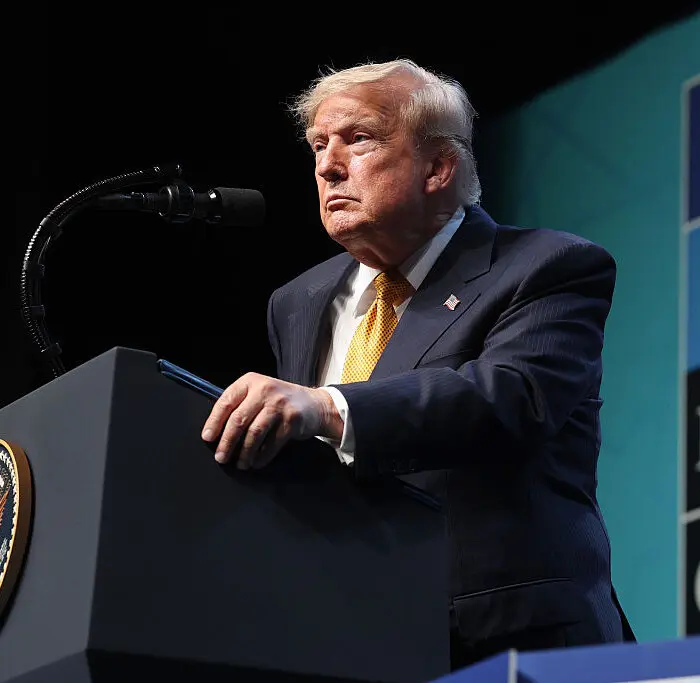
“In response, the United States is imposing a heavy cost by continuing to degrade Iran’s ability to attack civilian mariners and commercial ships freely transiting the strait. The strikes are being carried out at the direction of the Commander in Chief,” CENTCOM said.
Four hours later, CENTCOM said U.S. forces had finished hitting approximately 140 Iranian military targets, “holding Iranian forces accountable for attacking another commercial ship in the Strait of Hormuz.”
“Targets included Iranian missile and drone sites, naval capabilities, ammunition storage facilities, communication networks, and coastal surveillance locations,” the command said.
Shortly before the U.S. military announced the strikes, Iran’s Islamic Revolutionary Guard Corps (IRGC) claimed responsibility for firing upon a vessel that it said was attempting to transit the Strait of Hormuz through a route not approved by Iran.
The United Kingdom Maritime Trade Operations center, overseen by the British military, said the vessel had been close to the shoreline of Oman.
The IRGC said its forces also began enforcing a closure of the Strait of Hormuz, which sits on a key route for the oceangoing export of oil and other commodities.
The IRGC also claimed attacks on U.S. military bases in Jordan and Bahrain.
Officials in Kuwait and Qatar reported intercepting Iranian missiles in their territories. Missile alerts sounded in Bahrain and the United Arab Emirates, and the Omani state news agency said that drones struck northeastern parts of the country.
In a memorandum of understanding reached with the United States on June 17, Tehran agreed to facilitate the safe and toll-free passage of vessels sailing through the Strait of Hormuz for a period of 60 days. Iranian authorities further committed to consult with Oman, which sits on the opposite side of the strait, and with other neighboring nations, to manage the long-term administration of the waterway.
“Iran was provided yet another opportunity to demonstrate adherence to the Memorandum of Understanding after being held accountable for earlier attacks on commercial vessels but has again failed,” CENTCOM said of the latest strikes.
Secretary of War Pete Hegseth said the Iranian side made “a poor choice.”
“Now they pay,” he added, in a social media post.
Mohammad Bagher Ghalibaf, the speaker of Iran’s parliament and a main negotiator, responded. “The era of one-sided deals is over,” he wrote on X. “We told you: keep your word or pay the price. Reality is knocking.”
The latest violence follows a meeting between Iranian and Omani foreign ministers on July 11 to discuss freedom of navigation in the international waterway. The meeting ended without a conclusion.
“The two sides agreed to continue these talks at the technical and political levels to reach the necessary agreements in accordance with international law,” Oman’s foreign ministry said in a statement.
Oman’s Minister of Foreign Affairs Badr bin Hamad Al Busaidi told French-Arabic radio station Monte Carlo Doualiya on June 29 that Oman’s position in the talks was for upholding international law and the United Nations Convention on the Law of the Sea (UNCLOS) in the Strait, which prohibits transit fees.
The Epoch Times has contacted Oman’s foreign ministry for comment.