

ANKARA, Turkey—The heads of the NATO member nations concluded a two-day summit in the Turkish capital of Ankara on July 8, as U.S. President Donald Trump works to reorient the transatlantic alliance.
At their previous summit, member states agreed to increase their military spending commitments to 5 percent of their respective annual gross domestic product (GDP) from 2 percent. The increase entails members spending 3.5 percent of their GDP on core military expenditures and another 1.5 percent on critical infrastructure and industrial capacity.
Trump championed those spending increases.
This year’s summit also came amid an unresolved armed conflict between the United States and Iran, which began on Feb. 28 and has affected global trade. The Trump administration has expressed frustration with NATO’s level of support in the Middle East conflict, with some members restricting U.S. access to their military bases and airspace for U.S. operations.
Here are the key developments from the two-day summit.
Iran Ceasefire Shaken by New Strikes
The Middle East saw a fresh exchange of fire with Iran as the heads of the NATO states gathered in Ankara.
Projectiles struck three commercial ships transiting the Strait of Hormuz on July 7. Although Iran did not directly claim responsibility for the attacks, Iranian state media said the targeted vessels had ignored warnings from Iranian authorities.
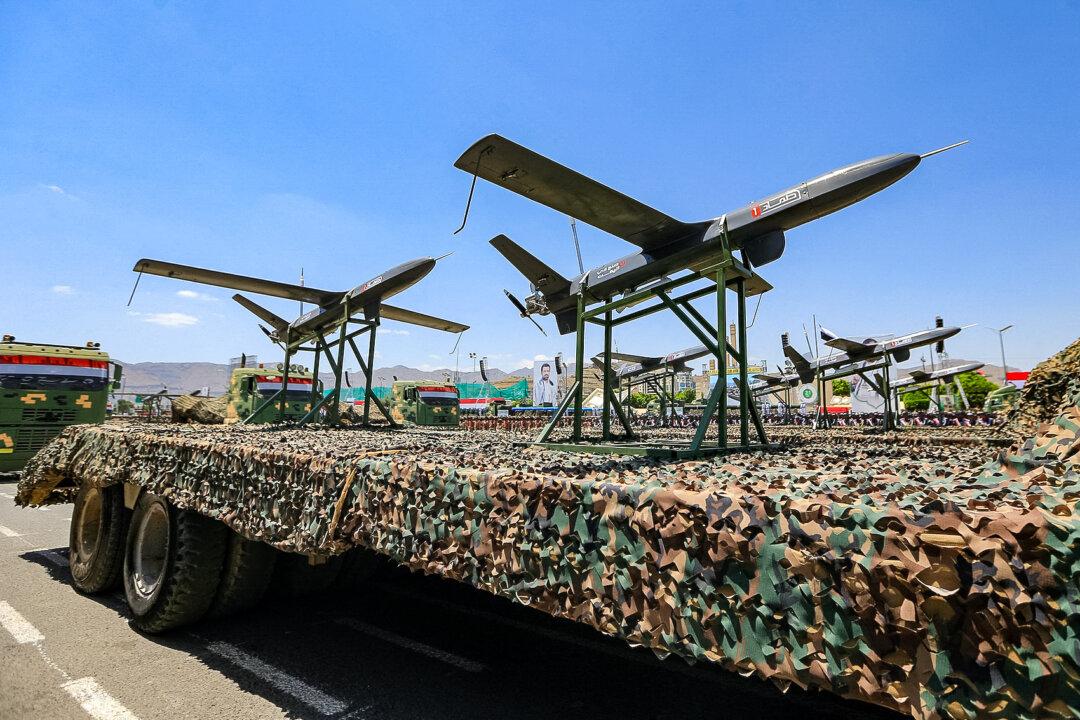
In response to the new attacks in the strait, U.S. forces launched strikes on dozens of targets within Iran on July 7. The Iranian regime’s Islamic Revolutionary Guard Corps, in turn, launched drones and missiles at U.S. military sites in Bahrain and Kuwait.
The new skirmish is the latest in a number of challenges to a truce Washington and Tehran initiated on April 8 and sought to reinforce through a memorandum of understanding in June.
When asked at a July 8 news conference whether the Iran peace framework is dead, Trump said, “I think it’s over.”
Trump said he would consult with his negotiating team before reaching a final decision but said he feels that negotiations are “a waste of time.”
At a news conference to conclude his Ankara visit, Trump was asked whether a collapse of the ceasefire would plunge the region back into a state of war.
“I think anything that happens is going to be over very quickly, and we'll only make it safer,” Trump said.
Renewed US Focus on Greenland
In the lead-up to the NATO summit, Trump reiterated his interest in expanding U.S. influence over Greenland.
At a meeting with NATO Secretary-General Mark Rutte on July 8, Trump said the island, which is an autonomous territory of Denmark, remains “very important” for the security of the United States and is “not important for Denmark.”
During the meeting, Rutte referenced a deal reached in Davos, Switzerland, early this year. Rutte said the deal allows a gradual increase in the U.S. military presence in Greenland and the deployment of the proposed Golden Dome missile defense system.
“I will make sure that that deal is, step by step, being implemented,” Rutte said.
Talk of the United States acquiring the island has been met with opposition from Denmark, a NATO member state.
US to Allow Ukraine to Produce Patriots
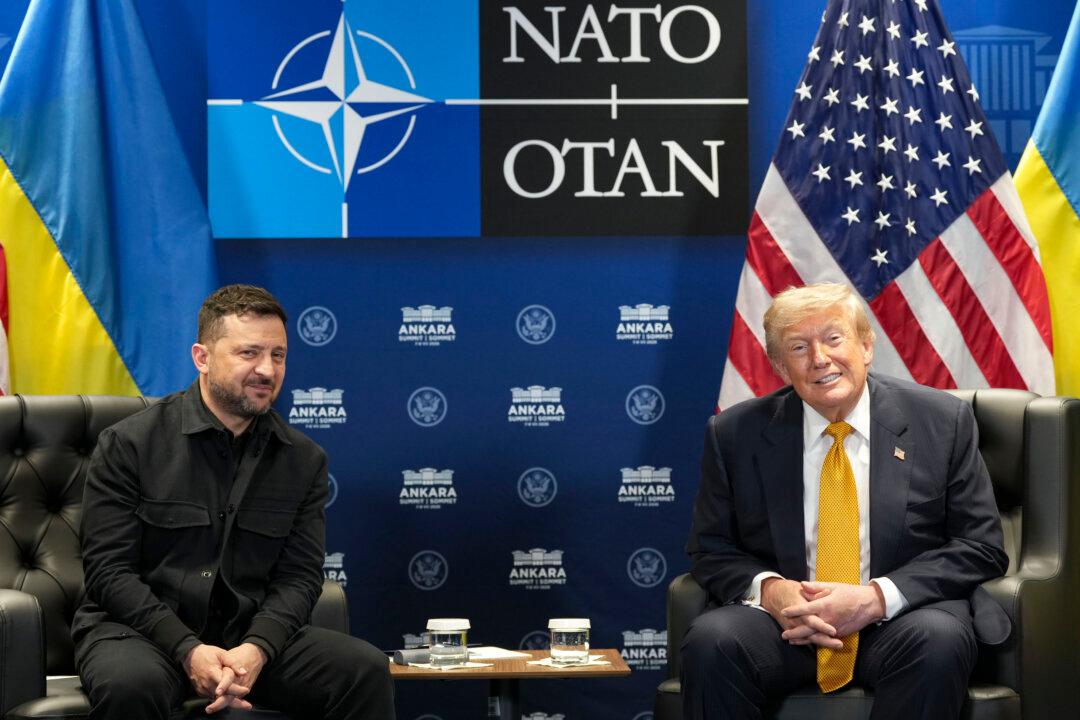
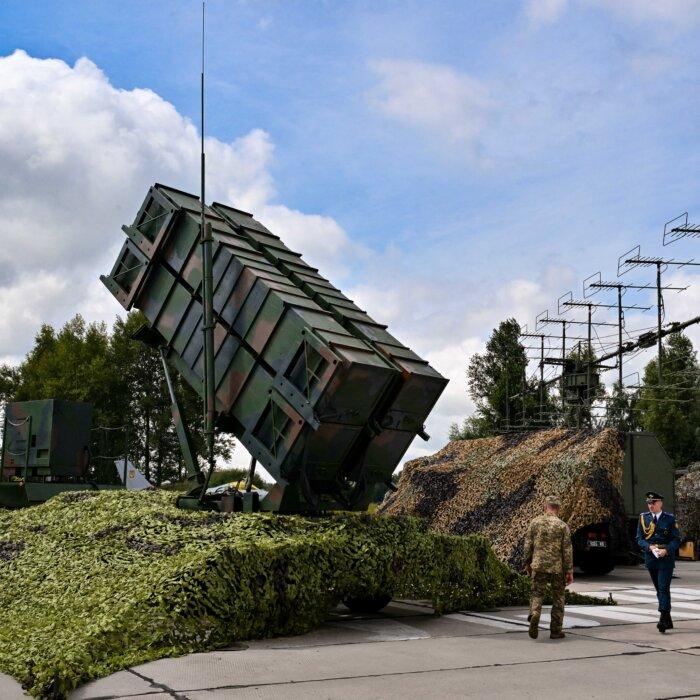
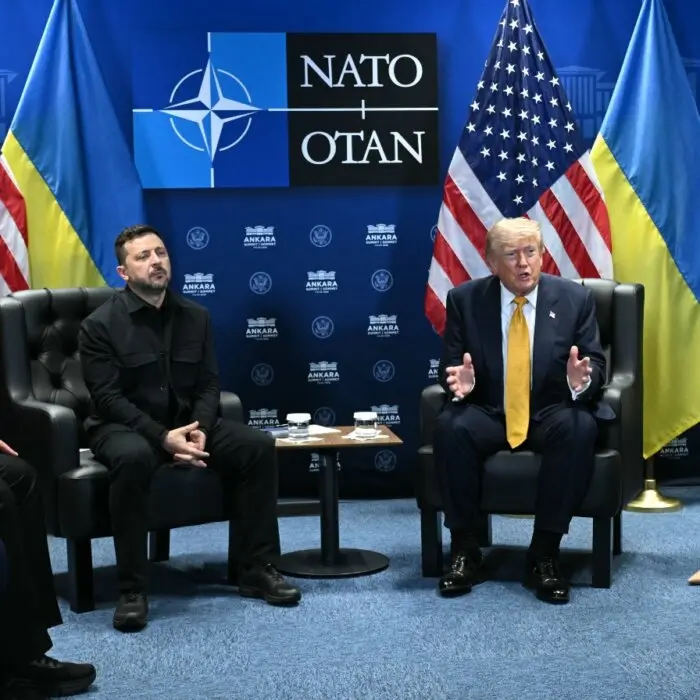
Ukraine stands to gain a production license for Patriot air defense systems following discussions between Trump and Ukrainian President Volodymyr Zelenskyy during the Ankara summit.
“One of the things we’re going to be talking about is we’re going to give a license to you to make Patriots,” Trump said during a bilateral meeting with Zelenskyy on July 8.
Since the start of the Russia–Ukraine war in 2022, Ukrainian forces have relied heavily on Patriot systems, transferred from the United States and other international supporters, to blunt persistent Russian aerial attacks.
Other recent conflicts, such as the one with Iran, have also taxed the global supply of Patriot systems.
“We have Patriots, but we don’t have that many,” Trump said. “We need them for ourselves too.”
Granting Ukraine a production license could address Kyiv’s demands for air defense systems and enable the United States to meet demand for Patriot systems elsewhere around the world.
“The Russians are finding it more difficult to defend their own airspace,” U.S. Secretary of State Marco Rubio said during the bilateral meeting. “And what we hope that means is that’s going to create the space now to negotiate the end of this war.”
Trump said, “It’s an escalation, but it’s also an escalation that can help lead to an end.”
Path Opening for Turkey to Get F-35s
Turkey was an early partner on the F-35 program but was barred from obtaining the advanced aircraft after purchasing Russian S-400 air defense systems in 2019. These purchases ran afoul of the 2017 Countering America’s Adversaries Through Sanctions Act.
“We’re going to be taking the sanctions off,” Trump announced.
Clearing the way for Turkey to obtain the advanced fighter jet is likely to be an involved process.
A provision of the 2020 National Defense Authorization Act requires the secretaries of state and war to certify that Turkey’s military no longer operates the S-400 and has offered assurances that it will not accept such Russian air defense systems before it can begin receiving F-35s.
Trump said he had tasked Rubio, Treasury Secretary Scott Bessent, and War Secretary Pete Hegseth to devise a plan to address the legal hurdles barring F-35 transfers to Turkey.
At a July 8 news conference, Trump said he had not reached a final determination on whether to readmit Turkey into the F-35 program.
“I haven’t totally made up my mind, but my inclination is to say, look, he’s done everything, he’s helped us in so many different ways,” Trump said.
NATO Allies Mark Progress on Military Spending
Trump praised the alliance’s progress toward the military spending commitments members agreed to last year, noting that most NATO allies have agreed to the new targets.
“Some have truly answered the call, and others are making big changes and will be answering the call,” Trump said on July 8.
Trump also praised the unity among the alliance’s members during the two-day summit.
“The unity in that room was incredible,” he said.
“There was a love in that room; it was great. So, this was a tremendously successful summit.”
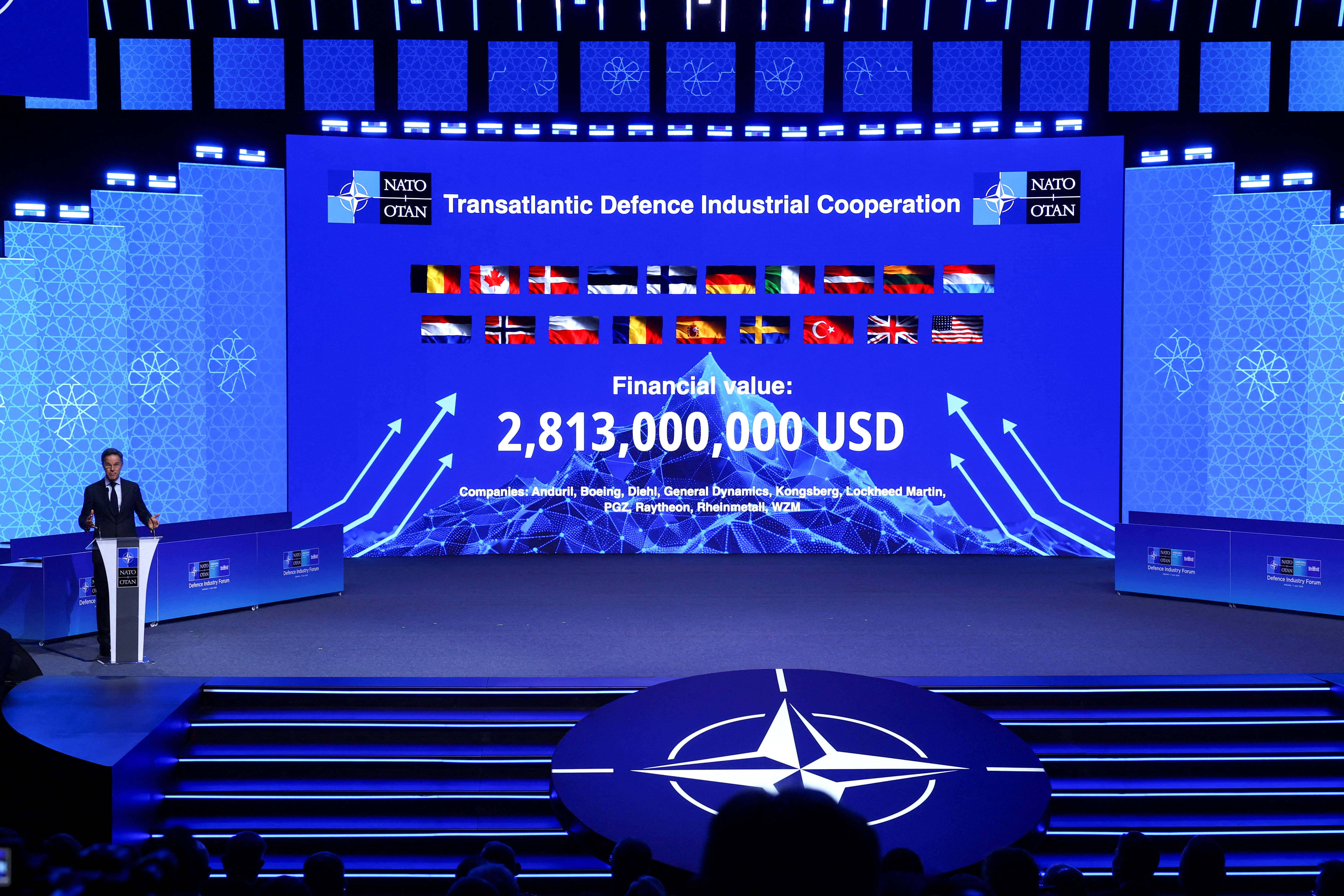
NATO allies also announced arms contracts with the United States during a defense industry forum in Ankara on July 7. The agreements signed with U.S. companies in Ankara include European countries purchasing surveillance drones from Northrop Grumman and Lockheed Martin establishing a new Patriot missile sustainment facility in Europe.
Trump Threatens to End Trade With Spain
Trump made headlines when he criticized Spain’s commitment to NATO, saying that the United States no longer wants to conduct trade with Madrid.
“Spain is a wasted cause,” the president said during his bilateral meeting with Rutte. “We don’t want to do any trade business with Spain anymore.”
Spain declined to join other NATO allies last year in pledging to increase defense spending.
According to the latest estimates from NATO, Spain remains one of the lowest spenders on defense, having contributed about 2 percent of its GDP last year.
“Spain is a terrible partner in NATO. They don’t participate, they don’t pay,” Trump said during the meeting, then turning to Bessent and asking to “cut off all trade with Spain, including visits.”
Tensions have been high since Spain’s socialist prime minister, Pedro Sánchez, publicly criticized the United States’ conflict with Iran. Spain actively blocked the U.S. military from using its domestic airspace and denied access to joint military bases.
However, during the news conference, Trump said that one country, which he did not name, had not been a strong team player before but that it showed better cooperation during the leaders’ meeting.
Meanwhile, Sánchez, in a news conference, said it had no intention of changing its “excellent social, cultural, and economic relationship” with the United States.