The Conservatives say they will table a motion in the House of Commons next week asking whether MPs support an oil pipeline from Alberta to the West Coast and any “appropriate adjustment” to the oil tanker ban on B.C.’s north coast.
Following the signing of the MOU, former Liberal MP Steven Guilbeault resigned from Prime Minister Mark Carney’s cabinet as minister of culture and Canadian identity, saying he could not stay on due to environmental concerns regarding the agreement.
Mixed Messaging From BC Caucus
While the federal government and Alberta are supportive of the MOU, B.C. and coastal First Nations have strongly opposed it.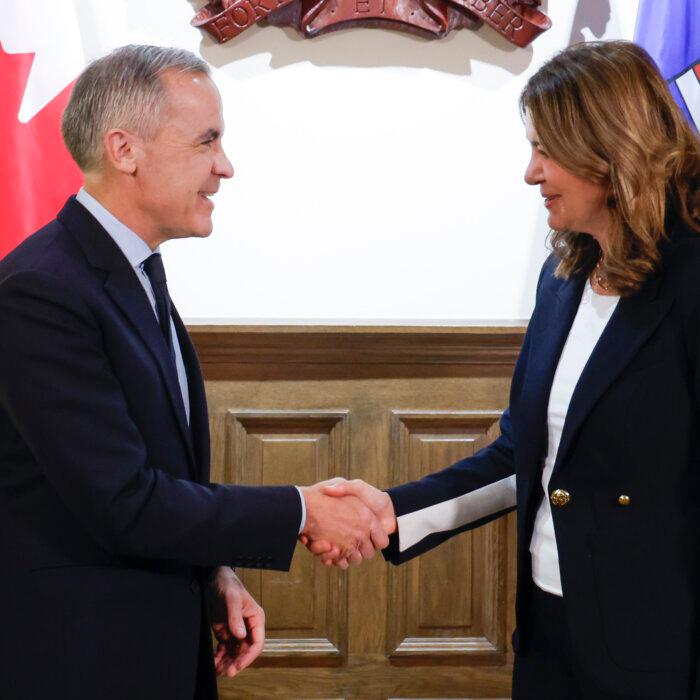
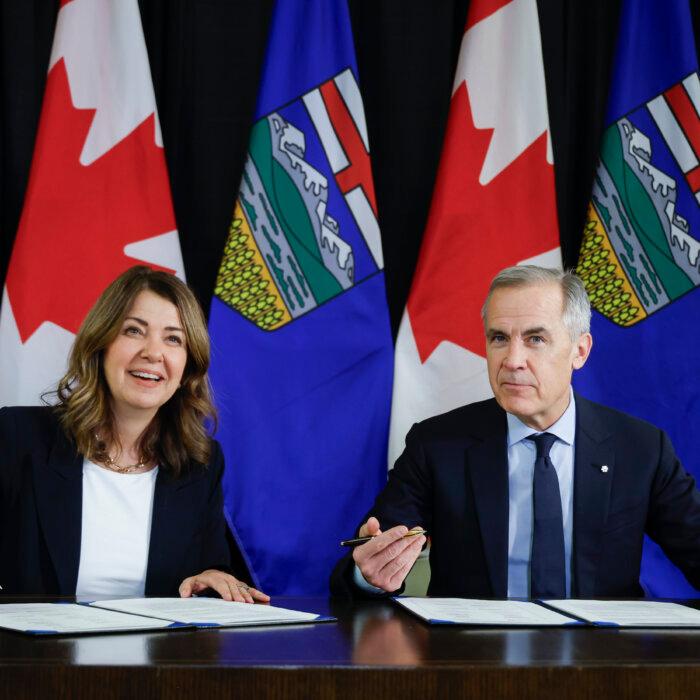
Energy Minister Tim Hodgson joined Carney in supporting the agreement, saying it represents an important step forward for Canada’s economy and geopolitical power.
However, the messaging from some Liberal MPs, especially those from B.C., have at times been contradictory with the public messaging of the Liberal government.
Liberal MP Gurbux Saini, representing the riding of Surrey, also said on Nov. 19 prior to the release of the MOU that a pipeline would require the consent of the B.C. government and First Nations to go forward, or else “there will be no pipeline.” In 2020, the Supreme Court upheld a ruling from a lower court, which held that B.C. has no legal right to regulate or limit oil shipments through the province, and that the issue falls within federal jurisdiction.
Liberal MP Will Greaves, representing Victoria, said prior to the release of the MOU that both he and his constituents are opposed to lifting the tanker ban.
The MOU
The MOU proposes the construction of one or more pipelines from Alberta to the B.C. coast should a private proponent come forward, and the rollback of several Trudeau-era regulations as well as a potential “adjustment” to the oil tanker ban. The first prospective pipeline would transport around 1 million barrels per day of bitumen to the B.C. coast, and would be paired with a carbon-capture system that Alberta Premier Danielle Smith says would be funded through higher oil revenues.An application to Ottawa’s Major Projects Office (MPO) is expected by July 1 of next year by the government of Alberta to pave the way for regulatory approvals for a proposed pipeline. If accepted by the MPO as a project of national importance, approval could come within two years.
The MOU also says Ottawa won’t implement its cap on oil and gas emissions or require Alberta to abide by the Clean Electricity Regulations, and will allow certain reforms to the Impact Assessment Act and give Alberta more decision-making power over its industrial carbon pricing system. Alberta agrees in return to charge at least $130 per tonne for its industrial carbon pricing and to reduce methane emissions by 75 percent from 2014 levels in the next 10 years.