The Roman Catholic Military Ordinariate of Canada says the military’s prayer ban at official events undermines the principle of state neutrality on religion and may violate the Charter in several ways, including by requiring chaplains to avoid mentioning God or using faith-specific language when delivering mandatory “spiritual reflections.”
The concerns were noted in a recent statement by Bishop Scott McCaig, who serves as Military Ordinary of Canada, the authority that oversees Catholic ministry and spiritual needs in the Canadian Armed Forces (CAF).
McCaig said discussions are taking place with the Canadian Conference of Catholic Bishops as well as other interfaith partners before the Ordinariate issues a formal position. He said the new CAF policy already raises a number of key concerns.
“For a great many people, chaplains and members alike, one cannot separate ‘meaning, purpose, and spiritual well being’ from ‘God, etc.’ Yet they are required by this instruction to do precisely that,” McCaig wrote in an Aug. 10 statement shared with the Epoch Times.
“They are required to do so despite it being contrary to sincerely held beliefs and the conviction of conscience. Is this not precisely the kind of coercion that the Charter is meant to protect us from?”
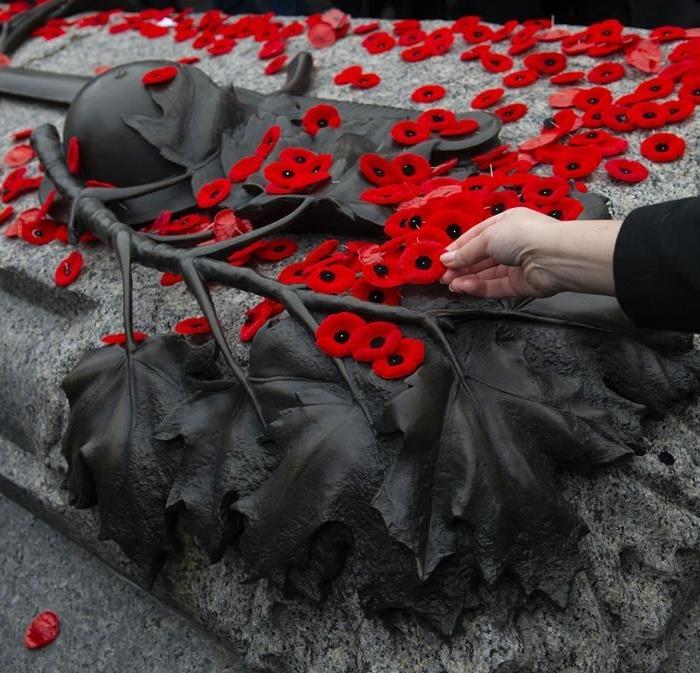
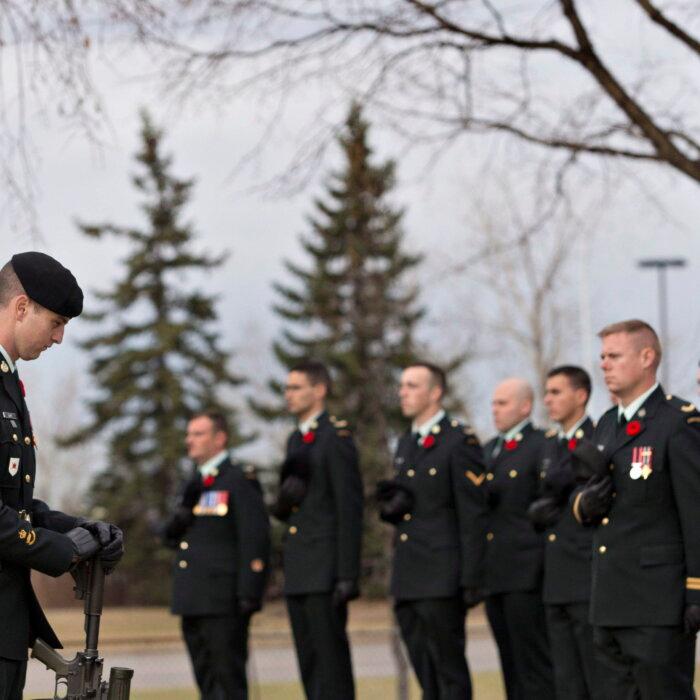
Instead of prayer or the use of now-banned words such as “God,” or other faith-specific terms and principles, the DND says a non-religious “spiritual reflection” should be delivered, focusing on themes such as meaning, purpose, and significant life experiences.
‘False Premise’
McCaig said the military’s stated position of trying to uphold state neutrality and inclusivity in the new instruction appears to be working from a “fundamental misunderstanding.”“This instruction is based on a false premise: simply because some belief systems do not profess the existence of God, or some other divine source, does not make them neutral,” he said.
McCaig noted that secular humanists are one of the recognized spiritual faith traditions represented by CAF chaplains, and that non-religious beliefs and philosophies including atheism still sometimes hold set views on God, values, or meaning.
“There is no such thing as reflections on meaning, purpose and spiritual well being without philosophical and religious presuppositions. It is not the place of the government to adjudicate between them. That is the opposite of state neutrality,” McCaig said.
Kim also referred to the instruction as being partly prompted by the Supreme Court of Canada’s 2015 ruling in Mouvement laïque québécois v. Saguenay, which held that the state must maintain a neutral position on religious beliefs or lack of beliefs.
McCaig cited the same Supreme Court decision, but argued CAF appears to have misunderstood it.
“What seems clear is that it is the favoured expression of one faith, to the exclusion of others, that is judged unconstitutional,” he said. “The Court ruled in favour of an open secularism, the freedom of religious conscience and expression for all rather than limiting rights, and enforcing restrictions.”
Exceptions
The recent CAF instruction has exceptions for military and state funerals as well as for voluntary religious gatherings and private counsel or prayer. It also allows indigenous practices including spiritual elements to take place at official military events if they are intended in a “cultural, historical, and educational” context.The latest directive in July now solidifies the prayer ban at official military events.
McCaig said the new directive is concerning not only because of its content, but also because of the process that led to it. He said military and political officials repeatedly turned down requests to hold discussions with religious and spiritual leaders as the issue was being reviewed and a new policy developed.
“A truly collaborative approach could have rendered a far more consistent and inclusive result,” he said.