Future attacks on the Middle East monarchy of Qatar will be treated as a threat to the peace and security of the United States, President Donald Trump affirmed in an executive order issued on Sept. 29.
“In recognition of this history, and in light of the continuing threats to the State of Qatar posed by foreign aggression, it is the policy of the United States to guarantee the security and territorial integrity of the State of Qatar against external attack,” Trump’s executive order reads.
“The United States shall regard any armed attack on the territory, sovereignty, or critical infrastructure of the State of Qatar as a threat to the peace and security of the United States.”
Trump’s order may come as an added level of assurance of U.S. support for Qatar after attacks inside its sovereign territory.

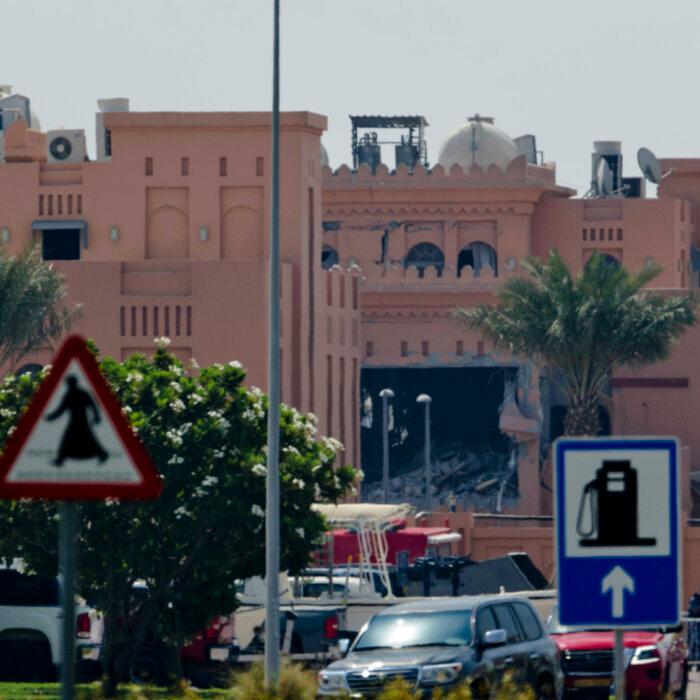
Qatar again came under fire in September, this time by another key regional partner of the United States.
The Qatari government has hosted political leaders of Hamas over the years and has served as an intermediary in negotiations to resolve the ongoing Israel–Hamas conflict in the Gaza Strip.
In his initial reaction to the Sept. 9 Doha strike, Trump said eliminating Hamas remains a “worthy goal” for Israel to pursue, but said it was unfortunate that Israeli forces struck inside Doha and he wasn’t able to notify the Qatari government before the strike.
Trump issued his new executive order concerning Qatar’s security on the same day he hosted Israeli Prime Minister Benjamin Netanyahu at the White House. During that visit, Trump facilitated a trilateral phone conversation involving him, Netanyahu, and Qatari Prime Minister Mohammed bin Abdulrahman bin Jassim Al Thani.
According to a White House readout of the Sept. 29 trilateral call, Netanyahu expressed to Thani that he regretted that Israeli warplanes violated Qatar’s sovereign airspace and that the strike “unintentionally killed a Qatari serviceman.” Further, the White House readout stated that Netanyahu affirmed Israel “will not conduct such an attack again in the future.”