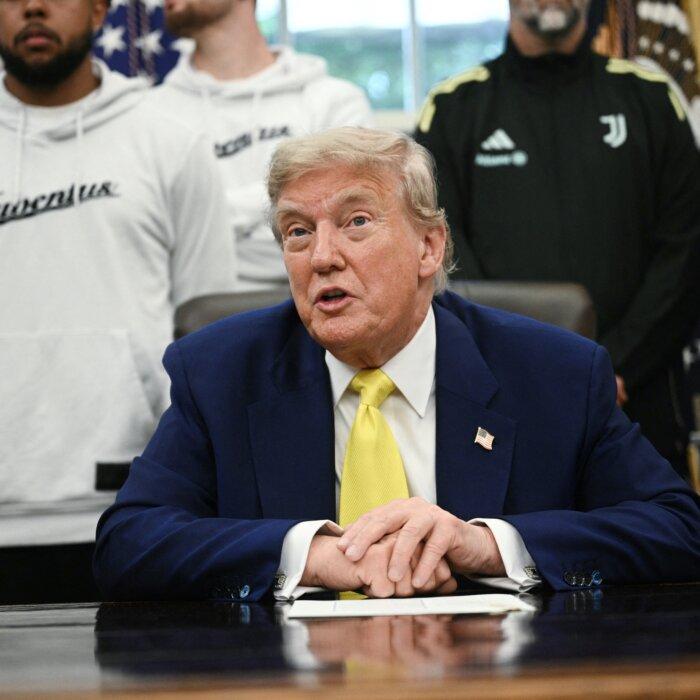
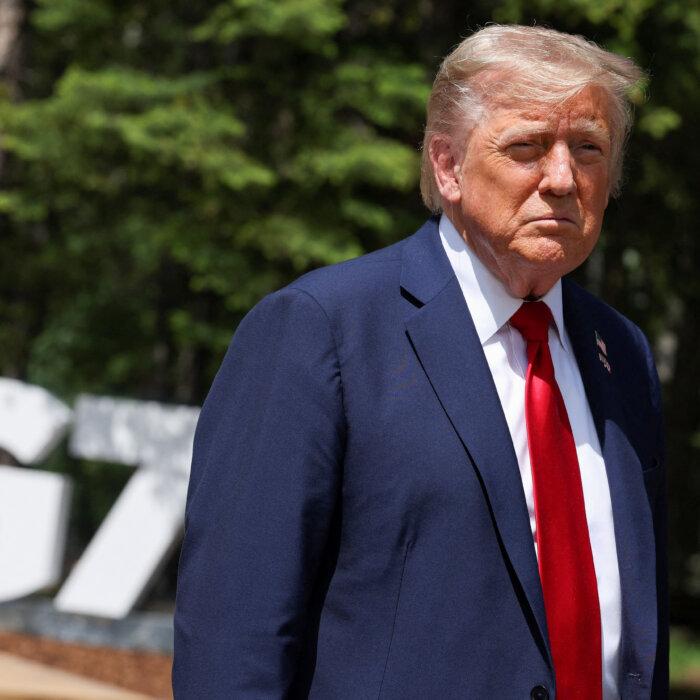
“When you get too complex on the deals then they never get done and we need speed,” Trump told reporters aboard Air Force One on his way back to Washington on June 17.
Trump was asked to expand on the comments he made on June 16 after his bilateral meeting with Prime Minister Mark Carney. Trump said the two have “different concepts” of trade, with him preferring tariffs while Carney has a “more complex idea, but also very good.”
“We’re going to look at both, and we’re going to see what we’re going to come out with,” the president added. Trump said Carney and Canadian representatives were “very good” at the summit.
After that meeting, Carney’s office said the two leaders had agreed to continue negotiations toward a deal “within the coming 30 days.”
Trump has imposed three sets of tariffs on Canada, including 50 percent duties on steel and aluminum. Another set pertains to Trump’s concerns about border security and drug trafficking.
Some of these elements could include participation in Trump’s “Golden Dome,” a major air defence project to defend against sophisticated missile and drone threats.
Ottawa has confirmed being in discussion with Washington on the matter and Trump raised the issue on Air Force One when asked whether anyone had talked about his comments of wanting to make Canada the 51st U.S. state.
Trump said it would be a “much better deal” for Canada but it’s “up to them.”
Trump left the G7 summit after the first day of meetings to address the Israel-Iran war from the U.S. capital. The foreign leaders who travelled to Canada and expected a bilateral meeting with Trump, such as the presidents of Mexico, South Africa, and Ukraine, will need to wait for another opportunity.
“We did everything I had to do in the G7. We had a good G7,” said Trump, who noted signing a trade deal with the United Kingdom. “We went very far down the line with a lot of deals.”
The agenda for the last day of the summit includes bilateral meetings and a working lunch with the invited leaders.