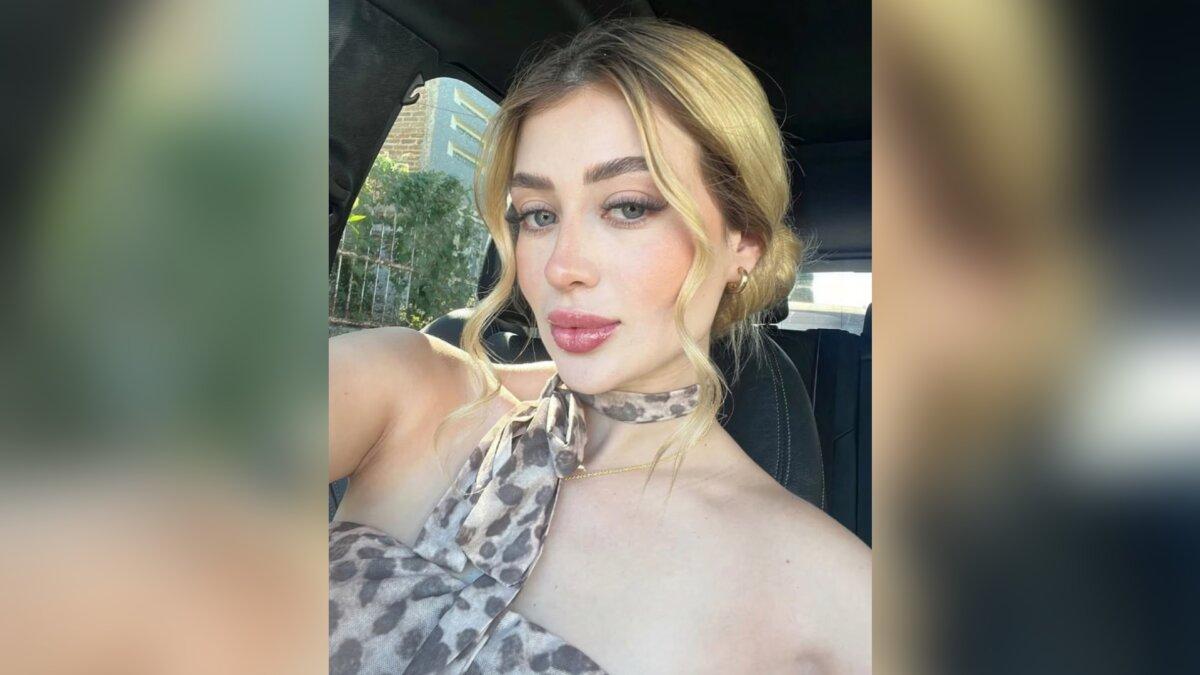
The murder of a TikTok influencer in Mexico has highlighted the dangers of livestreaming on social media.
It is not clear if her killer located her because of the livestream or if he already knew her location.
Kenji Takano, 42, was arrested on suspicion of murder on March 11.
The Asahi Shimbun newspaper reported that the Tokyo Metropolitan Police Department had stated that Takano told them he traveled from Oyama city, 60 miles north of Tokyo, to carry out the attack and tracked down Sato’s location by watching the livestreaming footage.
In June 2016, Antonio Perkins, 28, was shot dead as he livestreamed in Chicago—a murder that remains unsolved.
Louis Rossmann, an electronics technician and YouTuber with 2.2 million followers from Austin, Texas, told The Epoch Times: “These incidents are tragic but not unique to any one country or demographic.
‘You Open Yourself Up to Risks’: YouTuber
“The moment your platform reaches a certain size or your content challenges powerful entities, like I have been doing for a decade now, you open yourself up to risks,” said Rossmann, who has campaigned for the right to repair.He said it was important, when livestreaming, to prioritize being aware of everything that was going on around you.
“Knowing your surroundings and being comfortable in them doesn’t mean you should ignore the risks,” Rossmann said.
Social media has thrown up extra security risks, especially for people who are famous or wealthy.
Badiva, a musical artist and performer in London who posts on social media, told The Epoch Times: “I’ve always been told ‘don’t post in real time, post after you’ve left.’”
She said fans like livestreaming, but the practice comes with risks for content creators.
“The risk of posting livestreaming is high, even if you’re someone that doesn’t have enemies,” said Badiva, who said it was not just rappers or those wearing expensive jewelry who might be targeted.
In cases like that of PnB Rock’s, Rossmann said that “the risks may also be tied to broader cultural dynamics within certain industries.”
“The reality is that online visibility is itself a risk factor,” he said.
Rossmann said harassment and threats were not limited to the famous.
Stalking and Location Tracking
On May 14, a British man, Rob Keating, was convicted of two counts of stalking, involving fear of violence, after a trial in Portsmouth, England.The court was told he had targeted Alexandra Saper, a U.S. travel influencer who lives in Bali and posts on Instagram as The Wayfaress.
Keating had threatened to kidnap her and was arrested at the airport en route to Asia with a rope in his suitcase.
Since the advent of social media and, later, livestreaming, there has been more and more opportunity for criminals to track down their prey.
Chris Davies, a livestream producer and editor in the United States, told The Epoch Times: “Ultimately, if somebody is out to get you, it’s relatively easy to find anyone on social media.”
He said when he drove through affluent neighborhoods, he often thought about how people could see that someone had an expensive car or a large house and decide to rob them.
“I don’t think the internet is ever going to be any different, if people see something they want to take, as dystopian as that sounds,” Davies said.
“Be careful what lens you are seen through by millions of people. If it’s the wrong lens, you could be putting yourself in jeopardy.”
Livestreaming has been around since the late 1990s, but it has become more popular and easier to do in recent years.
In 2008, YouTube Live hosted its first livestream event, and then in 2011, a platform called Twitch allowed people to livestream video games.
Periscope was a popular livestreaming app between 2015 and March 2021, when it was closed down by its owner, Twitter.
Livestreaming has also become a platform for some perpetrators of horrific crimes.
In February 2017, 19-year-old Marina Lonina was jailed in Ohio for livestreaming the rape of an underage girl on Periscope.
Badiva said some criminals and gang members are now documenting their crimes on film, like some form of extreme reality TV.
Livestreaming-Related Murders in Jamaica
Jamaica has seen four murders in seven months involving people killed while—or just after—livestreaming.On April 27, Jabari Johnson, an influencer known as Baba Skeng, was shot dead on a street in the Jamaican capital, Kingston, while broadcasting live on TikTok.
Two influencers, Xavier “Niah Gang” Fogah and Marlon Samuels, aka “41 Busshead,” who were both 23 years old, were killed in December 2024 in separate incidents, and a 20-year-old student, Keauno Watson, was killed in September 2024 after he was struck by a stray bullet.
Andre Williams, a crime journalist with The Gleaner newspaper in Jamaica, told The Epoch Times that livestreaming had “kicked off” on the island after he filmed on TikTok outside the main prison in Kingston in July 2024, following the release of Vybz Kartel.
“I broke the internet because my livestream was very active,” Williams told The Epoch Times. “Persons from overseas were sending in gifts on the live. My battery died because of how active the livestream was. At one point in time, I had 66,000 people on the livestream.”
He said this is an election year in Jamaica, and politicians had started livestreaming campaign events.
“Wherever they go, these days, they are going live on their social media platform so that other persons see them and see what they’re doing and can engage with them,” Williams said.
But he said most politicians were surrounded by a security detail, unlike most people using TikTok or Instagram.
Williams said following the deaths in Jamaica, security experts had been brought in to try to educate the public about the risks of livestreaming.
Danger Lurks Even at Home
Paige Hanson, co-founder of SecureLabs, a U.S. company, told The Epoch Times that people need to take precautions when livestreaming from home.“I would pick a spot in your home and really scrutinize the background. What details are you giving away? Is there a certificate from the university you attended? Is there anything revealing about your children or other people in your house?” Hanson said.
“Those are the sort of things that people don’t think could be used against them, or that information could be filed away to build a profile of them.”
She said there were now artificial intelligence tools out there that could help people locate your home, even if the address is not in the public domain.
Hanson also advised influencers to post content on “latergram,” or to put things up on social media after they have left where they created the content.
Rossmann said it’s important to put things into perspective.
“I’ve spent most of my life in New York City and have livestreamed myself walking home through neighborhoods with reputations for being unsafe, without incident,” he said. “I realize being a public figure can quickly turn into vulnerability.
“My phone number was leaked online, which led to a steady stream of crank calls and credible threats. Since then, I’ve had to make multiple changes in the way I function and present myself online, to ensure my own safety.”