
The head of Canada’s Supreme Court has highlighted a series of challenges to the judiciary’s operations, including what he described as outside attempts to undermine trust in the courts and the increasing use of artificial intelligence (AI).
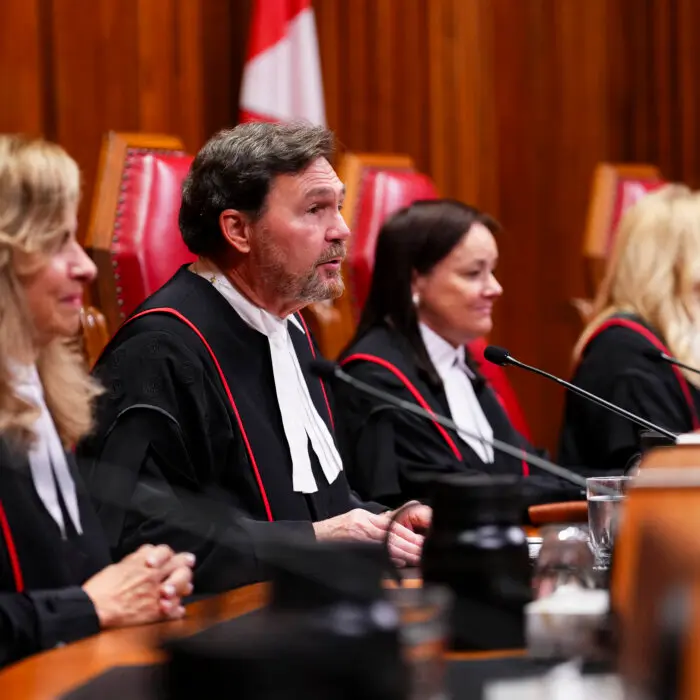
Chief Justice Richard Wagner made the comments during an update on the top court’s work in Ottawa on June 9, noting that institutions in Canada and elsewhere are under pressure and the public’s trust in them cannot be taken for granted.
“We have seen attempts to undermine public confidence in the justice system,“ he said at a press conference. ”We have seen judges and courts sometimes portrayed as partisan actors or described as obstacles to the will of the people.”
He said the public deserves a non-partisan system shielded from the influences of politics to ensure the rule of law.
“The rhetorical attacks which raise doubts about the legitimacy of courts or judges can weaken the entire justice system,” he said.
The Federal Court and the Federal Court of Appeal have ruled that the invocation of the act in 2022 to deal with the Freedom Convoy protest was not justified and breached Charter rights.
In 2022, Wagner publicly called the convoy the “beginning of anarchy, where certain people decided to take other citizens hostage, to take the law into their own hands.”
The Supreme Court registrar said in April that Wagner would not recuse himself because he had not commented on the Emergencies Act or matters in the proceedings.
Wagner was asked by reporters at the press conference to comment on the matter but he declined.
Risks of AI
Wagner also discussed the increasing use of AI in the courtroom, which he called both “promising and problematic.”“Just a few years ago, hallucinated legal cases were not something we imagined,“ he said. ”Today, they are a part of our reality.”
Artificial intelligence has generated fake cases that were cited in court in 200 cases in Canada, he added.
He said the risk rises as individuals with no legal background opt to represent themselves in court. These people will likely use AI input “but very often it will include fake cases, and that’s a big risk,” he said.
Wagner said self-represented litigants accounted for 37 percent of all appeals to the Supreme Court last year, and that figure is increasing this year.
Upcoming Ruling on Bill 21
Wagner’s update on June 9 came as the court is expected to deliver a key judgment on Quebec’s secularism Bill 21.The law prevents individuals working in positions of authority in the province from displaying religious symbols. The case also involves the pre-emptive use of the notwithstanding clause in the Charter of Rights to shield it from constitutional challenges.
Wagner called it a “major file” with the largest number of intervenors in the Supreme Court’s history, but said he doesn’t know when the ruling will be issued. He only noted it could be released before the Quebec provincial election in October.
The ruling could have key implications for the election campaign in Quebec if it sides against Bill 21, potentially giving new arguments to the Parti Québécois’ case for separation.