Carmaker Stellantis is selling its stake in a mega battery factory in Windsor, Ont., to its joint venture partner, Korean company LG Energy Solution.
The parties said the transaction reflects a “mutually agreed, strategic decision” that will help NextStar reach new customers in the field of energy storage systems. Meanwhile, Stellantis said it would remain a customer of battery products manufactured at the Windsor plant.
The federal government and the province of Ontario had made an agreement in 2023 to provide $15 billion in performance incentives to Stellantis and LG Energy Solution, as it pursued investments in battery production to build an electric vehicle (EV) supply chain.

EV Losses
Stellantis’s pullback from the Windsor battery plant came the same day it announced charges of about $22 billion euros (CA$35.44 billion) in the second half of 2025 as it scaled back its electric-vehicle strategy as part of a broader “reset” of its business. The company is pulling back from electrification, saying it’s putting “freedom of choice” at the heart of its plans.“The charges announced today largely reflect the cost of over-estimating the pace of the energy transition that distanced us from many car buyers’ real-world needs, means and desires,” Filosa said.
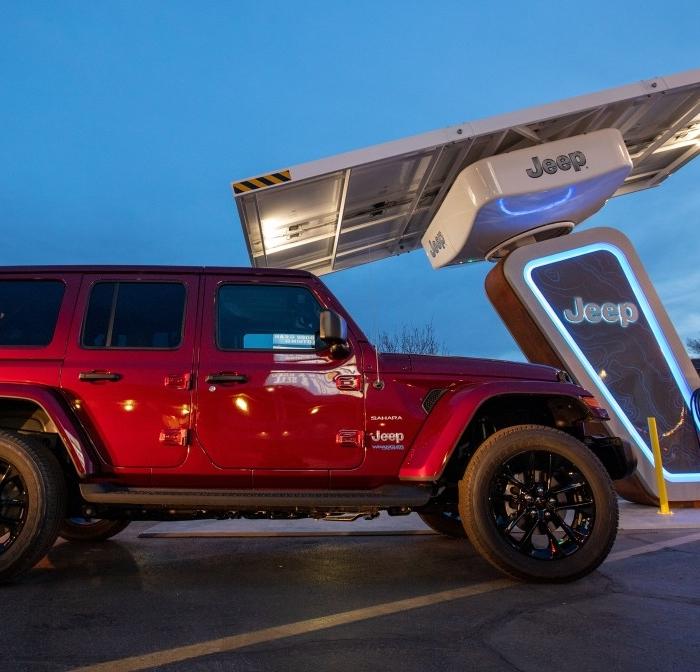
Stellantis is a multinational automaker headquartered in the Netherlands, with a portfolio that includes U.S. brands such as Jeep, Dodge, and Chrysler, and European brands including Fiat, Peugeot, and Alfa Romeo.
The company said it became a leader in electric vehicles in recent years but that it would now respond to “demand” and not “command.”
Other U.S. carmakers Ford and GM also recently announced financial losses related to EV investments.
Meanwhile, Ottawa announced this week a plan to expand EV production and charging station infrastructure as part of a broader automotive strategy. The government said it is also bringing back an incentive program to drive EV adoption.
A previous EV mandate that would have banned the sale of new gasoline- and diesel-powered vehicles by 2035 will be repealed. Instead, Ottawa plans to pursue a similar objective by tightening tailpipe emission standards. The federal government aims for electric vehicles to account for 75 per cent of new car sales by 2035 and 90 per cent by 2040.