The head of Australia’s domestic spy agency is concerned that “one day an Australian will be killed” on local soil by a foreign regime.
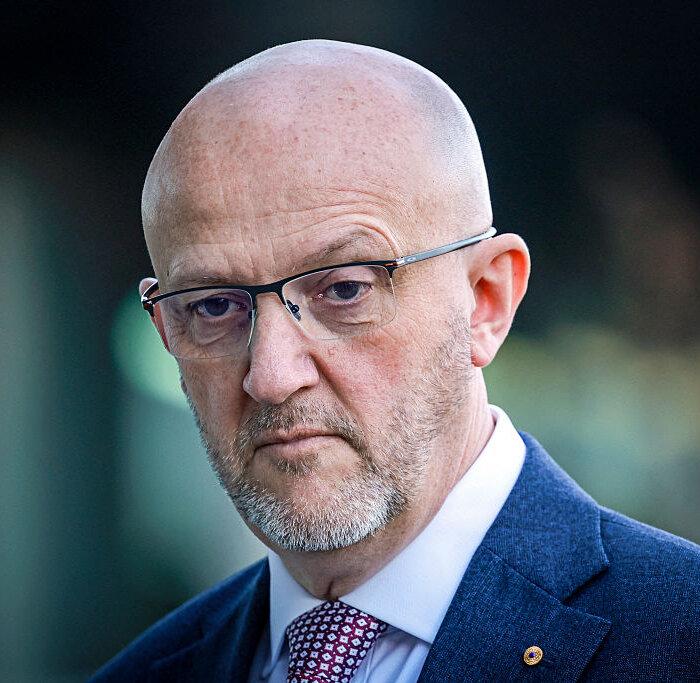
Mike Burgess, director-general of the Australian Security Intelligence Organisation (ASIO), issued the sobering warning during his Annual Threat Assessment on June 24.
Burgess revealed that the two local firebombing incidents that targeted the Jewish community involved Australian citizens living overseas working at the behest of the Iranian Revolutionary Guard Corps (IRGC).
A former Australian resident living in Iraq had been recruited by the IRGC through a network of militia groups and orchestrated the firebombing of the Adass Israel Synagogue in Melbourne in December 2024, Burgess said.
Another Australian citizen, based in Iran, orchestrated the firebombing of the Lewis Continental Kitchen in Bondi.
“This person is a senior agent of the IRGC Qods Force, running its networks around the world. We know more about him than he realises, including the name of his superior in Iran and the department he works for,” Burgess said.
Iran continues to view Australia as a legitimate target for covertly directed acts of violence, he warned, and there is a “realistic possibility” that an Iranian-backed group that’s responsible for a wave of arson attacks in Europe will expand to this part of the world and conduct or encourage arson, vandalism, or even assassinations.
“Thankfully, no one died as a result of the arson attacks. But I do worry that one day an Australian will be killed at the hands of a foreign government here in Australia,” Burgess said.
Since the Bondi attack in December 2025, Burgess revealed 14 other terrorist incidents have been resolved without incident.
ASIO is reviewing how it sets terrorism threat levels in the face of a “deteriorating global and domestic security environment,” and Burgess confirmed he is in talks with the Home Affairs Department on how the warning system could be overhauled.
“Australia’s terrorism threat level remains at ‘probable,’ but I do not believe the system was designed for a situation like the one we now face,” he explained. “The next level on the scale is ‘expected,’ which applies when we have intelligence about a specific attack. We do not.
“But we do know the environment is degrading and acts of politically motivated violence are becoming more likely than ‘probable’ suggests.
“In the current climate, it is too simplistic to assume there is a single terrorism threat or a most likely terrorist threat,” he said.
“Different countries, particularly our Five Eyes partners ... everyone does it a slightly different way, and we’re looking at that. The thing that matters is making sure that the Australian people, but also all the law enforcement agencies, get the best possible information,” he said.
Ideologies Mixing
Burgess said he was also gravely concerned by the “temperature and trajectory” of terrorism.“Grievance continues, social cohesion is strained and the likelihood of violence has increased,” he said.
“Social media is amplifying and accelerating grievance narratives, eroding trust in institutions, promoting discord and inflammatory rhetoric, exacerbating polarisation and creating a permissive environment for violence.”
People who are radicalised are increasingly embracing mixed ideologies.
“Neo-Nazis are anti-Semitic. Islamic extremism is anti-Semitic. Issue-motivated extremists can be anti-Semitic, particularly when they subscribe to conspiracy theories and stereotypes about the Jewish community.
“Nation states can be anti-Semitic ... anarchists and revolutionary groups can be anti-Semitic.
Opposition Surprised Australians Have Not Already Been Hurt
Opposition Defence spokesperson James Paterson, speaking on Sky News, said Burgess’s report was “sobering ... but not a surprising one to anyone who’s been paying attention.“Frankly, it’s remarkable that the Islamic Republic of Iran, and particularly the Islamic Revolutionary Guard Corps, hasn’t already killed an Australian.
“They nearly killed Australians when they sponsored terror attacks on the Adass Israel synagogue in Melbourne, which was firebombed when there were people inside worshipping ... And I fear that this malignant regime will cost the life of an Australian because it has the capability, and the intent, and the means of doing so.”