A former senior economics adviser to Prime Minister Anthony Albanese has warned that Labor’s tax settings are penalising economic growth, criticising the decision to keep the 37 percent tax bracket in earnings above $135,000 and calling for the top personal tax rate to be cut to 30 percent and the company tax rate reduced across the board.
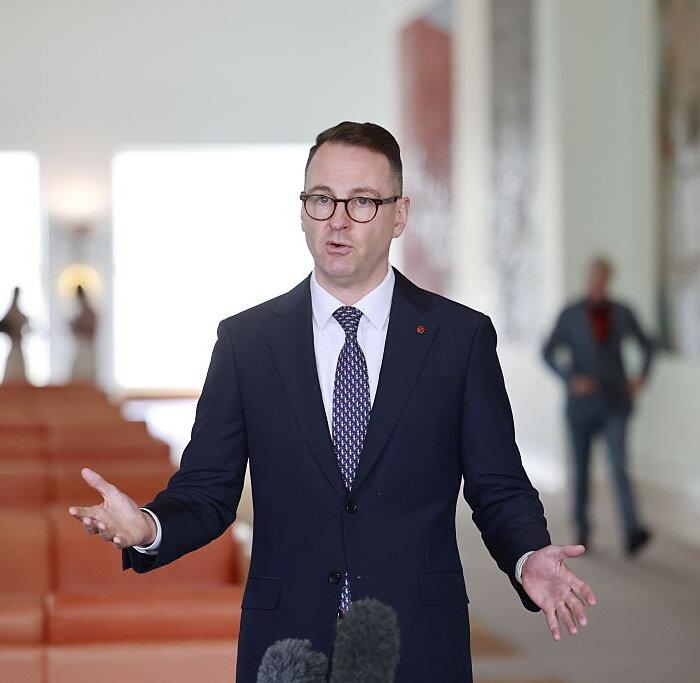
Alex Sanchez, who served as a senior economic adviser in the Prime Minister’s Office following the 2022 election, told the Centre for Independent Studies that Labor should move beyond the politics of attacking “the big end of town”—wealthy corporations, major banks, and high-income earners—and pursue more competitive tax arrangements.
He said he had encouraged Albanese and Treasurer Jim Chalmers to lower the top personal rate from 45 percent (on earnings over $190,000) to no higher than 39 percent, and ideally 30 percent.
The company tax rate, he said, should fall from 30 to 25 percent for all companies, removing the current threshold that restricts the lower rate to businesses with turnover under $50 million.
“I wanted to get rid of the arbitrage in the company tax rate, and bring it down to 25 percent because I thought that was a penalty on growth,” Sanchez said.
He described Labor’s current income-tax settings as “a very uncompetitive set of income tax arrangements.”
Sanchez argued capital should be taxed more lightly than labour, saying the economic literature was “absolutely compelling” on the point, and that it was consistent with the Labor tradition of prioritising growth.
“Hawke and Keating were go-for-growthers,” Sanchez said. “Everything that they tried to do was about enlarging, making the economy bigger, and while they were supportive of the safety net, they recognised the safety net in the absence of growth would be built on sand.”
Modern left-of-centre parties, he noted, tended to want to increase taxes on both capital and labour.
Sanchez Questions Universal Entitlement Model
On the National Disability Insurance Scheme (NDIS), Sanchez said spending had reached concerning levels relative to outcomes.
Around 3 percent of GDP is now devoted to disability support through the NDIS, the Disability Support Pension, and carers’ payments—more than is spent on the Pharmaceutical Benefits Scheme, public hospitals, and Medicare combined.
“The outcomes aren’t good. Forty percent of people on the NDIS are aged under 14. Absolutely, something is wrong there,” he said.
He suggested the government reconsider the scheme’s universal entitlement model, arguing a means test had been avoided largely because of political risk.
“In a means test, you’ve got to tell someone that they’re not going to receive assistance. So there’s partly the politics of that,” he said.
Australia was currently enjoying strong terms of trade and unemployment of around 4.4 percent, Sanchez noted.
“If you can’t get your budget right now, you never will,” he said.
He said the current direction of the Labor Party was very different from the one he had joined.
“If you went to a Labor Party meeting, sometimes you’d think you could be with the Greens, so there is a problem there. At the same time, the economic conditions are the ones that provide a wake-up call,” he said.