Retail power prices are set to rise, affecting every home and business in Australia due to worrying trends in the cost of wholesale electricity, according to a new analysis from the Centre for Independent Studies.
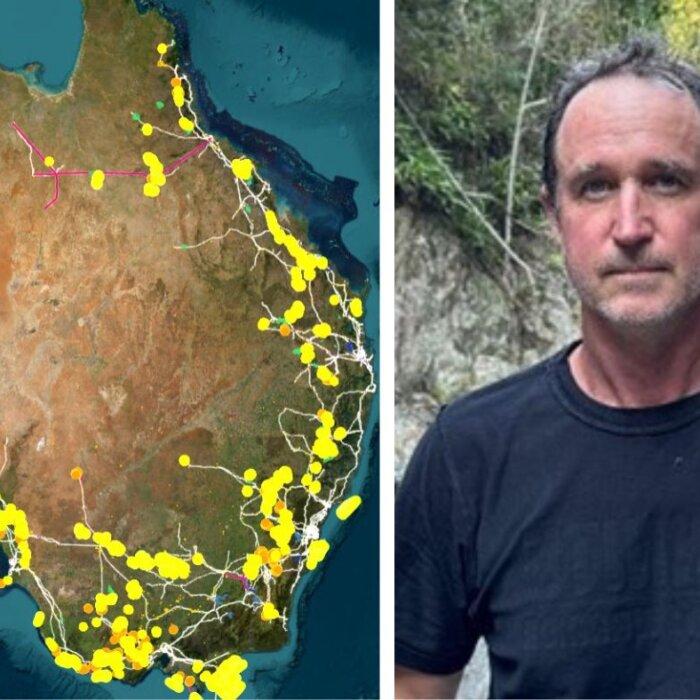
In a report titled “Risky Business,” senior policy analyst Jude Blik says the average wholesale price is increasing due to fuel costs, supply disruptions, and the integration of renewables.
Those factors all represent risks for generators, and subsequently, retailing.
“The business of selling power has become fundamentally more expensive,” Blik explains.
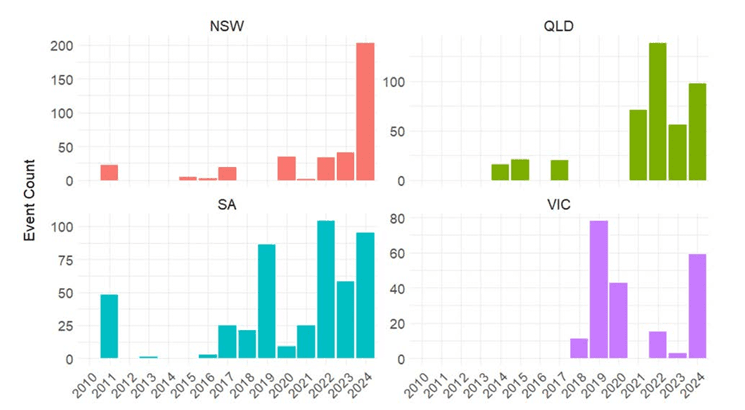
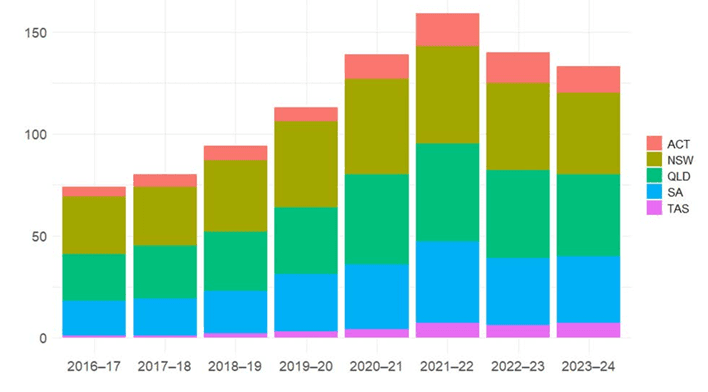
Frequency of Extreme Price Events (Where Prices Exceed $10,000)
In other words, a power generator might sell futures contracts to secure a stable price for its future electricity output, guaranteeing a minimum revenue stream regardless of a market price drop.
That works effectively when output is relatively predictable, such as from hydro or coal.
But intermittent renewables such as wind and solar are unable to provide the same degree of certainty, leading to higher costs for derivatives while demand for hedging increases, Blik explains.
“Compounding the challenge is a declining supply of derivative contracts, primarily due to the retirement of dispatchable coal generation, which historically underpinned these hedging instruments,” he says.
“Dispatchable” in this context means a power source that can be turned on or off and have its power output adjusted quickly to meet electricity demand.
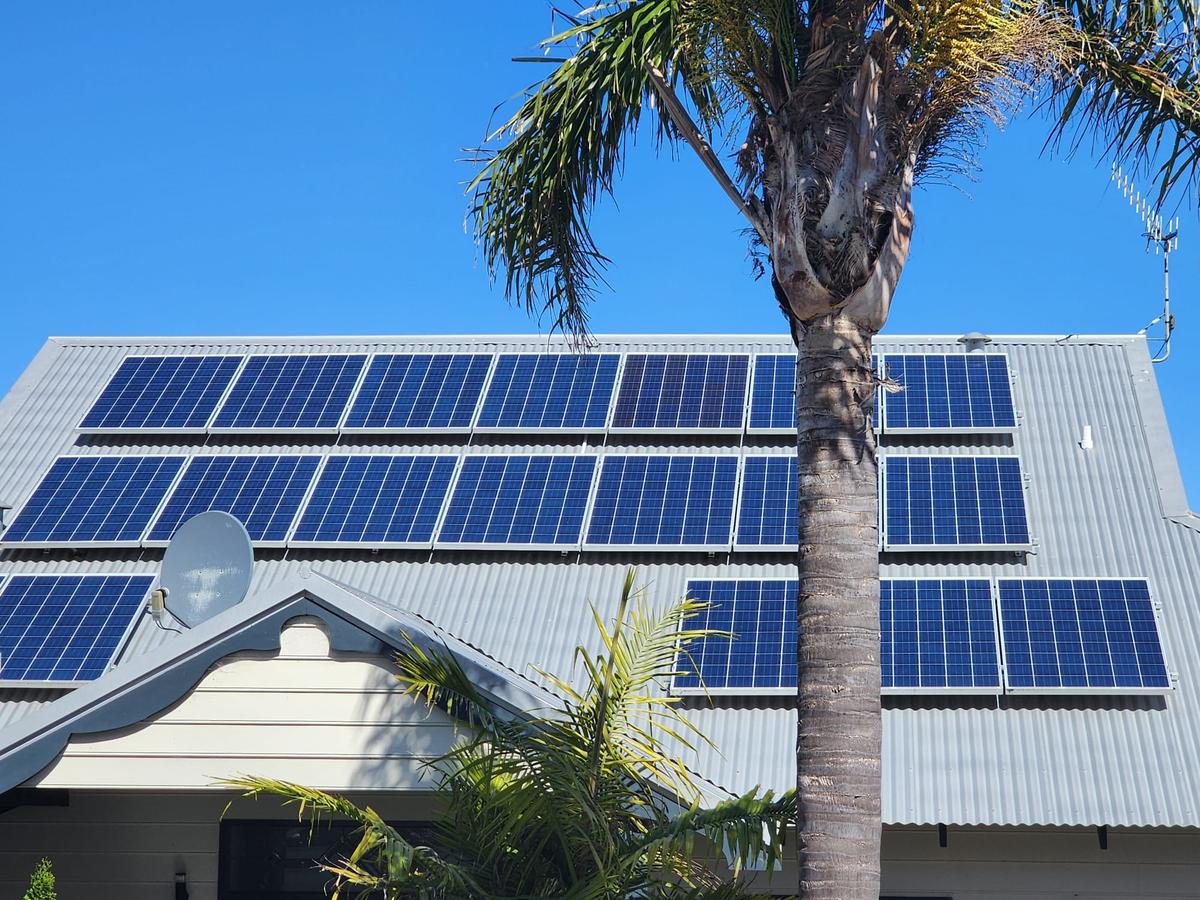
Rooftop solar has created what the CIS calls “a hidden cross-subsidy”: non-solar households are effectively paying more for their electricity, since retailers are forced to pass on losses from solar customers.
And, since rooftop solar self-consumption offsets grid consumption, solar households receive outsized savings by not having to pay their fair share of network costs.
“The so-called ‘duck curve’—a distortion in daily demand and price patterns caused by high rooftop solar penetration—[also] makes hedging more complex and expensive,” the report says.
- Morning: The demand for electricity rises as people wake up and turn on lights and appliances.
- Midday: As solar power generation peaks, it covers a significant portion of the daytime electricity demand, causing the net load on the grid to drop. This is the “belly” of the duck.
- Evening: Solar power generation declines rapidly as the sun sets, but demand for electricity surges as people return home and turn on lights, appliances, and air conditioning.
- The neck: The net load on the grid increases extremely quickly to meet this new demand, creating the steep “neck” of the duck.
Overall Number of Retailers in the Electricity Market
The DMO sets the maximum price energy retailers can charge electricity consumers in New South Wales, South East Queensland and South Australia who are on default plans, known as standing offer contracts.
The competition allowance, called the cost to acquire and retain customers (CARC), was factored into the DMO to acknowledge retailers’ business costs.
“If the energy transition continues, Australia will continue to see higher prices for consumers, more retailer failures, and less market competition,” the report says.
“The problem is due to the intermittent generation that is being forced into the system and the retiring of dispatchable thermal generation, driven by the government’s net zero ambitions and the ‘82 precent by 2030’ renewable energy target.
“Powering a nation with intermittent wind and solar is proving to be far more expensive than the Australian people were initially told, especially after counting the costs of the second- and third-order effects ... Until these policies are reconsidered, problems in the market will persist,” Blik says.