Scientists are one step closer to uncovering the true dangers of plastics and determining the reach of the nanoplastic invasion into the human body after the development of a specialised laboratory at the University of Queensland (UQ).
The development is a significant step for scientists striving to determine what regions of the body—including the brain—plastics have penetrated and what their damage could be.
In an email to The Epoch Times, the director of UQ’s Alliance for Environmental Health Sciences, Prof. Kevin Thomas, said that humans are exposed to plastic through the air they breathe, and the food and drink that they consume.
“Examining blood tells us whether (or not) the plastics that we are exposed to can cross into the body. This is the first step in understanding the consequence of being exposed to plastic particles,” Thomas said.
“Testing urine tells us whether these plastics can be excreted via urine. Our focus on the brain comes after understanding whether they are in blood or not, and this is to understand whether they have the potential to cross the blood-brain barrier.”

Prof. Thomas said that determining whether plastic particles have crossed membranes is the first stage in deciding to ask what the impact of that particle’s presence is.
“The body may be able to deal with it, or there may be mechanisms that occur that may start some sort of adverse outcome,” he said.
Lab First Step in Finding the Answers
In their search for plastic nanoparticles within the human body, scientists faced a significant obstacle. The pervasive nature of plastic pollutants means that they are found everywhere.This means that without a plastic-free lab, scientists can’t be sure that any plastics that they might find in blood, urine, or brain samples are indicative of plastics crossing membranes and infiltrating deep regions of the body. Instead, the plastics identified in the samples could be from the plastic or plastic-related chemicals constantly circulating in the air, water, clothes, building items, and everyday products.

This is where the lab at the Minderoo Centre—a partnership between UQ and mining billionaire Andrew Forrest’s philanthropic Minderoo Foundation—offers a solution.
The lab is nearly entirely made from stainless steel, with plastic excluded to the greatest extent possible and is also contamination-controlled and airlock-protected, making it capable of evacuating plastics that might be in the air, water, and clothes.
The air in the lab is also frequently filtered to catch and immobilise any circulating plastic particles and, to ensure that airflow is always outwards and never in, there is constant positive pressure.
“The air is filtered 70 times every hr. The filters are changed when we see that they no longer work (i.e., keep the room free of plastics),” Thomas explained.
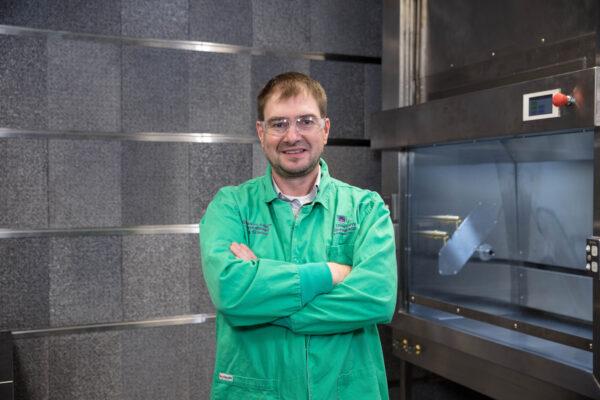
Image supplied by University of Queensland Prof. Kevin Thomas
The scientists are then free to enter a smaller metal chamber within the tightly sealed labs where they can dissect and examine any samples.
Thomas told the AAP that while it is an extraordinary process, it is entirely necessary.
Scientists are Searching for the Invisible
The plastic particles that scientists are searching for are capable of crossing the blood-brain barrier, which protects the organ from circulating toxins or pathogens. Plastics that are capable of this are called nanoplastics and they are incredibly small.Thomas said that the researchers are searching for things that are 1000 times smaller than the width of a human hair—and below.
“Our first goal is to be able to reliably measure them so we can actually say definitively whether they have crossed membranes into the body.”
The director of plastics and human health at the Minderoo Foundation, Emerita Prof. Sarah Dunlop, told AAP that the Minderoo Centre is fighting the invisible.
“You can see the plastic floating in the ocean, but you can’t see the plastic pollution in us,” Dunlop said.
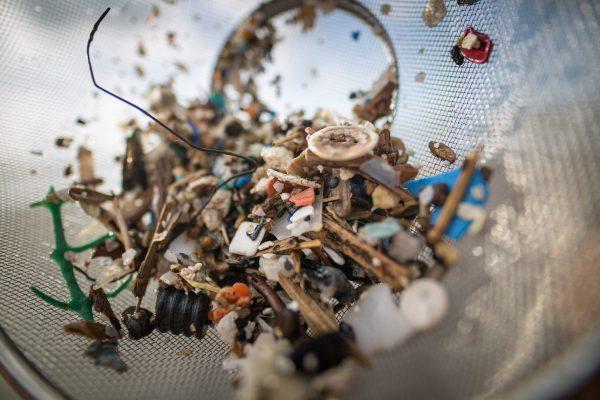
She said that if nano plastics are proven to be in the blood and brain, that in itself is an invasion or a toxic trespass that would demonstrate to the world that plastic pollution has to be stopped.
“Detecting plastics and having faith in the results is a very powerful statement to say to the world this plastic pollution has to stop,” she said.
“But it’s more than that. We have to be totally disruptive and redesign plastic so it doesn’t fragment into micro and nano plastics and doesn’t contain toxic chemicals.
“We hope that the scientific findings will shape government policy and health advice on plastic exposure and the chemicals.”