The Coordinator of Government Activities in the Territories (COGAT), an agency that implements Israeli government policies in the West Bank and the Gaza Strip, said that preparations with Egypt were ongoing to open the Rafah border crossing with Gaza.
“Preparations for the opening of the Rafah Crossing for the movement of people are ongoing in full coordination between Israel and Egypt, in accordance with the signed agreement,” COGAT said in a statement to The Epoch Times. “The date for the opening of the Rafah Crossing for the movement of people only will be announced at a later stage, once the Israeli side, together with the Egyptian side, completes the necessary preparations for the crossing’s opening.”
COGAT also stressed that humanitarian aid would not pass through the Rafah crossing; only people would be allowed to pass, as allowing aid through was “never agreed upon at any stage.”
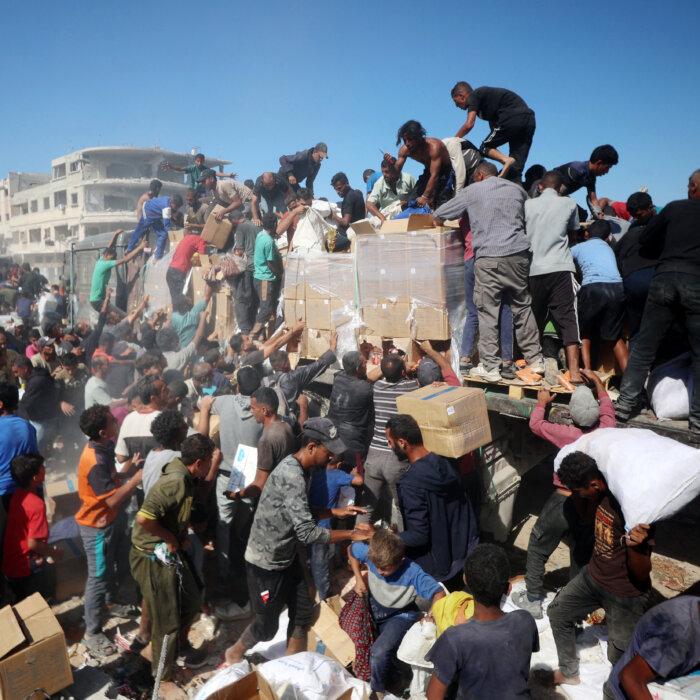
However, it said that overseas aid continued to flow into the Gaza Strip via the Kerem Shalom crossing with Israel near the Egyptian border, and at other crossings, and it would continue to uphold its commitment to the deal.
The preparations at the crossing come amid concerns from Israel that Hamas was returning the remains of the dead hostages too slowly.
Remaining Hostages
Officials said that “nobody’s getting left behind” and they were working to get all the deceased hostages back to their families, even possibly working with Turkey and other governments who were willing to send in experts to help with body retrieval.
“We’re working,” the official said. “We’re gathering lots of intelligence. We’re probably going to put together some sort of program where we’re going to ask people if they can help us to locate bodies, and we’re going to pay rewards for that type of good behavior.”
U.S. President Donald Trump separately told members of the press that work was being done to retrieve all the bodies but said it was a “gruesome process,” requiring that bodies be dug up and separated.
Later, Israeli President Benjamin Netanyahu appeared to suggest that this was not the view of Israel, saying in a statement on Oct. 16 that “the Government and the entire establishment for the missing and the captives of the State of Israel are determined, committed, and working tirelessly to return all of our fallen hostages for proper burial in their country.”
“The Hamas terrorist organization is required to uphold its commitments to the mediators and return them as part of the implementation of the agreement. We will not compromise on this and will spare no effort until we return all of the fallen hostages, every last one of them,” he added.
The war in the Gaza Strip has raged since Oct. 7, 2023, when Hamas-led gunmen attacked Israel, killing about 1,200 people, mostly civilians, and seizing more than 250 hostages.