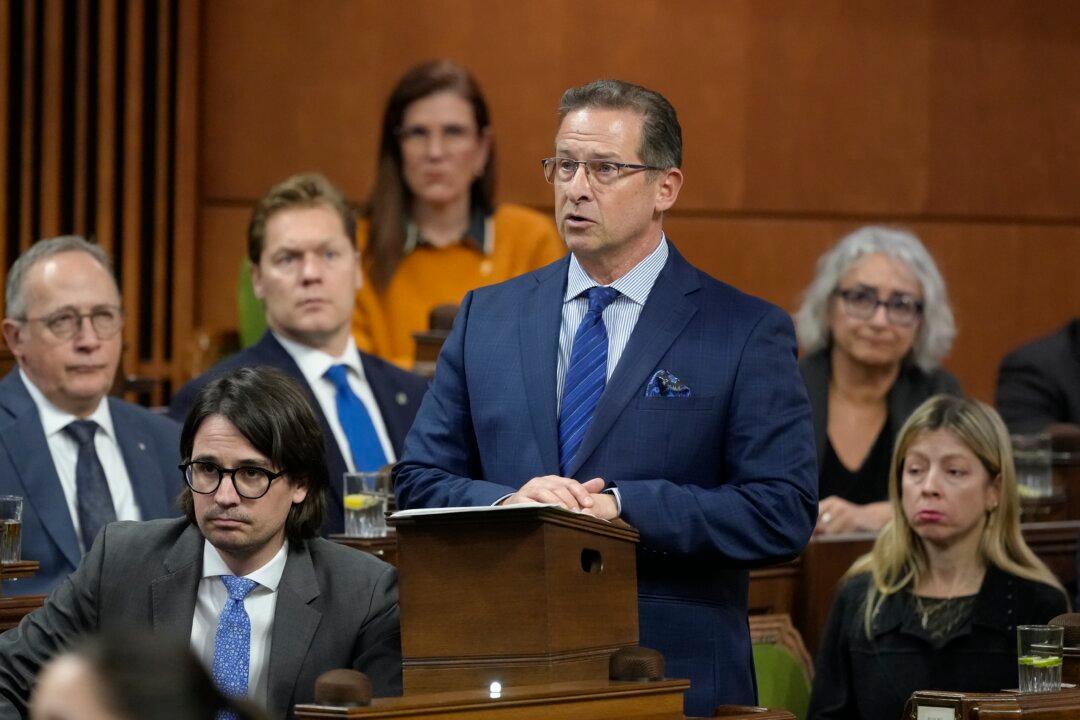

Ontario is tired of waiting for Ottawa to fix its back-logged immigration system and will begin issuing its own work permits to help asylum seekers enter the job market, Premier Doug Ford said.
Ford criticized the federal government during a July 23 press conference for prolonged delays in its immigration processes, saying that supporting asylum seekers while waiting for the federal agency to issue work permits is costing the province “an absolute fortune.”
“I’m not waiting any longer,” Ford said during the final press conference of the three-day premiers’ summer meeting in Huntsville, Ont. “We’re issuing work permits in Ontario for these folks.”
“There’s jobs available in Ontario, and we need to give them work permits and make sure that they’re out there working and contributing back to society.”
Premiers haven’t voiced many grievances against Ottawa in recent weeks as they present a united front to deal with economic issues and trade uncertainties with the United States, but concerns around bail reform and immigration were raised.
Ford noted premiers are asking for a larger role on the immigration file, saying that provinces know their labour markets best.
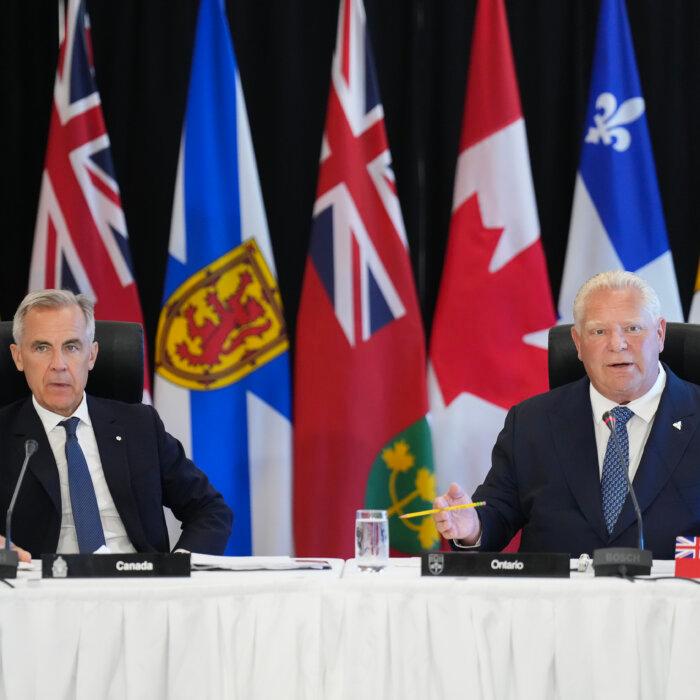
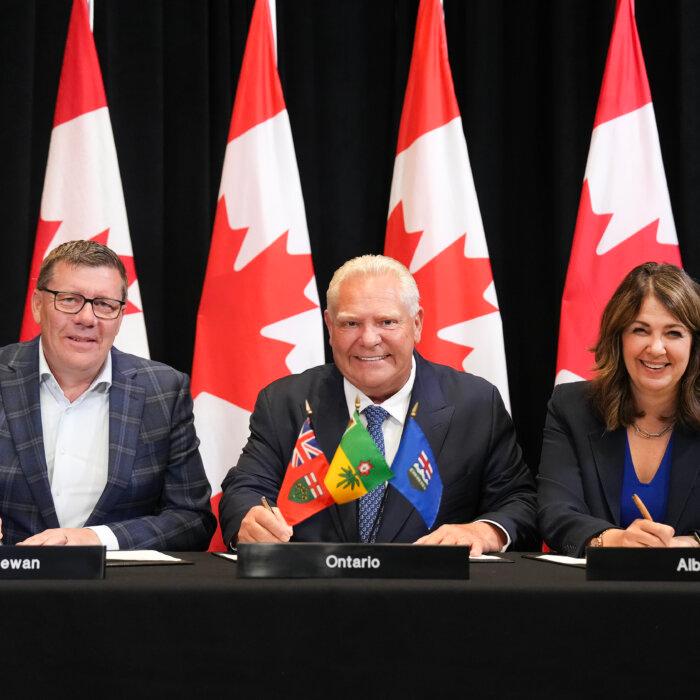
Ford said that Carney had agreed to have provinces take a larger role in immigration during the first ministers meeting at the summit on July 22, but suggested that federal Immigration Minister Lena Metlege Diab does not share that approach.
Ford said Diab “wasn’t on the same page” as Carney when federal and provincial immigration ministers met on July 22.
“We need the prime minister to be very, very clear with his minister: she needs to work with the provinces and territories to fix Canada’s immigration system and make it more responsive to economic and market needs,” Ford said.
Immigration Canada told The Epoch Times in a statement that it will continue to work collaboratively with provinces and territories and that they will be consulted on future immigration levels targets.
On the issue of work permits, the department said that once an asylum claim is deemed eligible for referral to the Immigration Refugee Board, a work permit can be issued to the claimant within about two weeks if a complete application was filed. The department added that processing time averages 45 days when factoring in the need for the claimant to complete a medical exam and provide a Canadian address.
The number of claimants has grown exponentially in recent years, from over 64,000 in pre-COVID 2019 to over 91,000 in 2022, and then over 143,000 in 2023.
The Liberal government introduced Bill C-2 in the spring to strengthen the borders, and it has provisions to make it harder to seek asylum in Canada.
The increase in asylum seekers in recent years, combined with population growth driven by permanent and non-permanent immigration such as foreign students and temporary workers, has put pressure on services such as health care delivered by provinces.
“Just last year, we were close to 100,000 asylum seekers, and I’m still waiting to get paid back from the federal government,” Ford said. CBSA and Immigration Canada processed 90,010 asylum claimants in Ontario in 2024.
Meanwhile, Quebec was second with 57,235 asylum claimants processed by federal organizations.
Legault said people are “used to hearing” Quebec ask for more immigration power, and he noted how now Canadian premiers are making a “pretty unanimous demand” around that issue.
He said Ottawa must “finally, at long last,” speed up the processing of asylum claims, saying it “makes no sense” that it takes three years, during which time provinces have to pay for the services in a context of scarcity.
“There’s a lack of housing, lack of spots in schools, lack of nurses, and we also have the question of the decline of the French language. So it is time for the federal government to reduce their delays of three years down to three months,” said Legault.