After saying his province would issue work permits to asylum claimants, Ontario Premier Doug Ford now says that he doesn’t intend to take over Ottawa’s responsibility, but just wants to help the feds speed up the process.
On July 28, Ford appeared to back away from his plan for Ontario to issue work permits to asylum seekers, saying he wants to support the federal government but questions whether Ottawa has the capacity to resolve ongoing delays.
“They’re collecting free schooling, free health care, and everything. I want them working,” Ford said, speaking in Toronto July 28. “And if we can support the federal government—maybe they don’t have the capacity to handle it—we’re willing to do that. I just want people to be out there working.”
Immigration, Refugees and Citizenship Canada (IRCC) said asylum claimants already have timely access to work visas.
“The average processing time for work permits to be approved is 45 days, when factoring in time for claimants to complete their medical exams and provide their Canadian address,” IRCC wrote in a July 28 email to The Epoch Times, noting that after approval, permits usually reach applicants within two weeks.
“IRCC collaborates with provincial/territorial counterparts to administer immigration and other programs and services to Canadians and newcomers,” it added.
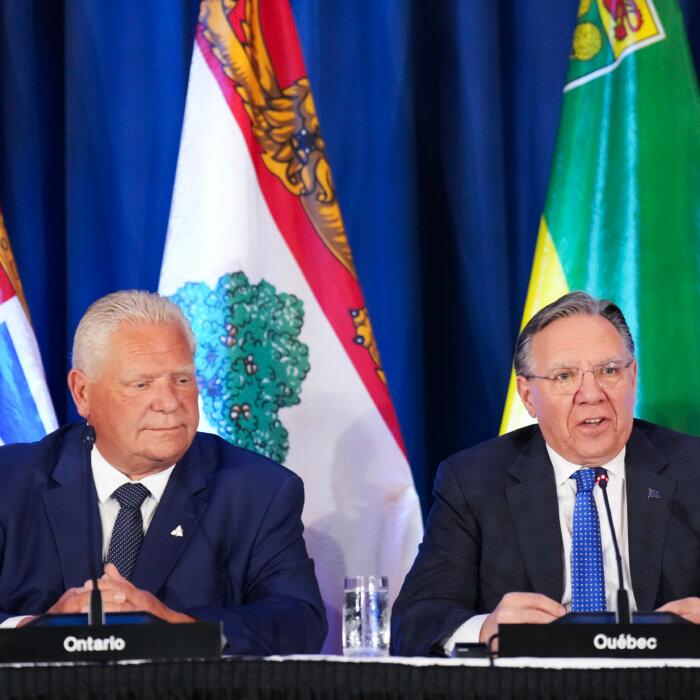

Ford said July 23 that delays in getting work permits for asylum claimants can be up to two years and are costing his province “an absolute fortune” amounting to around $1 billion in support payments for refugees. He also said that Ontario’s government would be stepping forward and issuing the permits themselves, instead of waiting on Ottawa.
Ford had planned to put forward a law under Section 95 of Canada’s Constitution that would let provinces make their own immigration decisions as long as they are not “repugnant” to existing federal law.
In his apparent reversal July 28, Ford said he’s still concerned about upcoming federal cuts that would end payment for some asylum seekers staying in hotels by the end of this September, saying Prime Minister Mark Carney had not advised him of the cuts.
While Ford said that he doesn’t “want to take the responsibility off the federal government,” or have Ontario take over immigration matters in Ottawa’s purview, he added that he still has serious concerns about delays and efficiency in the process and is willing for his government to assist as needed.
“As the Department looks towards the 2026-2028 Levels Plan and 2026 allocation decision-making, IRCC will engage all provincial/territorial partners and ensure that their perspectives are taken into account. Therefore, we are not able [to] speculate about future agreements,” the IRCC said.
Last year, IRCC and the Canada Border Services Agency handled more than 171,000 asylum claimants, primarily in Quebec and Ontario. The number of asylum claimants has skyrocketed, going from more than 64,000 per year before COVID in 2019 to more than 91,000 in 2022 and over 143,000 in 2023.
The Liberal government’s Bill C-2 to strengthen protections at the Canada-U.S. border was introduced last month and is currently in legislative review, having not yet reached the Senate for review.