Since 1054, the Great Schism has split the Christian Church into two main groups: the Western Roman Catholic Church, from which all protestant and evangelical denominations ultimately branched, and the Eastern Orthodox Churches. But on June 28, Pope Leo XIV reaffirmed his commitment to finally bringing that separation to an end as he met with a delegation representing Eastern Orthodox leadership at the Vatican.
While there are many observable differences between the Orthodox and Roman Catholic churches, especially in how they celebrate the Mass, two key reasons for the schism were each side’s use of the term Filioque in their respective versions of the Nicene Creed and their recognition of the Bishop of Rome’s authority over the global Church.
Leo XIV credited Pope Paul VI and then-Ecumenical Patriarch Athenagoras for initiating dialogue that he hopes will bring the churches back into communion. The Ecumenical Patriarch of Constantinople has been seen as the spiritual leader of the Eastern Orthodox Churches since 1991.
“Their venerable successors to the Sees of Rome and Constantinople have pursued with conviction the same path of reconciliation, thus further strengthening our close relations,” the Pope said, adding recognition of the current Ecumenical Patriarch Bartholomew’s participation in both Pope Francis’s funeral and his inauguration Mass.
The new pope made clear to the delegation that he already saw proof of a “profound communion” existing between the two churches meeting during the feast day of their shared patron saints—Saint Peter and Saint Paul—and he said he was open to talking through their differences.
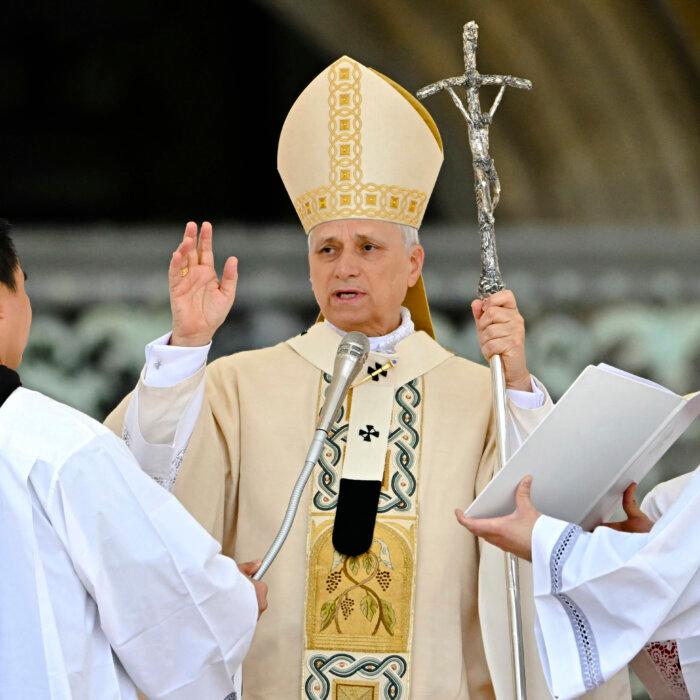
“I am open to any suggestions that you may offer in this regard, always in consultation with my brother Bishops of the Catholic Church who, each in his own way, share with me the responsibility for the complete and visible unity of the Church,” he said.
“Our two Sister Churches have been faithfully and hopefully engaged in the profoundly important dialogue of charity since the historic year of 1964, and have been committed to the official theological dialogue since 1980,” he wrote in his letter to Leo XIV.
He mentioned that there have been seven important texts that the two churches have agreed to, which he said highlighted “a remarkable convergence on many of the complex issues that, for centuries, have continued to divide Orthodox and Roman Catholics.” The most recent of those agreements was in 2023.
As for the two key matters that divided the Churches nearly a millennium ago, Emmanuel confirmed that the Joint International Commission for Theological Dialogue was preparing to study the addition of the Filioque into the Nicene-Constantinopolitan Creed, as well as continuing an “examination of papal primacy.”
“We hold a well-founded and confident hope that the extensive theological reflection and the dedicated ecclesiological research of these recent decades will contribute decisively to discovering the common ground upon which these traditionally thorny and challenging issues may finally find their peaceful and harmonious resolution,” he said.
Emmanuel added that both churches have come closer together in their shared calls for peace in the Orthodox-majority regions like Ukraine and the Middle East, and he expressed his anticipation for the joint commemoration of the 1700th anniversary of the First Ecumenical Council of Nicaea later this year.