A faulty main oxygen valve was found to be the cause of Blue Origin’s rocket explosion that brought all launches to a standstill several months ago.
“The anomaly originated at the main oxygen valve on one of the BE-4 engines, which was later confirmed by hardware recovery and inspections,” the commercial spacefaring company’s CEO, Dave Limp, said on X on Aug. 5.
“Extensive component-level and engine hotfire tests have been conducted to understand the failure mode better and inform mitigations. The path forward is clear.”
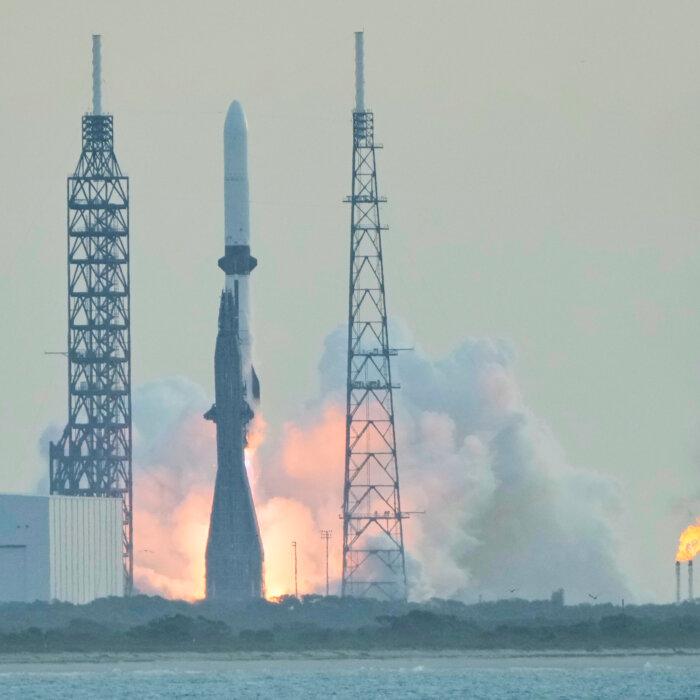
The explosive anomaly occurred on May 28 in Cape Canaveral, Florida, during a hotfire test of a New Glenn rocket—the company’s flagship semi-reusable heavy-lift rocket that has the capability to deliver multiple tons of hardware to and beyond Low Earth Orbit—ahead of a scheduled launch.
Lost in the accident were the reusable primary booster, which makes controlled returns and landings like the Falcon 9 boosters, the disposable upper stage, and the payload. The launchpad itself, Launch Complex 36 at Cape Canaveral Space Force Station, was left unusable, and some damage was dealt to the nearby vehicle assembly facility.
The accident occurred at a time when Blue Origin was assuming greater responsibility as a launch provider for NASA and the U.S. Space Force. That includes a large share of the launches for NASA’s Artemis program and Moon Base ambitions, including the Blue Moon MK1 uncrewed and MK2 crewed lunar landers.
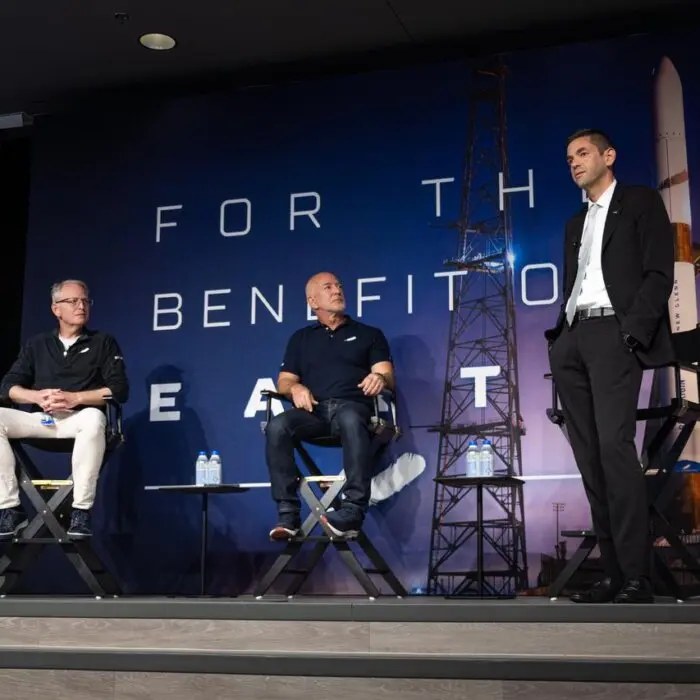
Immediately after the accident, NASA and Blue Origin leaders expressed determination to discover what went wrong, rebuild, and resume launch operations before the end of the year.
“We’re making small modifications to the valve that can be quickly retrofitted to existing engines,” Limp added in his Aug. 5 statement.
“We’re manufacturing the updated hardware, which will be ready by the end of this month. In parallel, we’re working through the remaining fault tree analysis.”
Reconstruction of the launch pad has already been underway for months, with the old launch tower and vehicle placement hardware being removed piece by piece.
A new hybrid assembly system will be installed, with the second stage and payload mounted onto the primary booster on the pad rather than inside the assembly building.
NASA has also opened the Thad Cochran Test Stand “B-Test Complex” at NASA Stennis Space Center in Mississippi for Blue Origin to test its New Glenn second-stage engines, which will be used to take spacecraft and hardware from Earth to the moon.
“We are proud to partner with NASA and build on our shared commitment to returning America to the Moon and our broader mission to build a road to space for the benefit of Earth,” Limp said in a press release.
“Stennis helped take Americans to the Moon, and through this partnership, it will take us back.”
Even the founder of Blue Origin’s top competitor, SpaceX, expressed his desire to see the New Glenn rockets fly again.
In a reply to Limp’s X post, Elon Musk said, “Hope you get back to flight soon.”