NASA officials were in the small Spanish village of Villalibado on Aug. 12 to turn their cameras skyward to livestream a solar eclipse to the world.
Standing along with them in town, across the country, and across the entire continent, were countless people stepping outside to catch a glimpse of the rare celestial event.
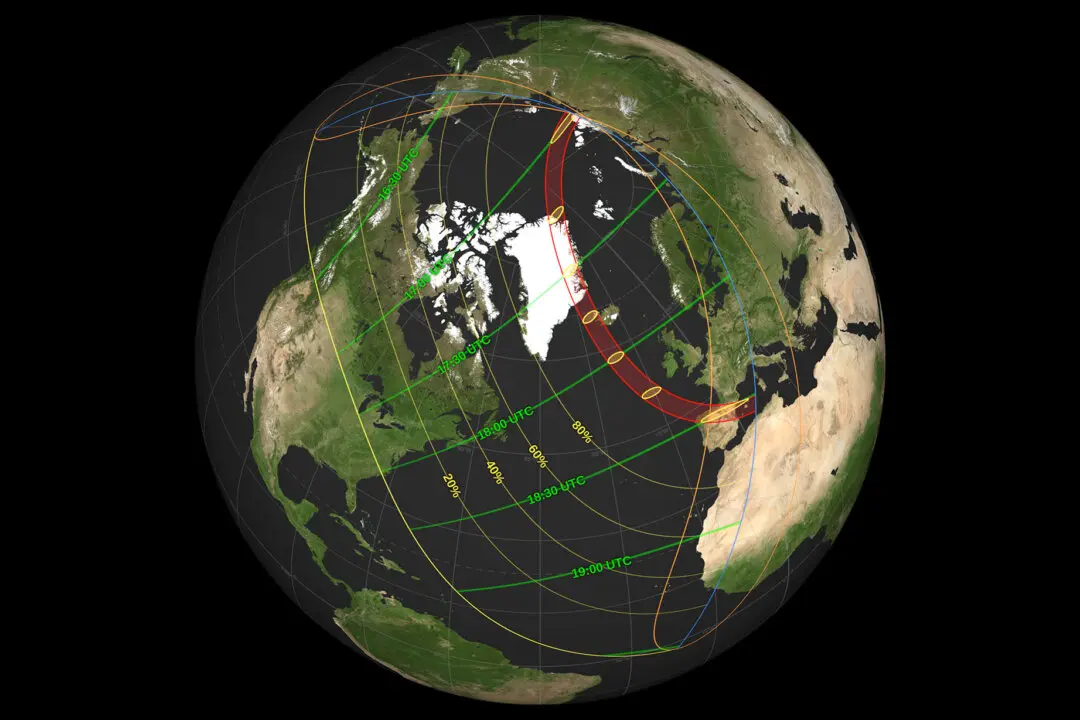
The first major European city to come under the total solar eclipse was Reykjavik, Iceland, at around 5:48 p.m. local time.
Its path across the Northern Hemisphere extended over the North Atlantic, off the coast of Ireland. But people watching from London were still expected to be under 91 percent coverage at 7:13 p.m., and those in Dublin were forecasted to see a 94 percent eclipse just before that, at 7:10 p.m.
Everyone in the British Isles from the southwestern tip of Ireland to the northeastern tip of Scotland, in fact, would see a near-total eclipse between more than 90 percent and nearly 95 percent.
Around that same time, people across Scandinavia and the Baltic region got their turn to see it. Those as far east as Stockholm were projected to see an 81 percent eclipse, with 83 percent predicted for Oslo. Even St. Petersburg, Russia, saw about 79 percent.
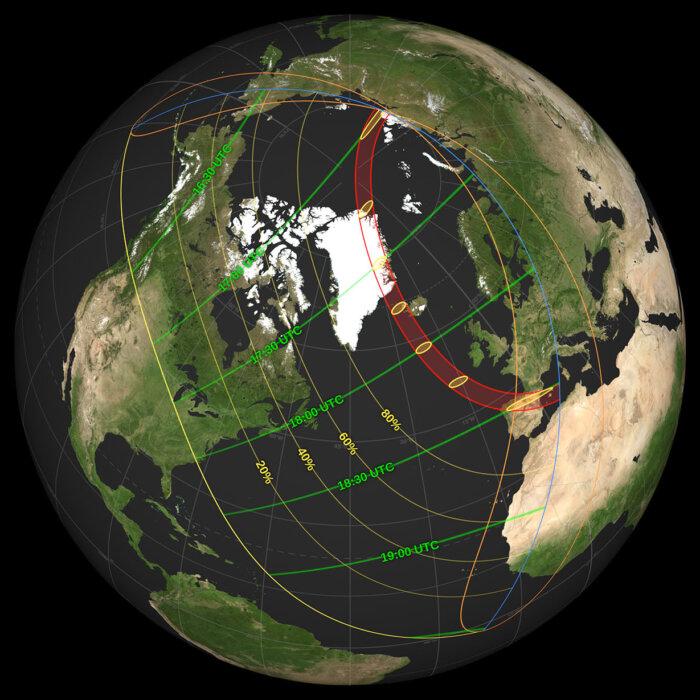
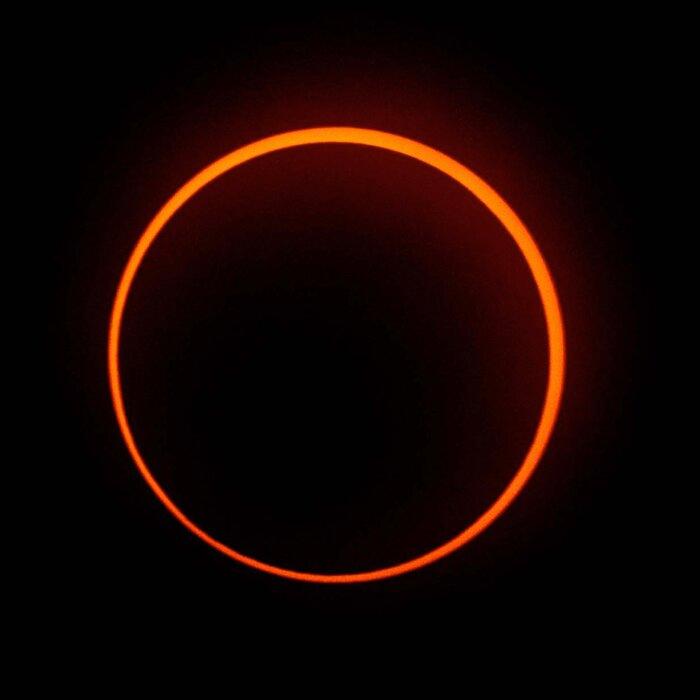
Then, the skies across the European continent dimmed for a few minutes. Viewers in Paris and Milan were treated to 92 percent total eclipse coverage at 8:17 p.m. and 8:20 p.m., respectively, and those looking up from Berlin at 8:08 p.m. and Vienna at 8:10 p.m. saw 85 percent.
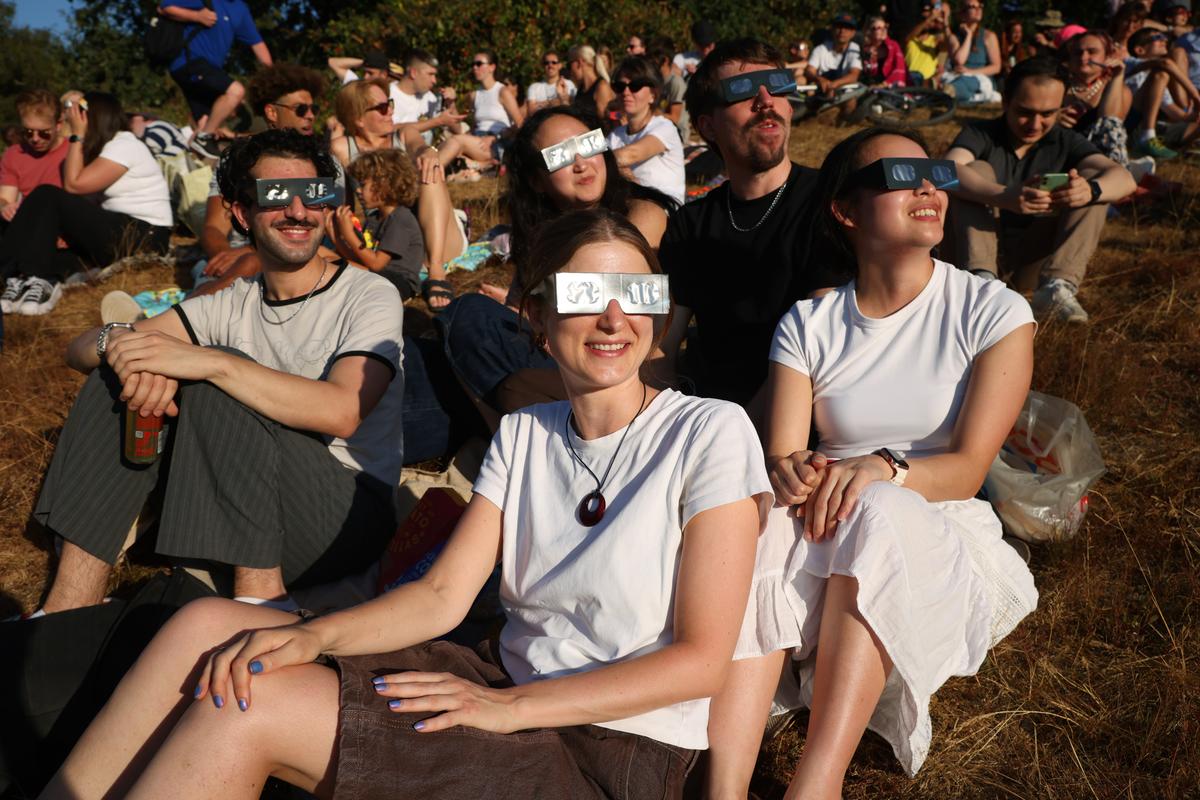
As the Earth rotated, the sun-blocking alignment came over the Iberian Peninsula. Making landfall in Galicia, its shadow traced across the northern half of the peninsula into the Mediterranean.
León, Zaragoza, and Valencia, Spain, bore witness to the total eclipse at 8:28 p.m., 8:29 p.m., and 8:32 p.m., local time, respectively. Barcelona and Madrid saw 99 percent coverage around the same time, and Lisbon, Portugal, saw 95 percent. Near or total eclipse sightings were also seen across the Mediterranean in Morocco, Algeria, and the Spanish island of Mallorca.
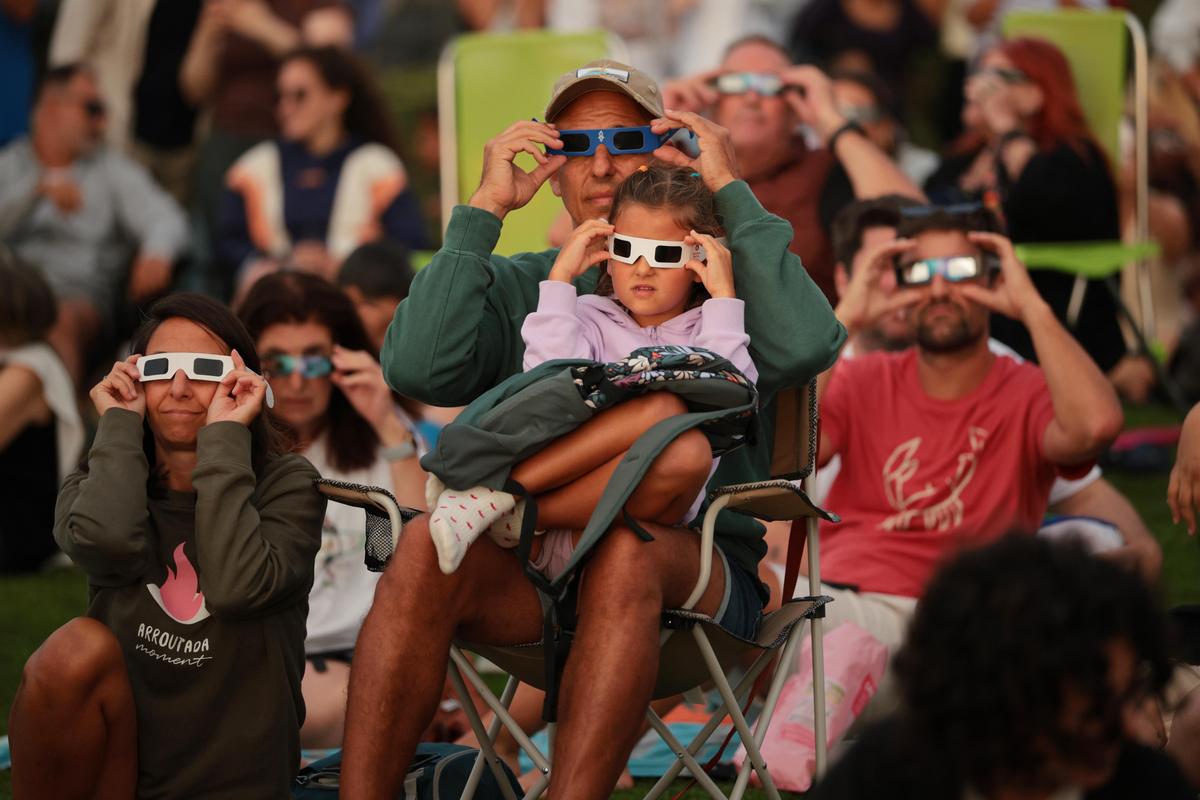
Along with NASA, the European Space Agency was also out on its home turf to observe the solar eclipse, making a point to share safe viewing practices with its followers beforehand.
“That was one minute 21 seconds none of us will forget,” the European Space Agency’s space science team said of the eclipse on X. “The sky went dark, the corona appeared, and for a moment the whole site went whoaaa.....and cheered!”