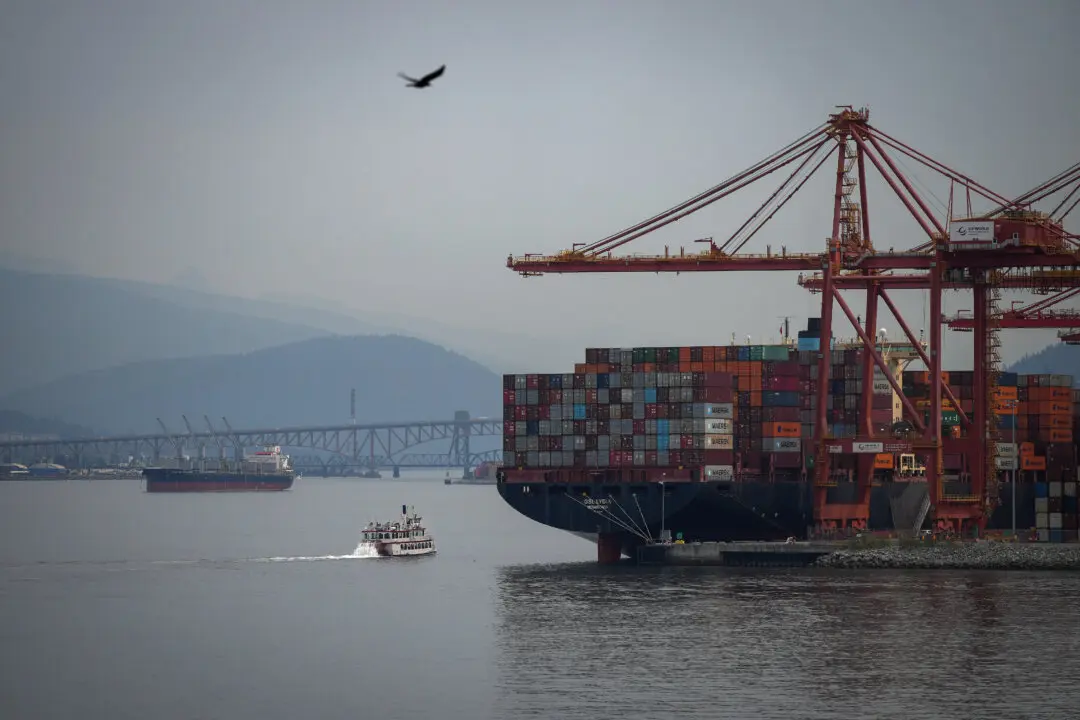
A set of recycling policies being rapidly adopted in recent years is adding hundreds of millions of dollars to costs across the food sector, according to a food policy expert.
“My concern is that Canada may be pursuing environmental objectives in a way that unintentionally undermines food affordability during a period when many households are already struggling with food insecurity,” Charlebois told The Epoch Times.
The EPR rules require companies that make packaging and paper or cardboard products to pay for and oversee the recycling of the materials after consumers throw them away.
The government says the benefit of this program is that instead of municipalities paying to recycle these materials and passing those costs on to taxpayers, companies are required to bear the costs through recycling, recovery, and compliance obligations under the EPR framework.
The issue of EPR regulations passing higher costs onto consumers is also cited in a 2021 paper from Dr. Calvin Lakhan of York University, which analyses the issue at a provincial level.
The paper estimates full implementation of Ontario’s obligations on EPR could add up to $345 million per year in direct cost increases on packaged goods and raise the cost of a basket of groceries by 4.79 percent in areas of the GTA up to 12.4 percent in some remote areas of northern Ontario.
Government Support
The federal government says the goal of EPR policies is to reduce waste and has repeatedly offered support for EPR frameworks, saying they “shift responsibility upstream in the product life cycle to the producer.”“Extended Producer Responsibility (EPR) supports waste reduction, reuse and recycling activities, and reduces the burden on municipalities for the physical and/or financial requirements of waste management by providing a non-tax base funding for the programs,” Environment and Climate Change Canada wrote in a 2017 statement backing EPR frameworks.
Environment Canada said EPR frameworks are helpful in incentivizing producers to make more efficient and less wasteful packaging.
“Considering that municipalities have limited ability to affect the generation of waste, EPR as a concept aims to shift waste management costs onto producers, who have the ability to incorporate changes in product and packaging design to reduce waste,” the department said.
Ottawa has also introduced initiatives such as the Federal Plastics Registry, a measure that requires tracking and reporting on plastics through their life cycle.
Despite strong support from Ottawa, EPR programs are mainly implemented at the provincial level.
EPR polices have been in place in various parts of the country for years, with B.C. implementing a full packaging EPR framework in 2014 through its residential recycling system, and Alberta first bringing in significant EPR policies in 2022 when Bill 83, also known as the Environmental Protection and Enhancement Amendment Act.Cost Pressures
Charlebois said Canada in particular is already facing numerous food security and food cost challenges, and EPR regulations are adding more up-front pressure and long-term financial drain on consumers.Charlebois noted that municipalities and taxpayers can benefit financially under EPR programs because producers take on more of the costs associated with recycling and packaging recovery—expenses that were once covered through local taxes. He noted that this cost transfer is the central justification for EPR policies.
However, he argued that the financial benefits to consumers are indirect and difficult to notice, whereas the increased costs passed along through food prices are immediate and more apparent at the checkout counter.
“Consumers may save a few dollars annually through municipal taxes, but potentially pay much more through higher food prices over time,” he said.
Charlebois said it’s hard to isolate the exact impact of EPR rules on food prices in Canada because of the many different product categories and packaging types, as well as other factors. However, he said industry estimates already peg the amount at hundreds of millions of dollars a year.“Packaging-heavy categories like dairy, beverages, prepared foods, and produce are among the most exposed,” he added.
Another concern is how much EPR rules vary between provinces, creating further bureaucratic costs and compliance difficulty.