Senator Jim Quinn has joined the Conservative Senate caucus after serving just over five years as an independent from New Brunswick.
Quinn was first appointed in June 2021 on the advice of then-Prime Minister Justin Trudeau and had been affiliated with the non-partisan Canadian Senators Group before joining the Tory Senate Caucus.
“Since his appointment to the Senate in 2021, Senator Quinn has brought decades of experience in the Canadian Coast Guard, the federal public service, and as President and CEO of Port Saint John to his work in the Upper Chamber,” Housakos wrote.
“Having worked alongside him on the Transport and Communications Committee, I have seen firsthand the depth of his experience on transportation, trade, and economic development. I know he will continue to be a strong and effective voice for New Brunswickers within our growing Conservative caucus in the Senate,” he added.
Senate Appointments
Quinn’s move comes a day after Prime Minister Mark Carney made his first Senate appointments, naming his principal secretary and longtime Liberal strategist Thomas Pitfield, Conservative MP Richard Martel, Dr. Rodney Ouellette, and businesswoman Geeta Tucker as new senate candidates. The Prime Minister’s Office (PMO) said they will become senators once their constitutional qualifications are confirmed.
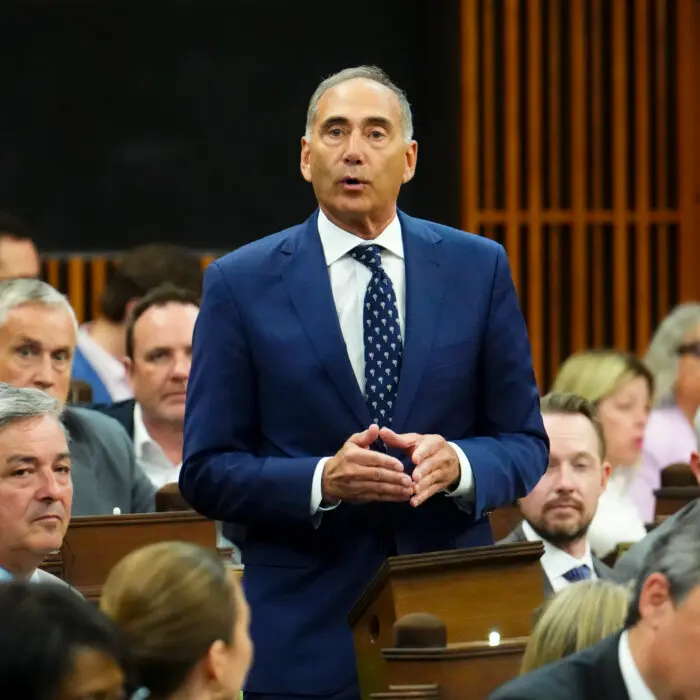

The Senate has 105 seats, with 95 currently filled. Of the sitting senators, 80 were appointed by Justin Trudeau, 13 by Stephen Harper, and two by Jean Chrétien.
Carney’s four new nominations would bring the number of occupied seats to 99.
The PMO said another five Senate seats are expected to open before the end of 2026, and that a new Independent Advisory Board for Senate Appointments will be created to help fill them.