Korean shipbuilding company Hanwha Ocean says it is pulling out of a partnership training deal with Ontario Shipyards and Mohawk College, following Ottawa’s selection of a German company to build new submarines for the Canadian navy.
Hanwha announced it was exiting the arrangement after Prime Minister Mark Carney said on July 6 that Germany’s ThyssenKrupp Marine Systems (TKMS) had been selected as the preferred supplier for Canada’s new submarine fleet.
TKMS was chosen over Hanwha, which had been the only remaining competing bidder on the contract at the time of Ottawa’s decision.
“All of it stops,” Green added of any chance of continuing the partnership in some form.
Submarine Project
Ottawa says the Canadian Patrol Submarine Project will replace Canada’s aged Victoria-class submarines and constitutes the biggest defence procurement in Canadian history.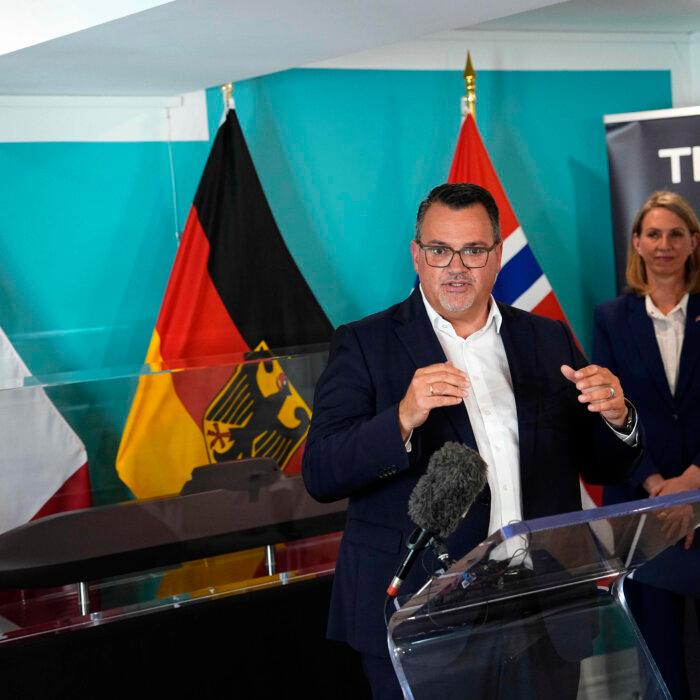
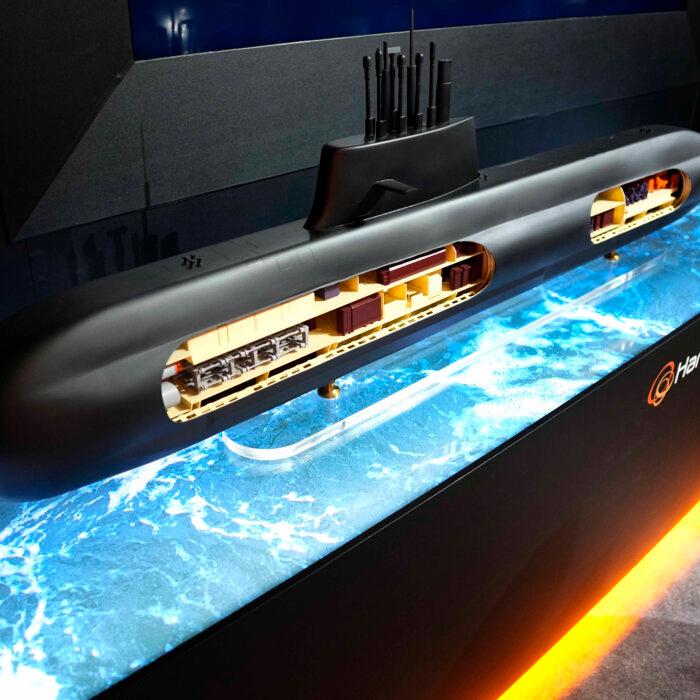
The contract calls for the federal government to procure up to 12 Type 212CD submarines from TKMS to replace its current four-submarine Victoria-class fleet. Negotiations are currently ongoing and likely to last several months, according to Carney.
Ottawa says that negotiations will conclude no later than the end of next year and that the first of the four submarines is expected to arrive in Canada in 2034. The federal government noted that Hanwha may still be chosen as a supplier for the submarines if negotiations don’t succeed with TKMS.
Canada’s current Victoria-class submarines were upgraded to make them operational until the 2030s, but Carney has said they have reached the “end of their lifespan” and only one of the submarines is currently voyage-ready.
Competing Bids
In the portions of its initial March bid that were made public, TKMS argued in favour of the Norwegian-German-built submarines’ interoperability with other NATO fleets and shared training, maintenance, and parts.Hanwha’s spring bid focused on the speed of being able to deliver its KSS-III submarines, vowing to send four by 2035 and one submarine per year following that.
Hanwha’s Agreement
Hanwha signed an agreement in February with Ontario Shipyards and Mohawk College to develop a training hub in Hamilton, where Mohawk would train students for shipbuilding jobs with support from Hanwha’s shipbuilding knowledge and technology.Under the proposal, Hanwha would have provided technical and operational support to Ontario Shipyards, while Mohawk would have led training in areas such as welding, electrical work, millwrighting, marine mechanics, robotics, logistics, and how to inspect ship parts and welds for hidden flaws without damaging them.
Ontario Shipyards and Mohawk say the project will move forward without Hanwha’s involvement as part of a standalone agreement between the shipyard and the college. However, Ontario Shipyard’s vice-president of business development Ted Kirkpatrick said the loss of Hanwha has left the shipyard “disappointed.”
“Hanwha’s commitment was primarily based on knowledge and technology transfer, as well as training, so it’s difficult to put a dollar amount on it, but it would have been significant,” he told CBC.
“While we are disappointed that Hanwha was not the winning proponent, we are honoured to have worked with them to support their bid and for the opportunity to build what we hope is a lasting relationship.”