New Zealand’s Reserve Bank has slashed the official cash rate (OCR) by 50 basis points to 2.5 percent in a move that surprised many in the markets.
It also signalled that there may be further easing in future.
The rate is at a two-year low as the country’s economy continues to contract, unemployment increases, and New Zealanders hold onto their money in response to uncertainty.
Announcing the decision, the Bank’s Monetary Policy Committee said the annual consumer price index (CPI) inflation is currently near the top of its 1 to 3 percent target band but, with spare capacity in the economy, inflation is expected to return to around the 2 percent target mid-point over the first half of 2026.
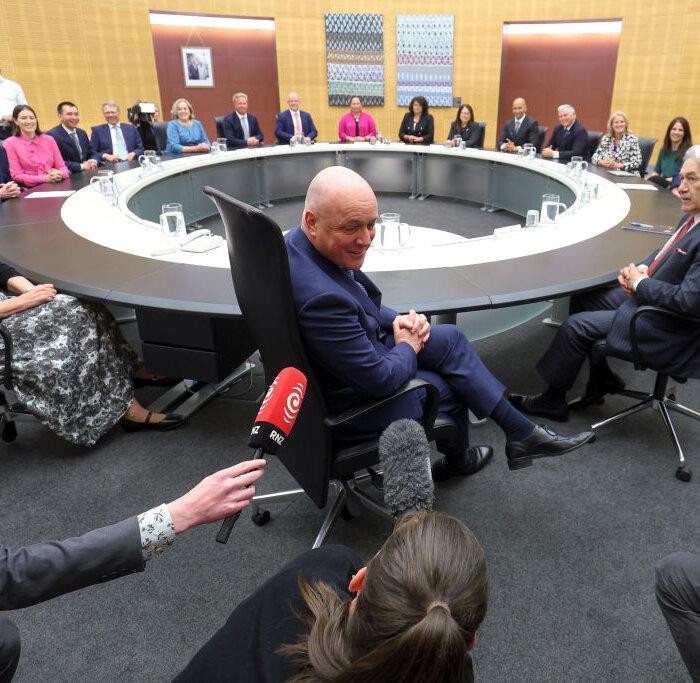
Prime Minister Christopher Luxon had said publicly that he hoped the Bank would lower the rate to try to boost a sluggish economy, which has caused his personal popularity, as well as that of his government, to plummet.
New Zealand’s economy contracted 0.9 percent in the second quarter and has shrunk in three of the last five quarters. A Taxpayers’ Union-Curia poll released this week found that the National-led coalition would not have enough seats to govern if an election were held today.

The country’s business confidence has worsened in the third quarter as inflation pressures rose, with just 18 percent of firms surveyed by the New Zealand Institute of Economic Research (NZIER) saying they expected general business conditions to improve, compared with 22 percent who were optimistic in the previous quarter.
That uncertainty has flowed through to the employment market, with joblessness reaching 5.2 percent for April-June from 5.1 percent three months prior, while employment fell 0.1 percent.
The labour force participation rate—which includes workers either employed or actively looking for work—fell to 70.5 percent from 70.7 percent, its lowest since the first quarter of 2021.

Meanwhile, Finance Minister Nicola Willis is borrowing to provide core government services.
Net core Crown debt reached $182.2 billion, or 41.8 percent of GDP—an increase of $6.7 billion from the previous year—Treasury revealed.
The country is still running a deficit of $9.3 billion, which is $600 million higher than last year, as total expenses continue to exceed total revenues. Those expenses amount to $183.5 billion, which is $3.4 billion more than the previous year.
When the tri-party coalition came to power, it did so on the promise of tax cuts and the restoration of generous write-offs for landlords, which cost it in the short term $12 billion and $2.9 billion respectively, most of which had to be borrowed to be covered.
In addition, the coalition’s belief that the public service had grown too large led to 1,533 redundancies over the last year, with a cost in redundancy payments of $80.4 million.
Meanwhile, Stats NZ data shows that household spending has climbed steadily over the past two years, while the share of disposable income left after consumption—the household saving ratio—has fallen sharply. After sitting in positive territory through most of 2023, saving has now turned negative, meaning many households are spending more than they earn.
By early 2025, total household spending was roughly 8 percent higher than two years earlier. But saving had plunged, falling more than 200 percent from its 2023 level. The shift suggests people are drawing on savings, credit, or the sale of assets to maintain their living standards.
But a series of economic shocks over the past year—such as the price of butter reaching more than $10 a block in a country known for its strong dairy industry, which led to widespread debate—has seen that trend sharply reverse.
Households also had $264.5 billion in deposits with the banks in August. That’s slightly down from July, but significantly more than the $249.2 billion they had in savings last August, and the $235.8 billion the year before.
That’s all money that’s not being spent in the economy, causing businesses to become even more pessimistic, and vacancies to shrink even further.