
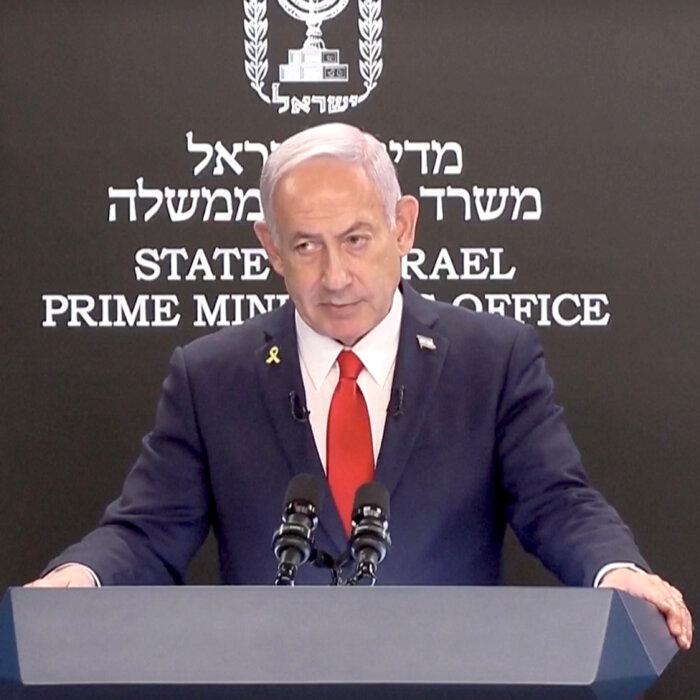
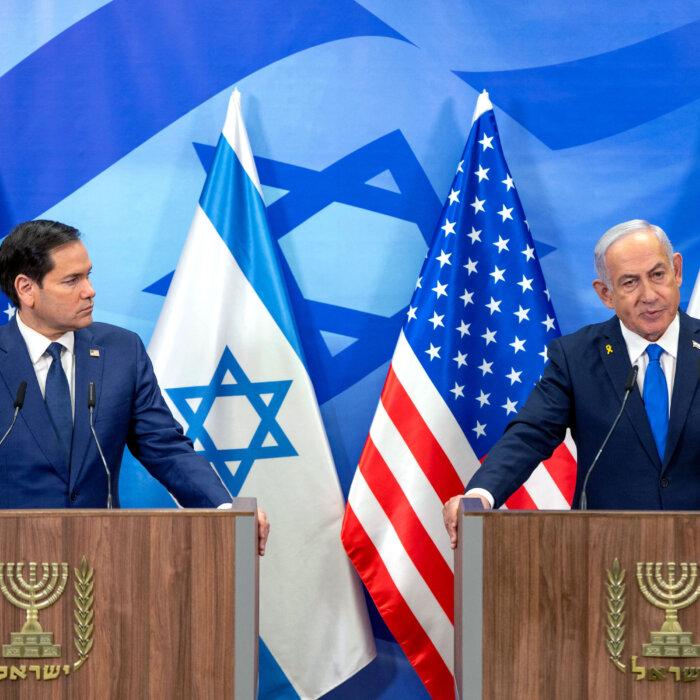
Israeli Prime Minister Benjamin Netanyahu ordered fresh military strikes on the war-torn Gaza Strip on Oct. 28, after accusing Hamas of violating a cease-fire put in place earlier this month.
Witnesses reported hearing tank blasts and seeing explosions in various parts of the territory, including strikes in Gaza City and Deir al-Balah, following Netanyahu’s announcement. Gaza officials also reported Israeli aircraft had struck sites in southern Gaza.
The cease-fire deal obligates Hamas—an internationally-designated terrorist group—to return all hostages it has held in Gaza, including both the living and dead.
While Hamas turned over all of the living hostages, there have been delays in returning the remains of all 28 hostages believed to be deceased at the start of this latest cease-fire.
Hamas was originally supposed to turn over all of the bodies by Oct. 13, but the bodies of 13 hostages still have yet to be returned to Israel, as the group has claimed challenges locating all of their remains.
Cease-Fire Repeatedly Tested
The Tuesday strikes follow other Israeli strikes on Gaza since the start of the cease-fire.This weekend, Israeli forces announced they had also conducted an airstrike against alleged members of Palestinian Islamic Jihad, another group designated as a terrorist group by the United States and Israel. The Israeli military said the suspected Islamic Jihad fighters were planning new attacks.
In a Tuesday press statement, Al-Qassam Brigades claimed to have located another set of hostage remains in a set of tunnels in southern Gaza, and said that it would delay turning them over to the Israeli side after the latest round of strikes on the territory.
US Monitoring Situation
President Donald Trump, whose administration helped broker the cease-fire deal, has repeatedly warned Hamas against faltering from the agreement, and said his administration is carefully monitoring the terrorist group’s actions.Last week, the U.S. Central Command—which handles U.S. military operations across the Middle East—announced the formation of a new Civil-Military Coordination Center, through which U.S. military personnel will monitor compliance with the cease-fire and coordinate with partner nations, and international agencies and organizations handling humanitarian, logistical, and security assistance projects within Gaza.
The mission of the Civil-Military Coordination Center is not meant to deploy U.S. troops within Gaza.
Speaking with reporters in Washington, D.C. on Tuesday, Vice President J.D. Vance acknowledged the recent flare-ups in Gaza, but said it doesn’t have to mark the end of the cease-fire agreement.
“That doesn’t mean that there aren’t going to be little skirmishes here and there,” Vance said. “We know that Hamas or somebody else within Gaza attacked an [Israeli] soldier. We expect the Israelis are going to respond, but I think the President’s peace is going to hold.”