Russia, despite being one of the world’s largest oil producers, is facing its worst fuel crisis in decades. Across the country, drivers are lining up at gas stations, many waiting for hours or even overnight to fill their tanks.
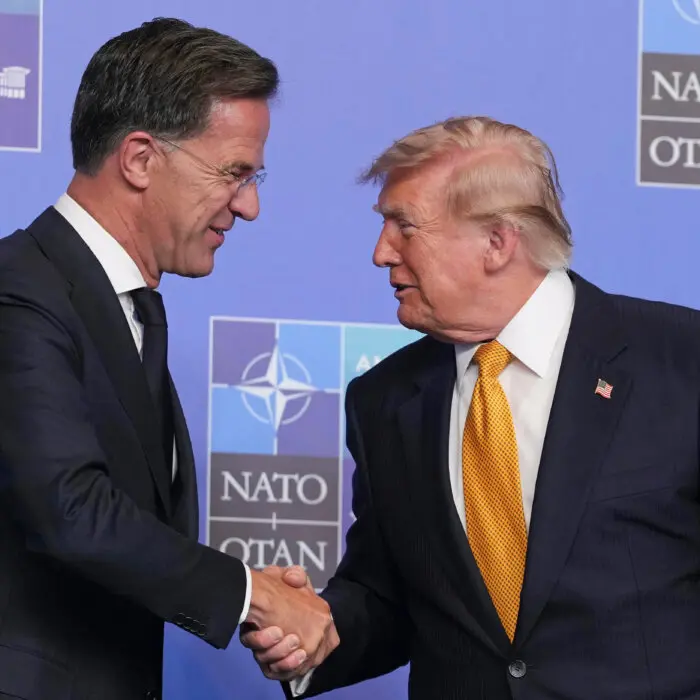
Speaking at a press conference following the NATO summit in Ankara, Turkey, on July 8, NATO Secretary-General Mark Rutte praised Ukraine’s recent assault on Russia’s energy sector.
“This is part of a pattern over the last two months, where the Ukrainians are more and more successful in hitting the vital energy infrastructure in Russia,” Rutte said in response to a question by The Epoch Times.
The latest blow came this week after Ukrainian drones traveled nearly 1,500 miles and struck the Omsk refinery in Western Siberia, Russia’s largest oil refinery. The attack was one of the deepest long-range strikes on Russian territory since the war began more than four years ago.
The continued attacks in recent months have triggered widespread fuel shortages across Russia. In some regions, lines at gas stations stretch for miles, and drivers have had to wait for hours or even overnight to buy fuel. The situation has become so severe that the mayor of the Siberian city of Irkutsk had to deploy portable toilets outside the gas stations to help people stuck in long lines. Several regions have also introduced fuel rationing measures.
Rutte said that these shortages could affect voter sentiment and Russia’s economy, putting more pressure on the Kremlin.
“I can assure you one thing as a politician: In the 16th and 17th centuries, you had to make sure there was enough bread. In the 21st century, you have to make sure there is enough gasoline,” he said. “Your voters don’t like it if they cannot fill up their cars. And of course, this is having an impact on the Russian economy.”
Economic pessimism in Russia has reached a record high, according to a recent Gallup survey.
The poll conducted between March and May found that 60 percent of Russians believe their economic conditions are worsening, the highest level in 20 years. In addition, 56 percent said their living standards were deteriorating, also a record, according to the poll.
Russia is now taking much longer to recover from these strikes.
“Until recently, oil companies were able to repair their facilities fast enough to avoid systemic failure. That is no longer the case,” Alexander Kolyandr, a senior fellow at the Center for European Policy Analysis, wrote in a recent report.
He noted that Moscow now has a limited choice: escalate attacks on Ukrainian infrastructure or come to the negotiation table.
“Russia has less time and fewer options than it had six months ago,” he said.
The recent attacks led Russia to ban diesel exports last week. Russia’s fuel crisis also hit Central Asian countries, especially Kyrgyzstan, Tajikistan, and Uzbekistan, which rely heavily on Russian fuel imports.
A breakthrough occurred during a July 8 meeting between U.S. President Donald Trump and Ukrainian President Volodymyr Zelenskyy at the NATO summit in Ankara, Turkey.
Since the Russia–Ukraine war began in 2022, Ukrainian forces have depended on Patriot systems from the United States and other allies to defend against ongoing Russian air attacks.
The war in Iran and other recent conflicts have put pressure on the global supply of Patriot systems.
“The Russians are finding it more difficult to defend their own airspace,” Rubio said during the Trump–Zelenskyy meeting.
“And what we hope that means is that’s going to create the space now to negotiate the end of this war.”