Vietnam closed airports and schools and launched mass evacuations on Aug. 25 as it braced for Typhoon Kajiki, the most powerful storm to hit the country this year.
The storm’s eye struck northern Ha Tinh and Nghe An provinces at about 3 p.m. local time on Aug. 25, according to the newspaper VNExpress, based in Hanoi, Vietnam.
As of Aug. 25, about 30,000 people had been evacuated from vulnerable coastal areas, the government stated. Authorities had planned for more than half a million evacuations as the storm approached.
More than 16,500 soldiers and 107,000 paramilitary personnel were mobilized to assist in the evacuation effort and prepare for post-storm search-and-rescue operations, according to a government statement. Boats have been ordered to remain in port.
The Traffic Police Department also banned all vehicles from using the North–South Expressway through Nghe An Province to ensure safety during the storm, the outlet said.
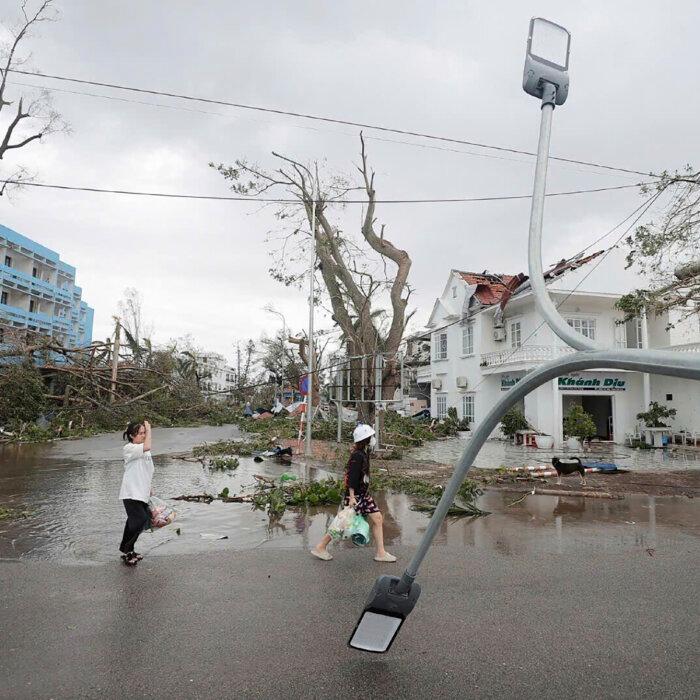
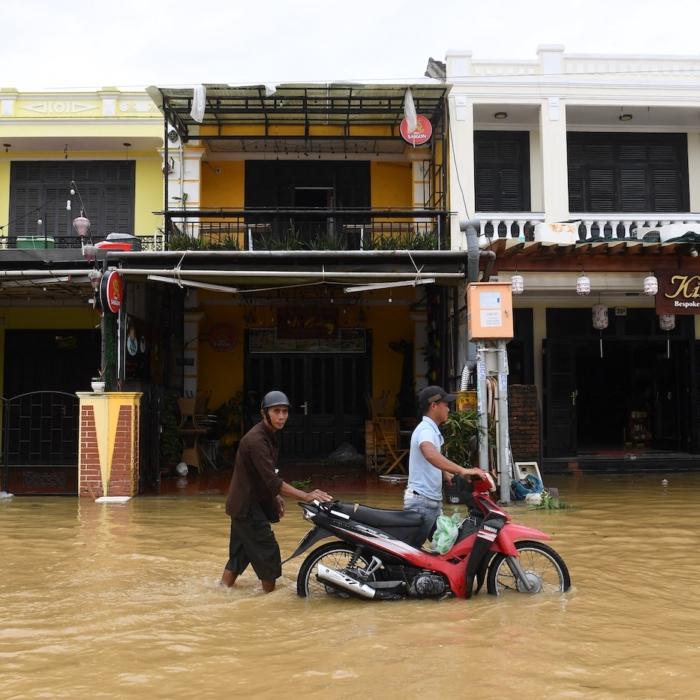
The restriction took effect at 1:30 p.m. on Aug. 25 and will remain in place until further notice, with drivers and transport operators required to follow police instructions.
“As the eye moves ashore, there will be a period of calm before strong winds return,” Nguyen Van Huong, head of the weather forecasting department at the National Center for Hydro-Meteorological Forecasting, told VNExpress. “At that point, the winds may be just as strong or even stronger than before landfall.”
It forecast rainfall of 50 to 250 millimeters over six hours ending at 1 p.m. on Aug. 25, affecting parts of the north, central, and Central Highlands regions.
Khiem said the strong winds in Hue, a coastal city in central Vietnam, and Quang Tri Province, which stretches from the central coast inland to the Laos border, should gradually ease.
“This is an extremely dangerous fast-moving storm,” the government said in a statement on the night of Aug. 24, warning of heavy rains, flooding, and landslides.
Vietnam’s long coastline along the South China Sea makes it especially susceptible to powerful typhoons that frequently cause floods and landslides.
The storm brushed past China’s southern Hainan Island on Aug. 24, forcing authorities in Sanya, China, to shut down businesses and public transport.
By the morning of Aug. 25, Hainan downgraded its emergency alerts but warned of lingering heavy rain in the south.
The storm was expected to weaken gradually after landfall, moving inland across Laos and northern Thailand.