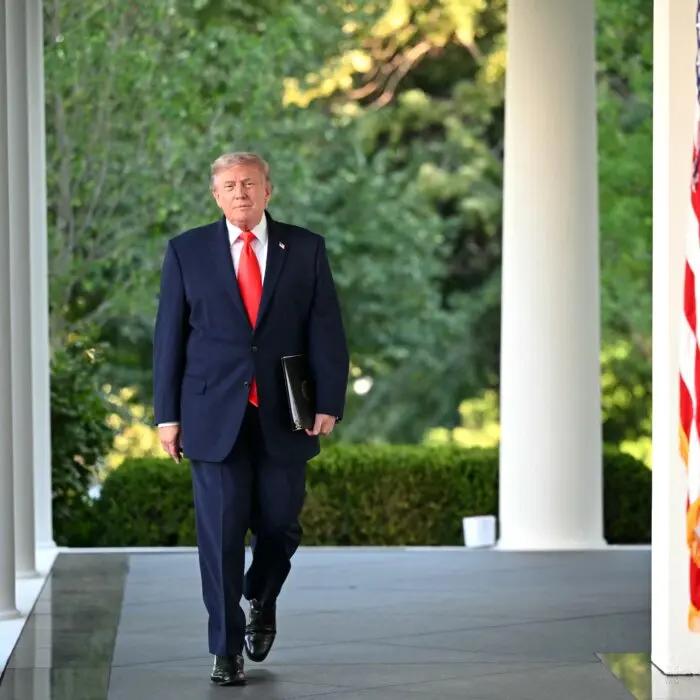
President Donald Trump has temporarily suspended certain duties on phosphate fertilizer imported from Morocco after declaring an emergency over fertilizer supplies.
Trump said the move will help ensure American farmers have enough fertilizer as global supply disruptions continue to pressure agricultural markets.
The White House issued a proclamation on June 29, authorizing duty-free imports of certain Moroccan phosphate fertilizers for up to eight months, or until the declared emergency ends.
The decision follows weeks of concern over fertilizer supplies after conflict in the Middle East disrupted trade and shipping routes, including around the Strait of Hormuz, a key corridor for global fertilizer and energy shipments.
The administration said Middle East disruptions and trade actions by major fertilizer-producing countries have tightened fertilizer supplies and raised costs for U.S. farmers.
The White House said domestic production is not sufficient to meet U.S. agricultural demand and that immediate action is needed while efforts to expand U.S. fertilizer manufacturing continue.
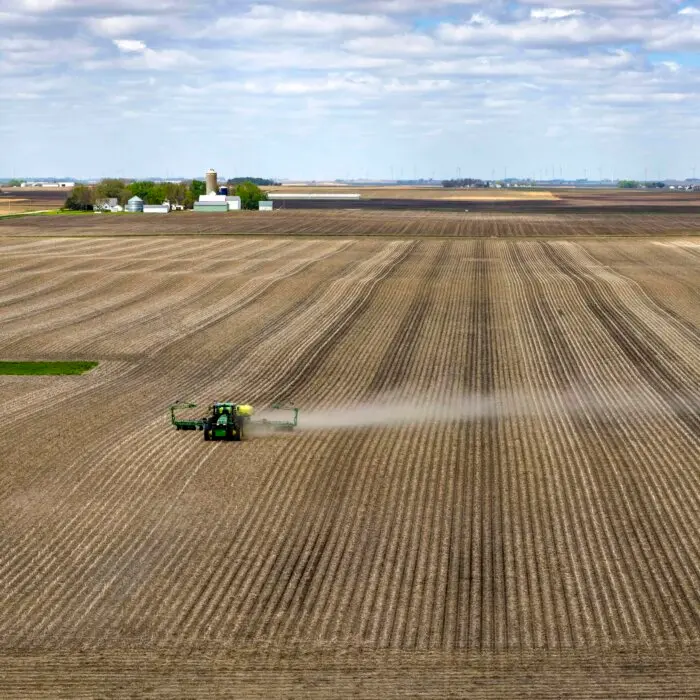
Fertilizers are essential to U.S. food production and national security because producers of corn, soybeans, wheat, and other crops depend on phosphate fertilizers to maintain crop yields, Trump said.
“Immediate action is necessary and appropriate to ensure in the interim that United States farmers have access to a sufficient and timely supply of phosphate fertilizers during the planting and growing season,” the White House said.
The American Soybean Association welcomed the temporary suspension, saying fertilizer is one of soybean farmers’ highest costs.
“Suspending import taxes on this critical farm resource will improve fertilizer availability and help reduce input costs at a time when farmers begin to plan for the 2027 crop while tackling increasingly challenging financial decisions,” association president Scott Metzger said in a June 29 statement.

The ASA said that suspending duties on imports from Morocco, the world’s second-largest phosphate producer, should increase supply and encourage more competitive pricing.
Support for Farmers
The fertilizer proclamation follows several recent administration initiatives aimed at supporting agriculture.
Last week, Trump signed an executive order promoting regenerative agriculture and hosted farmers at the White House, where he announced he had asked Congress to approve more than $11 billion in additional assistance for farmers.
The same day, the U.S. Department of Agriculture issued its final Regenerative Feedstock Rule, which Agriculture Secretary Brooke Rollins said would connect regenerative farming practices to new opportunities in biofuel markets.
The American Farm Bureau Federation also welcomed the White House request for additional farm assistance. The organization said Congress should approve the funding, but said that losses across the farm sector exceed the amount requested by the administration.
Rollins said in a June 30 post on X that the temporary suspension of duties could save farmers about $1.82 billion a year and lower phosphate fertilizer prices by about 22 percent.
She said the administration is also working to expand domestic fertilizer production and improve fertilizer transportation.
Rollins said the fertilizer proclamation is part of a broader strategy to strengthen domestic fertilizer supplies while providing immediate relief for producers.
Political Issue
The cost of fertilizer has also become a point of debate in Washington. During a June 10 Senate Agriculture Committee hearing, Sen. Raphael Warnock (D-Ga.) questioned Rollins about whether administration policies, including tariffs, had increased costs for farmers.
Warnock said Georgia farmers continued to face high production costs, worsened by tariffs and the conflict involving Iran.
Rollins defended the administration’s trade policies and said efforts were underway to reduce the agricultural trade deficit while rebuilding domestic fertilizer production.
Earlier this year, lawmakers and farm groups also called for greater competition in fertilizer manufacturing, arguing that farmers have little bargaining power amid rising input costs and volatile commodity prices.
Owen Evans contributed to this report.