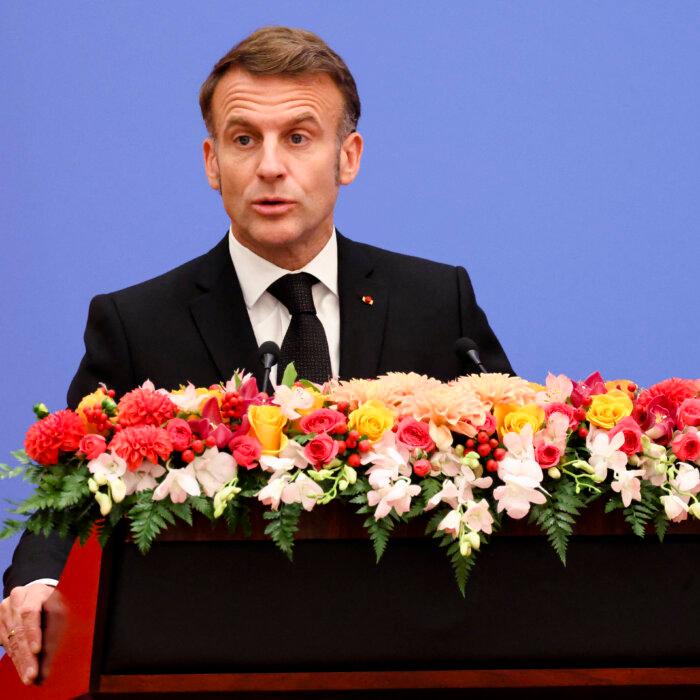
French President Emmanuel Macron on July 13 urged European governments to pursue joint defense strategies and resist nationalist impulses that he said threaten to fracture the continent’s rearmament drive, warning that Europe cannot guarantee its security by having countries separately build up military capabilities.
Speaking in his annual address to France’s armed forces on July 13, Macron said that Europe risks undermining its military revival if governments compete against one another for contracts and duplicate weapons programs instead of pooling resources and developing common capabilities.
“Every time we create fragmentation, we may feel good in the moment, but we are creating the delays of tomorrow,” Macron said on the eve of Bastille Day, France’s national holiday. “Every time we pander to nationalism, in France or elsewhere, we misunderstand our own history. Patriotism, yes; nationalism, never.”
Macron, who has long championed the idea of greater European strategic autonomy, delivered his remarks as governments across the continent ramp up military spending in response to Russia’s war in Ukraine and mounting pressure from Washington to assume a larger share of the burden for Europe’s defense.
“At a time when Europe is rearming, it is absurd to believe that the direction of history lies in every country separately accumulating its own capabilities,” he said.
The French president added that Europe “is becoming a power: one that rests upon its constituent states, respects their sovereign decisions, but accepts the responsibility to defend itself and act as one.”
Macron’s speech came just weeks after the collapse of the Franco-German Future Combat Air System (FCAS), a flagship next-generation fighter project that had been promoted for years as a symbol of Europe’s ambition to build a stronger and more autonomous defense industry.
Nuclear Shield, Strategic Autonomy
Marcon’s speech also came as France seeks to position itself at the center of a more independent European defense architecture.In March, Macron unveiled what he described as a “forward” nuclear deterrence initiative under which France—the European Union’s only nuclear-armed member state—would expand its strategic footprint across the continent.
Under the plan, participating countries would be able to host French strategic air forces on a temporary basis, allowing France’s nuclear deterrent to be dispersed more widely across Europe.
Macron said at the time that such deployments would “complicate the calculations of our adversaries” and strengthen the continent’s security posture.
Talks about such deterrence cooperation have started with the UK, Germany, Poland, the Netherlands, Belgium, Greece, Sweden, and Denmark, Macron said in March.
Fighter Jet Setback Exposes Rivalries
Macron said on Monday that he “deeply regretted” the demise of the FCAS fighter project, which he launched alongside former German Chancellor Angela Merkel in 2017.The program had been intended to deliver a sixth-generation combat aircraft and related systems to replace French and German fleets in the coming decades, but disagreements between Airbus and France’s Dassault Aviation—including over industrial leadership and intellectual property—ultimately proved insurmountable.
The collapse of FCAS has sharpened questions about whether Europe can overcome national competition to develop advanced military capabilities at scale.
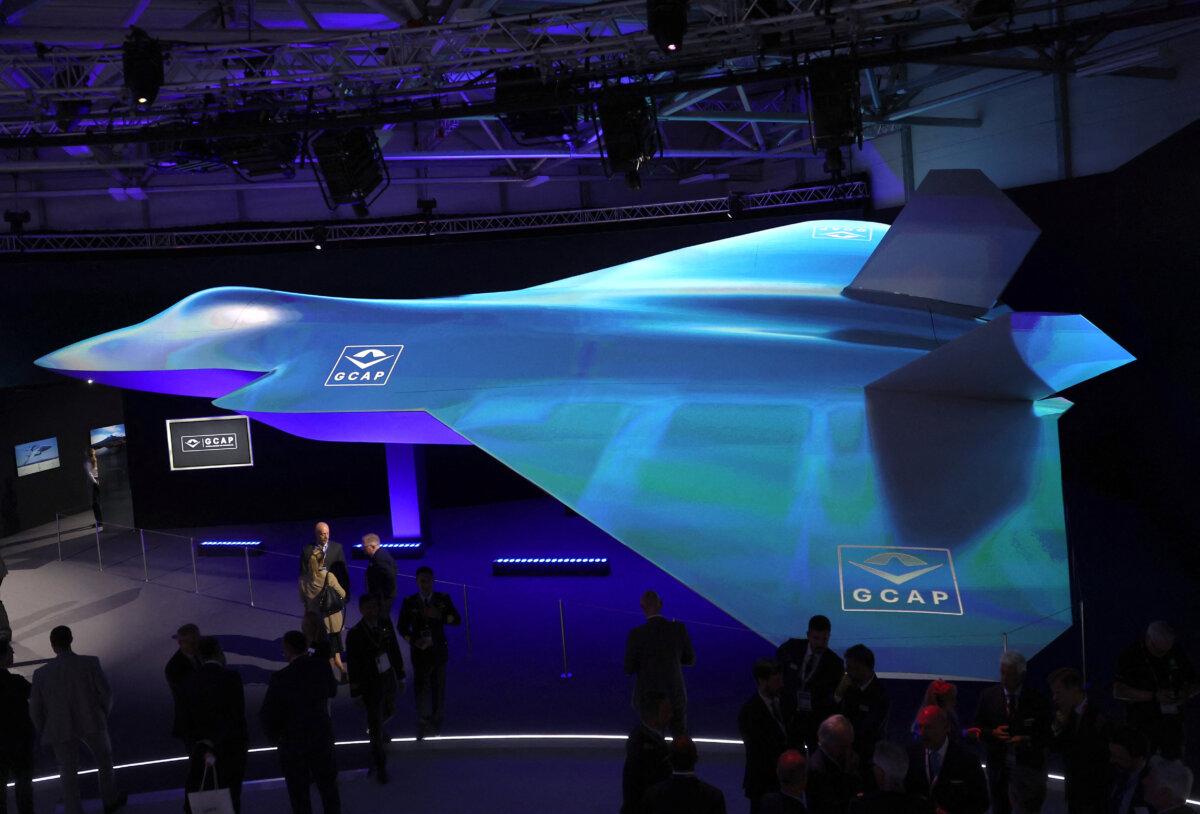
The aircraft, which is scheduled to enter service by 2035, will replace Japan’s F-2 fighters and the Eurofighter Typhoons, operated by the UK and Italy.
Macron’s speech comes against the backdrop of a broader transformation in European defense policy driven by Russia’s invasion of Ukraine and reinforced by U.S. President Donald Trump’s insistence that European allies assume greater responsibility for the continent’s security.